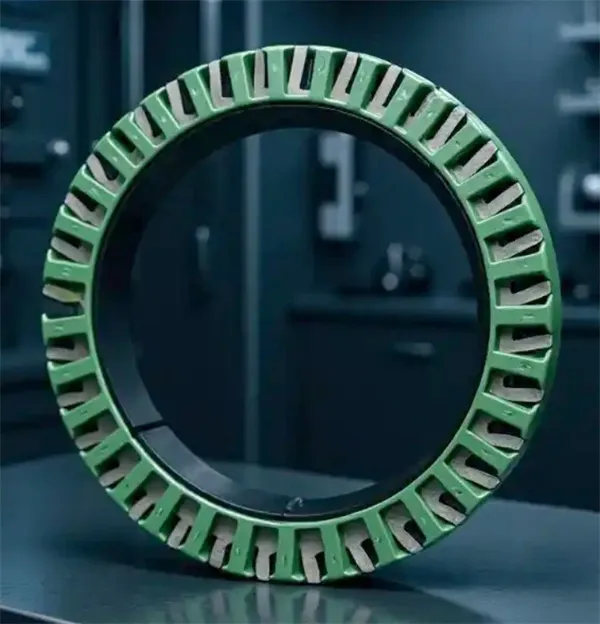
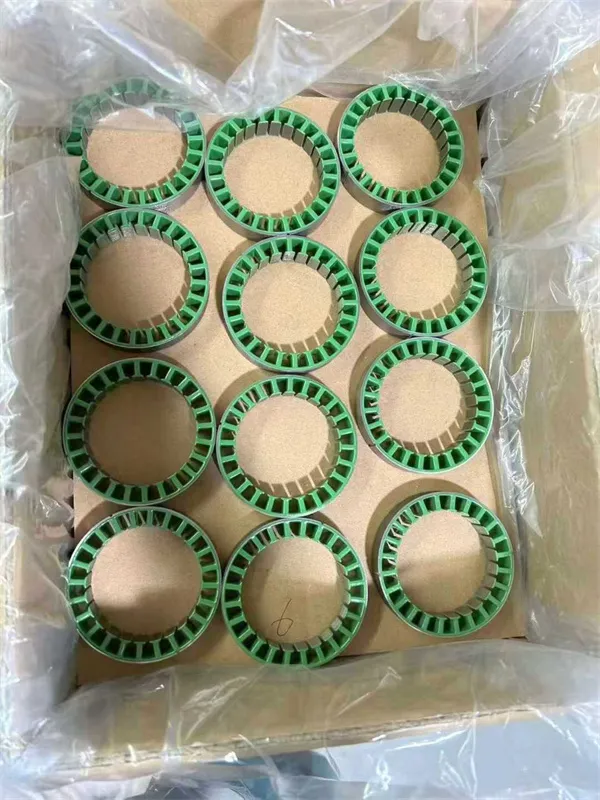
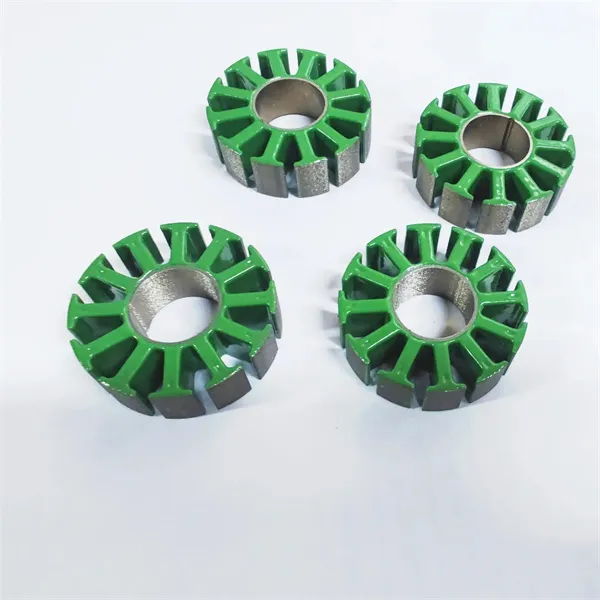
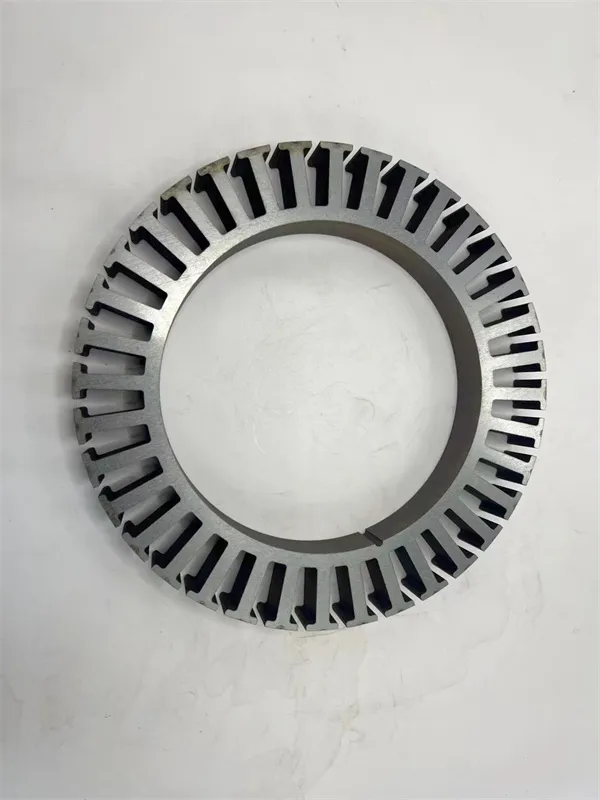
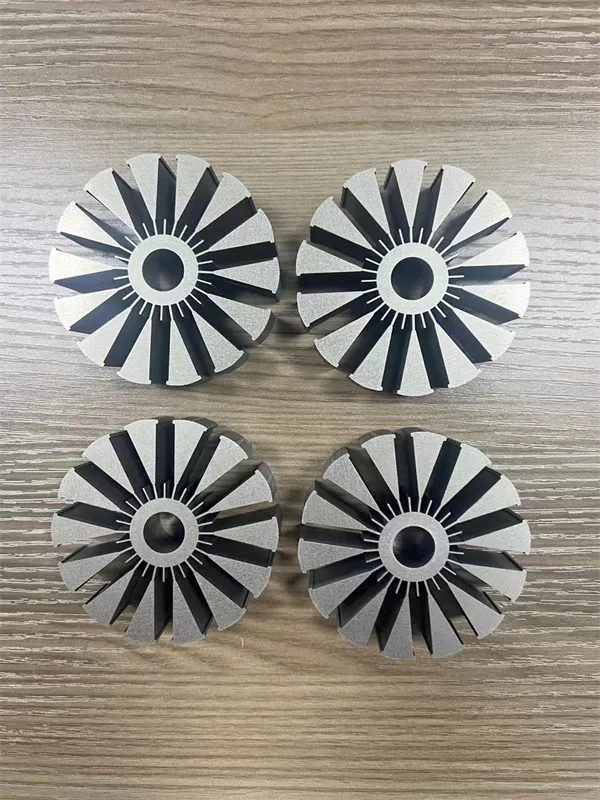
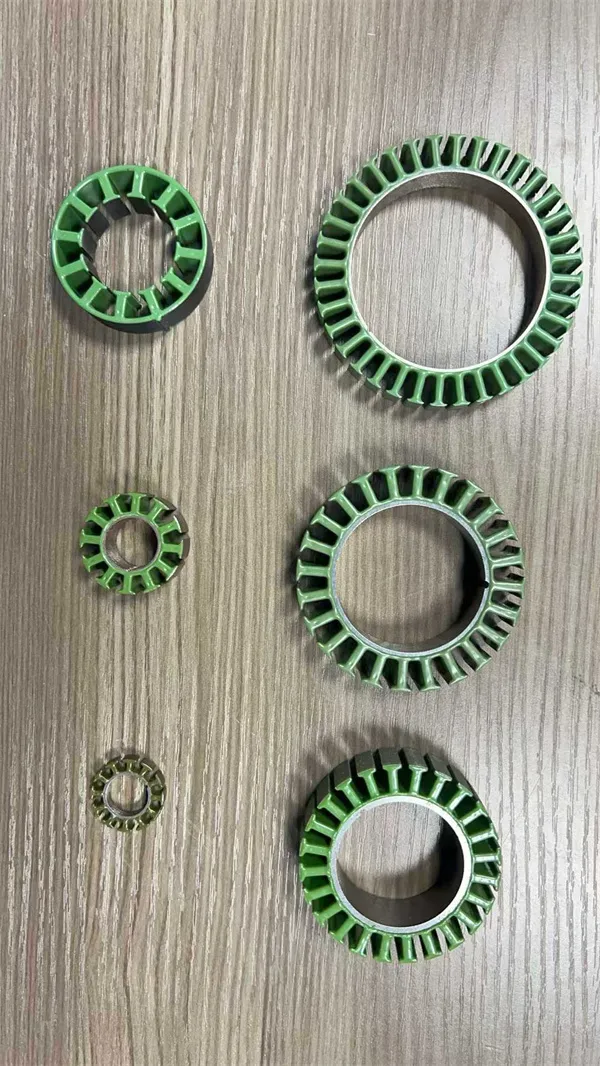
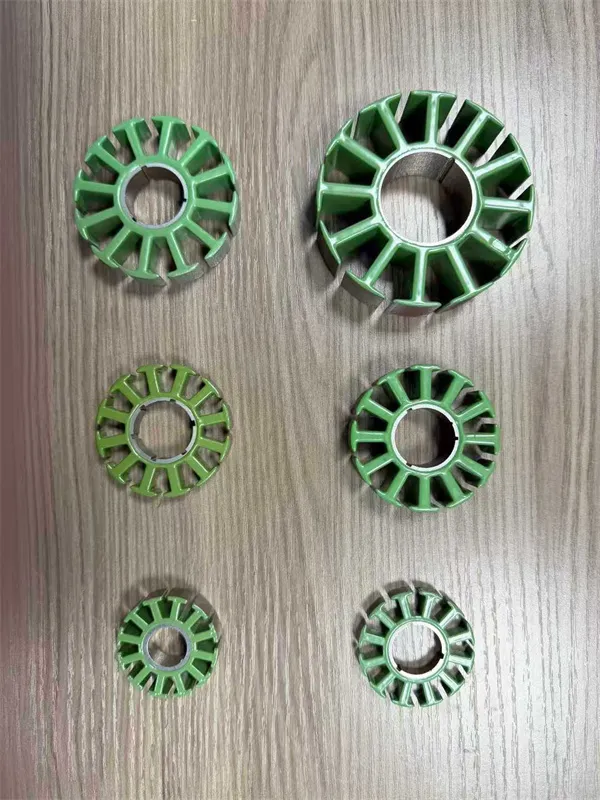
In the FPV drone industry, pilots are surprisingly forgiving of "crashes," but they have zero tolerance for "performance degradation." As a factory deeply rooted in precision motor manufacturing, we are often asked: "Since everyone uses silicon steel, why are Backlack stator motors so much more expensive, yet top-tier brands are still fighting to get them in stock?"
Today, we will dismantle the Backlack (Self-Bonding) Lamination Technology from three dimensions: manufacturing process, electromagnetic physics, and real-world flight performance.
Traditional stator assembly typically relies on Welding or Interlocking (Riveting).
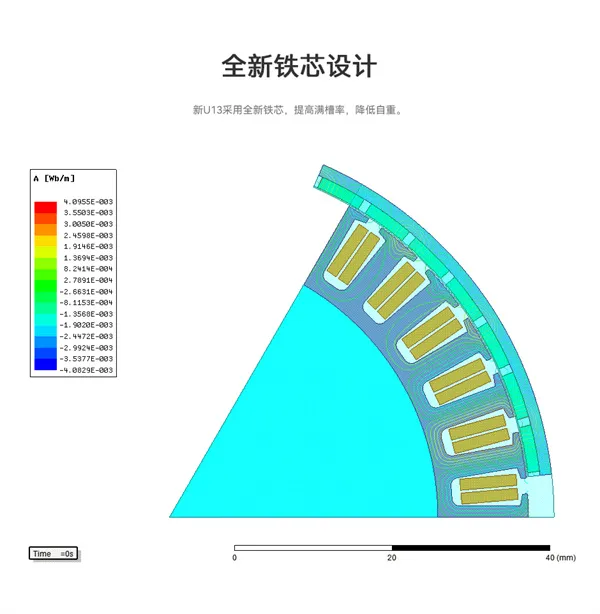
Factory Perspective: This technology achieves 100% cross-sectional utilization. With no weld spots and no rivet holes, the magnetic flux lines flow through the stator without obstruction.
At speeds exceeding 30,000 RPM, if the stator laminations are not tightly bound, microscopic "chatter" occurs.
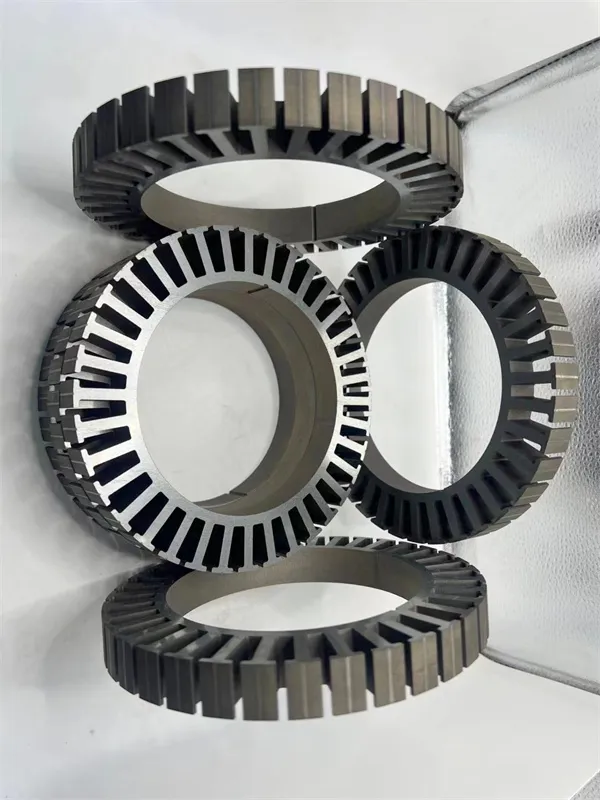
The Backlack Effect: Because every single sheet is bonded into a rigid monolith, the stator’s internal damping is significantly increased. This "solid" feel reduces the noise captured by the gyroscope, allowing for higher PID gains and a "locked-in" flight feel.
To minimize eddy current loss, thinner is always better. Moving from 0.35mm to 0.15mm, traditional interlocking becomes nearly impossible due to material deformation.
Our Solution: We use precise thermal curves (Ramp-up / Soak / Cool-down) in our cleanroom facilities to ensure height tolerances are kept within ±0.05mm.
Not all Backlack is created equal. Our core competitiveness lies in these metrics:
| Key Parameter | Standard Process | Our Backlack Process |
|---|---|---|
| Inter-laminar Resistance | Unstable, prone to breakdown | High insulation (> 1000MΩ) |
| Stacking Factor | ~93% | 97% - 98% (Near solid metal) |
| Bonding Strength | Prone to delamination | Strong even at 200°C |
If you are chasing cleaner Gyro curves, longer flight times, and greater instantaneous punch, a customized Backlack stator is the "nuclear weapon" for your product line.
We provide full-link solutions from material selection (JFE, Baosteel) to final thermal curing.
Request a Technical ConsultationHave specific dimensions? We can calculate your potential performance gain.
Youyou Technology Co., Ltd. specializes in the manufacture of Self-bonding precision cores made of various soft magnetic materials, including Self-bonding silicon steel, ultra-thin silicon steel, and Self-bonding specialty soft magnetic alloys. We utilize advanced manufacturing processes for precision magnetic components, providing advanced solutions for soft magnetic cores used in key power components such as high-performance motors, high-speed motors, medium-frequency transformers, and reactors.
The company Self-bonding precision core products currently include a range of silicon steel cores with strip thicknesses of 0.05mm(ST-050), 0.1mm(10JNEX900/ST-100), 0.15mm, 0.2mm(20JNEH1200/20HX1200/ B20AV1200/20CS1200HF), and 0.35mm(35JNE210/35JNE230/ B35A250-Z/35CS230HF), as well as specialty soft magnetic alloy cores including VACODUR 49 and 1J22 and 1J50.

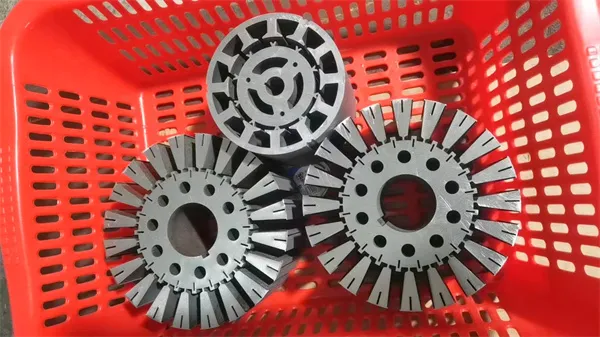
As an stator and rotor lamination bonding stack manufacturer in China, we strictly inspect the raw materials used to make the laminations.
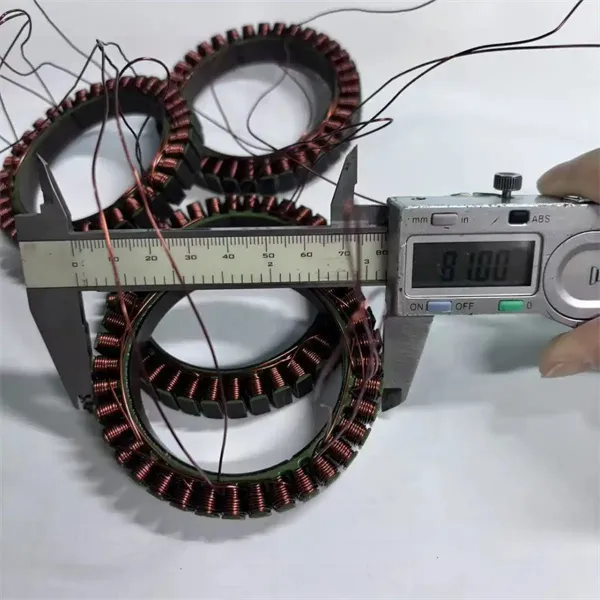
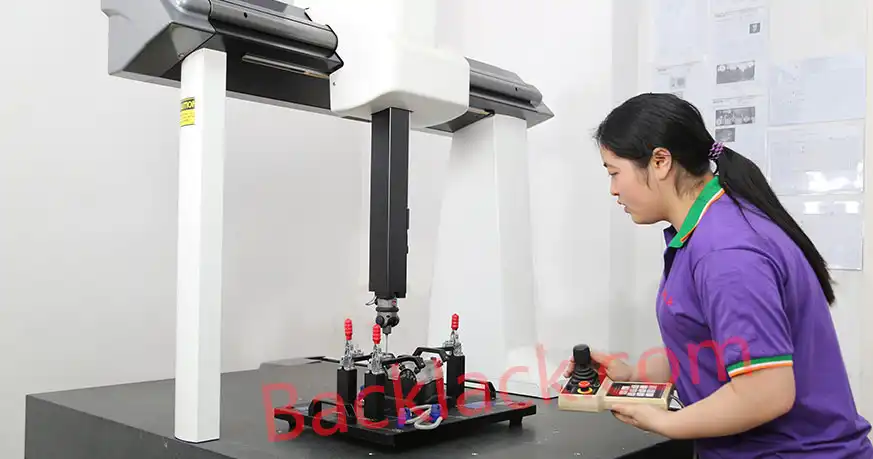
Technicians use measuring tools such as calipers, micrometers, and meters to verify the dimensions of the laminated stack.
Visual inspections are performed to detect any surface defects, scratches, dents, or other imperfections that may affect the performance or appearance of the laminated stack.
Because disc motor lamination stacks are usually made of magnetic materials such as steel, it is critical to test magnetic properties such as permeability, coercivity, and saturation magnetization.
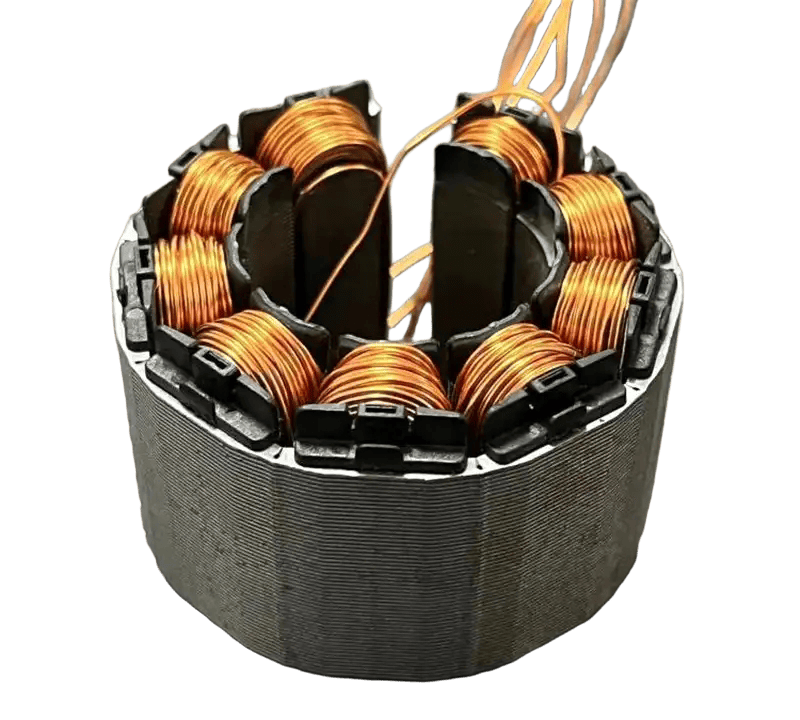
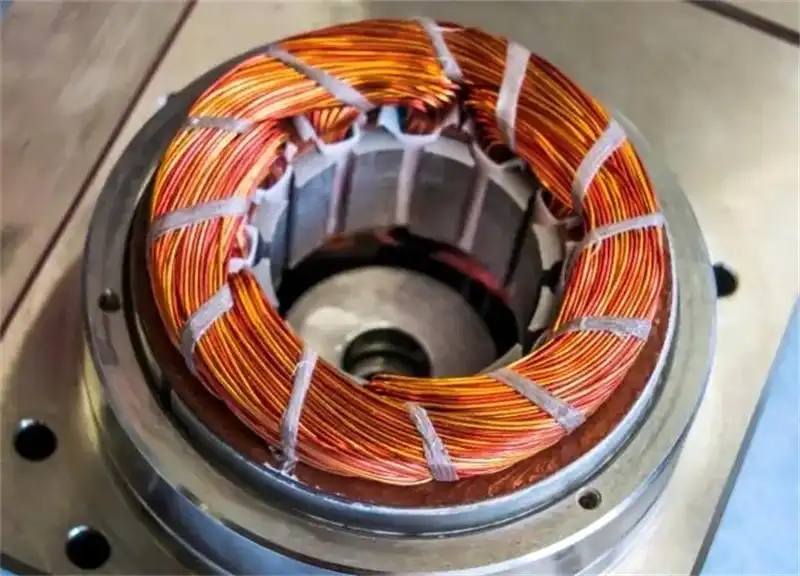
The stator winding is a fundamental component of the electric motor and plays a key role in the conversion of electrical energy into mechanical energy. Essentially, it consists of coils that, when energized, create a rotating magnetic field that drives the motor. The precision and quality of the stator winding directly affects the efficiency, torque, and overall performance of the motor.
We offer a comprehensive range of stator winding services to meet a wide range of motor types and applications. Whether you are looking for a solution for a small project or a large industrial motor, our expertise guarantees optimal performance and lifespan.
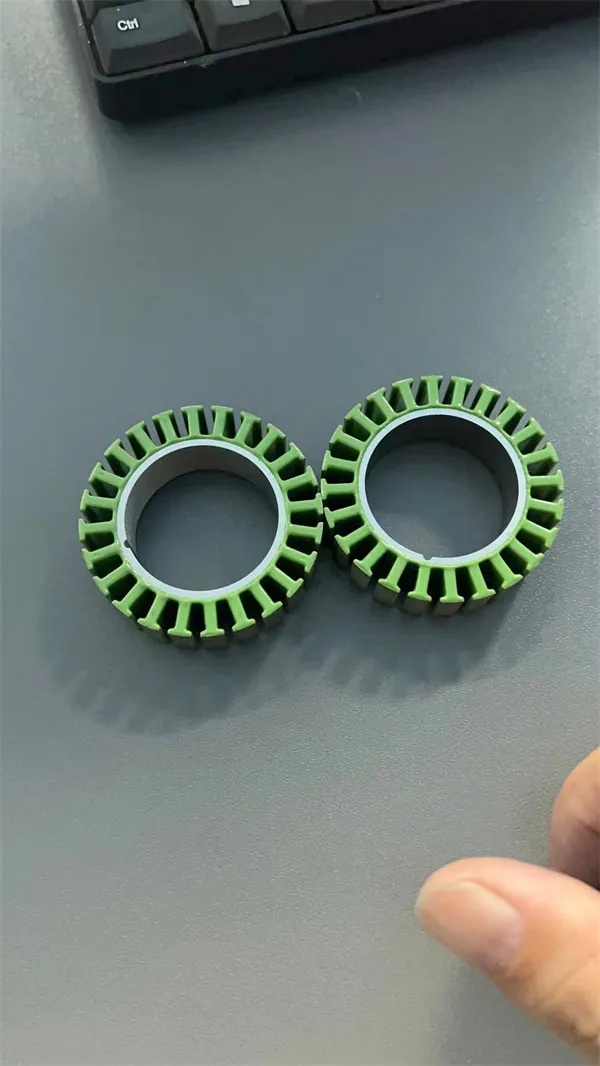
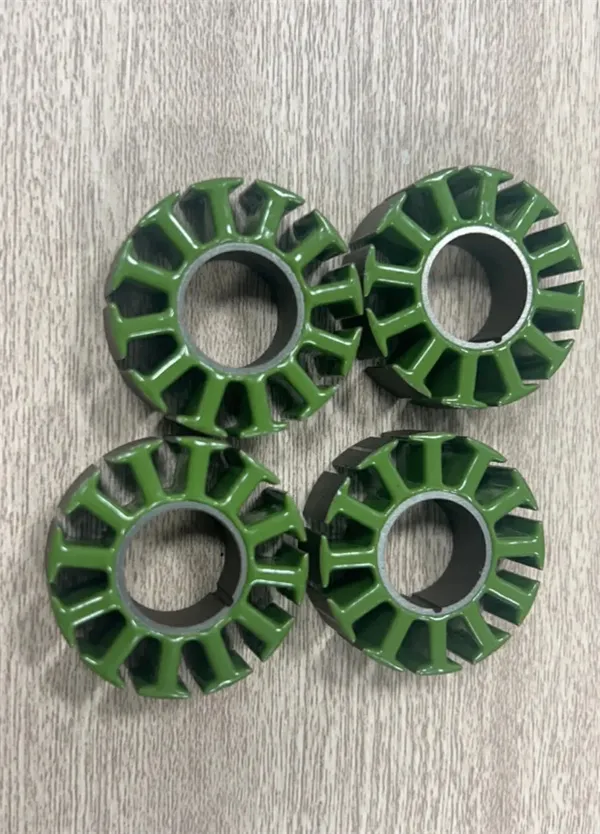
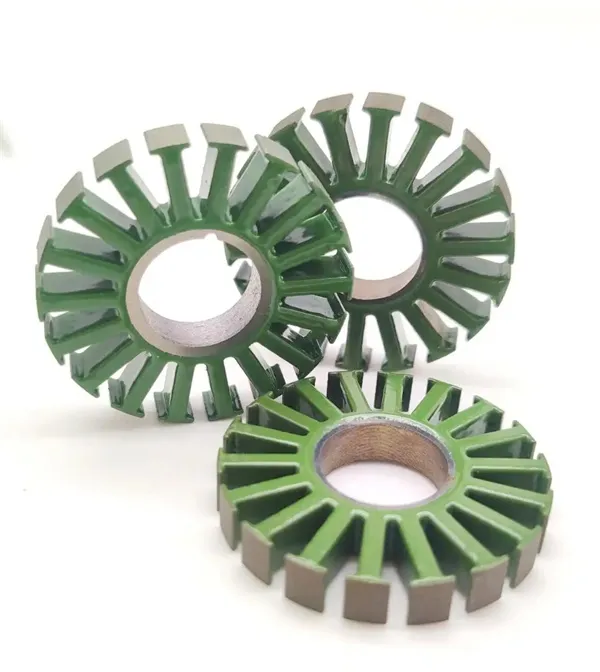
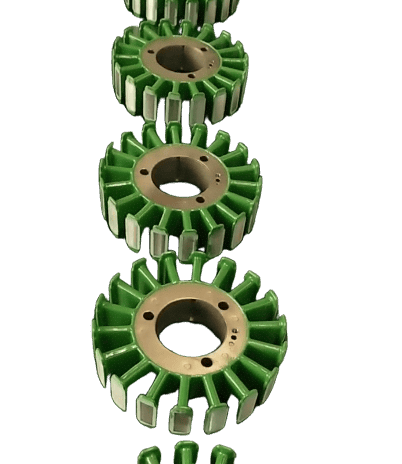
Epoxy powder coating technology involves applying a dry powder which then cures under heat to form a solid protective layer. It ensures that the motor core has greater resistance to corrosion, wear and environmental factors. In addition to protection, epoxy powder coating also improves the thermal efficiency of the motor, ensuring optimal heat dissipation during operation.
We have mastered this technology to provide top-notch epoxy powder coating services for motor cores. Our state-of-the-art equipment, combined with the expertise of our team, ensures a perfect application, improving the life and performance of the motor.
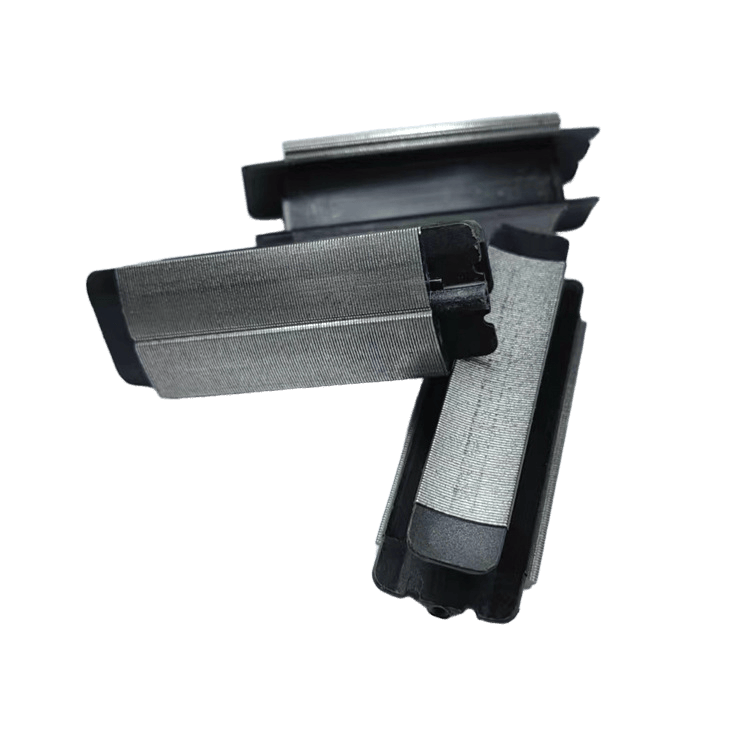
Injection molding insulation for motor stators is a specialized process used to create an insulation layer to protect the stator's windings.
This technology involves injecting a thermosetting resin or thermoplastic material into a mold cavity, which is then cured or cooled to form a solid insulation layer.
The injection molding process allows for precise and uniform control of the thickness of the insulation layer, guaranteeing optimal electrical insulation performance. The insulation layer prevents electrical short circuits, reduces energy losses, and improves the overall performance and reliability of the motor stator.
In motor applications in harsh environments, the laminations of the stator core are susceptible to rust. To combat this problem, electrophoretic deposition coating is essential. This process applies a protective layer with a thickness of 0.01mm to 0.025mm to the laminate.
Leverage our expertise in stator corrosion protection to add the best rust protection to your design.
For high-volume production, silicon steel (0.20-0.35mm) remains the most cost-effective option. It offers an excellent balance of performance, manufacturability, and cost. For applications requiring better high-frequency performance, ultra-thin silicon steel (0.10-0.15mm) provides improved efficiency with only a moderate cost increase. Advanced composite laminations can also reduce total manufacturing cost through simplified assembly processes.
The choice depends on your specific requirements: Amorphous metals offer the lowest core losses (70-90% lower than silicon steel) and are ideal for applications where efficiency is paramount. Nanocrystalline cores provide a better combination of high permeability and low losses, along with superior temperature stability and mechanical properties. Generally, choose amorphous metals for maximum efficiency at high frequencies, and nanocrystalline cores when you need balanced performance across a wider range of operating conditions.
For premium EV applications where power density and efficiency are critical, cobalt-iron alloys like Vacodur 49 can provide significant advantages. The 2-3% efficiency gain and 20-30% size reduction can justify the higher material cost in performance-oriented vehicles. However, for mass-market EVs, advanced silicon steel grades often provide better overall value. We recommend conducting a total lifecycle cost analysis including efficiency gains, battery size reduction potential, and thermal management savings.
Advanced materials often require specialized manufacturing approaches: Laser cutting instead of stamping to prevent stress-induced magnetic degradation, specific heat treatment protocols with controlled atmospheres, compatible insulation systems that withstand higher temperatures, and modified stacking/bonding techniques. It's essential to involve material suppliers early in the design process to optimize both material selection and manufacturing approach.
The thickness of motor core lamination steel grades includes 0.05/0.10/0.15/0.20/0.25/0.35/0.5MM and so on. From large steel mills in Japan and China. There are ordinary silicon steel and 0.065 high silicon silicon steel. There are low iron loss and high magnetic permeability silicon steel. The stock grades are rich and everything is available..
In addition to stamping and laser cutting, wire etching, roll forming, powder metallurgy and other processes can also be used. The secondary processes of motor laminations include glue lamination, electrophoresis, insulation coating, winding, annealing, etc.
You can send us your information, such as design drawings, material grades, etc., by email. We can make orders for our motor cores no matter how big or small, even if it is 1 piece.
Our motor laminate lead times vary based on a number of factors, including order size and complexity. Typically, our laminate prototype lead times are 7-20 days. Volume production times for rotor and stator core stacks are 6 to 8 weeks or longer.
Yes, we offer OEM and ODM services. We have extensive experience in understanding motor core development.
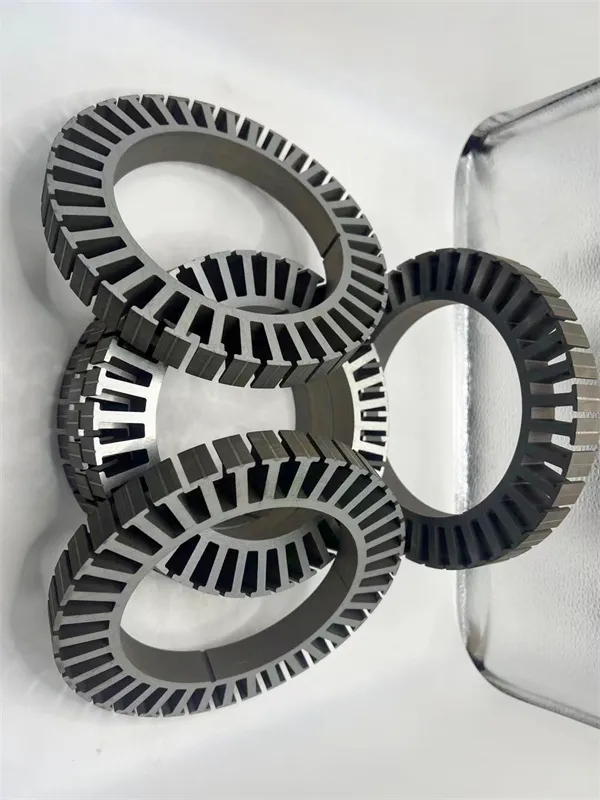
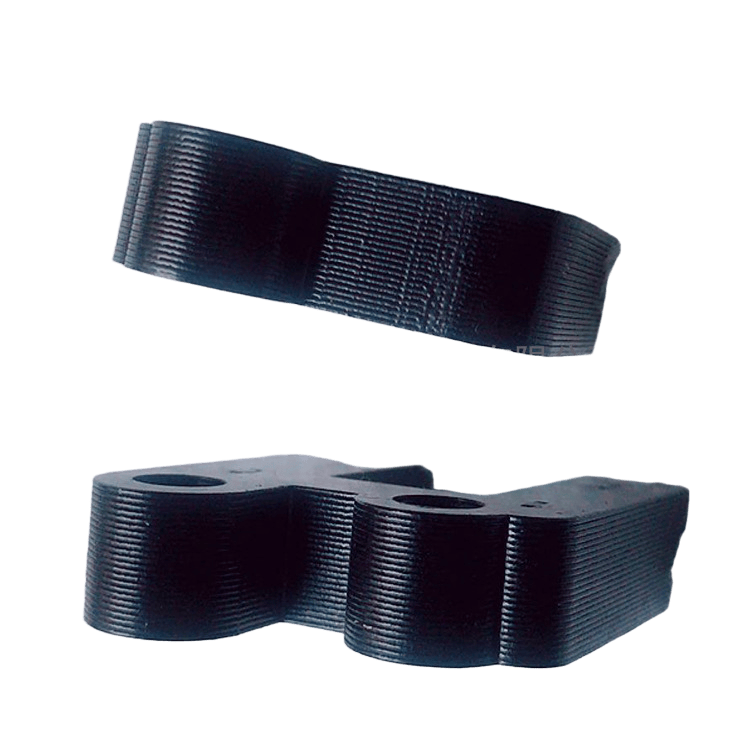
The concept of rotor stator bonding means using a roll coat process that applies an insulating adhesive bonding agent to the motor lamination sheets after punching or laser cutting. The laminations are then put into a stacking fixture under pressure and heated a second time to complete the cure cycle. Bonding eliminates the need for a rivet joints or welding of the magnetic cores, which in turn reduces interlaminar loss. The bonded cores show optimal thermal conductivity, no hum noise, and do not breathe at temperature changes.
Absolutely. The glue bonding technology we use is designed to withstand high temperatures. The adhesives we use are heat resistant and maintain bond integrity even in extreme temperature conditions, which makes them ideal for high-performance motor applications.
Glue dot bonding involves applying small dots of glue to the laminates, which are then bonded together under pressure and heat. This method provides a precise and uniform bond, ensuring optimal motor performance.
Self-bonding refers to the integration of the bonding material into the laminate itself, allowing the bonding to occur naturally during the manufacturing process without the need for additional adhesives. This allows for a seamless and long-lasting bond.
Yes, bonded laminations can be used for segmented stators, with precise bonding between the segments to create a unified stator assembly. We have mature experience in this area. Welcome to contact our customer servic.
Looking for a reliable stator and rotor lamination Self-adhesive Cores stack Manufacturer from China? Look no further! Contact us today for cutting-edge solutions and quality stator laminations that meet your specifications.
Contact our technical team now to obtain the self-adhesive silicon steel lamination proofing solution and start your journey of high-efficiency motor innovation!
Get Started NowRecommended For You