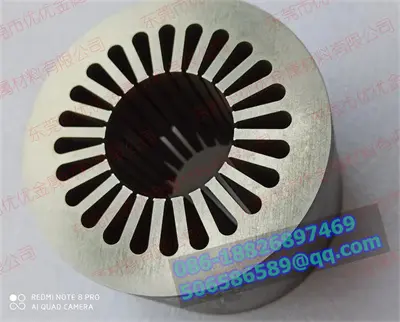
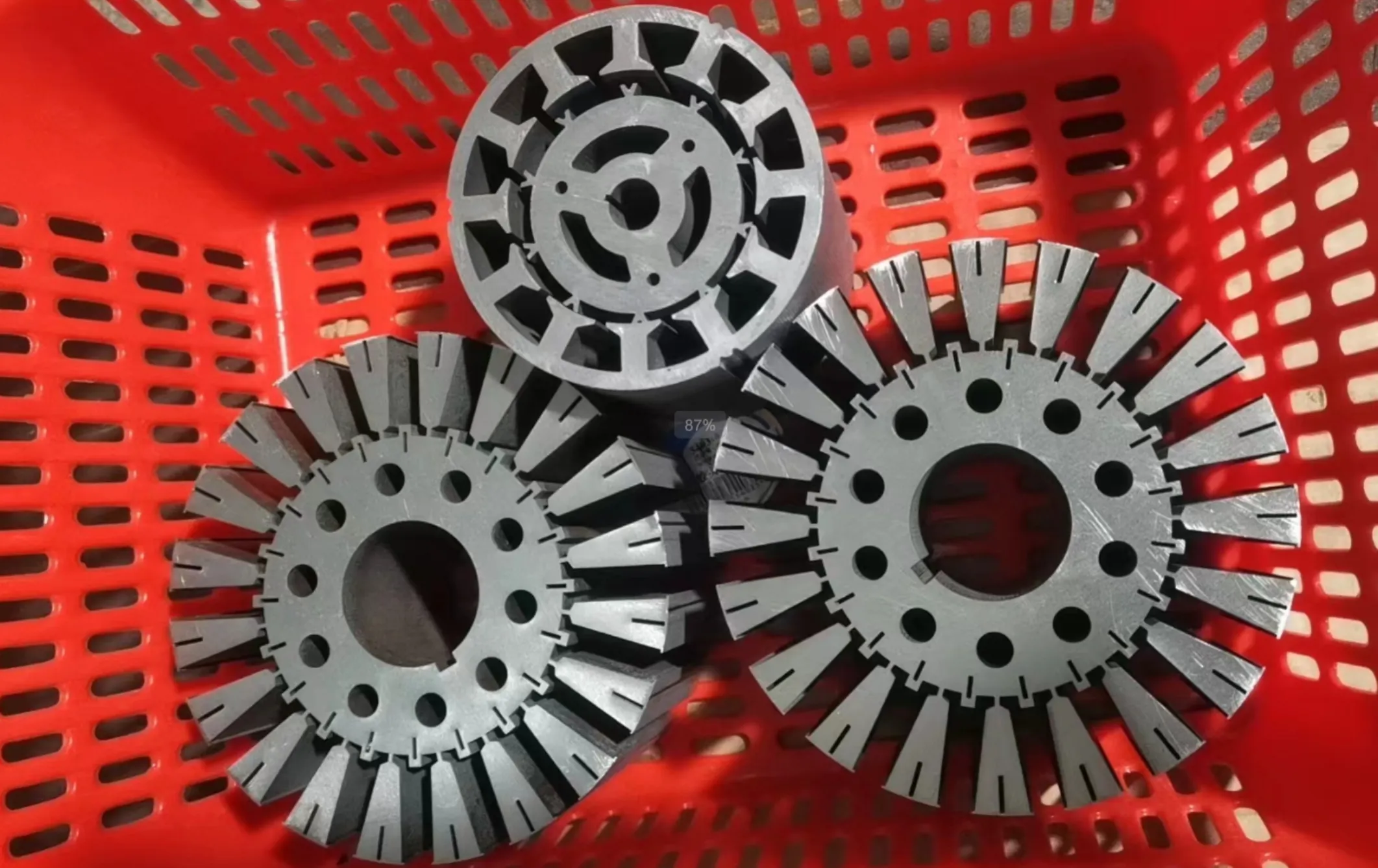
Overcoming Motor Actuator Performance Bottlenecks: Why Rivet-Free In-Mold Bonding Stator Cores Are the Ultimate Solution

A Comprehensive Engineering Guide to Eliminating Core Loss, Reducing NVH, and Maximizing Power Density for Robotics & eVTOL Motors

In the motor manufacturing sector, technical priorities are shifting rapidly. While industry discussions previously centered on stamping precision and stacking factors, the main focus for high-performance applications—such as humanoid robot actuators, eVTOL propulsion systems, and high-frequency BLDC motors—has turned to a crucial challenge: How can self-bonding (Backlack) technology break through power density and core loss bottlenecks?

As a specialized custom manufacturer of stator and rotor laminations, we integrate advanced self-bonding processes, ultra-thin electrical steel processing, and an extensive tooling library to provide complete engineering solutions—from early-stage prototyping to full-scale mass production.

Key Takeaways

Traditional cleating, riveting, and welding processes induce magnetic degradation, high mechanical stress, and micro-vibrations, severely bottlenecking next-generation motor designs. Rivet-free self-bonding (Backlack) cores eliminate these issues through full-surface insulation bonding, delivering stress-free magnetic performance, ultra-low eddy current loss, and superior NVH characteristics.
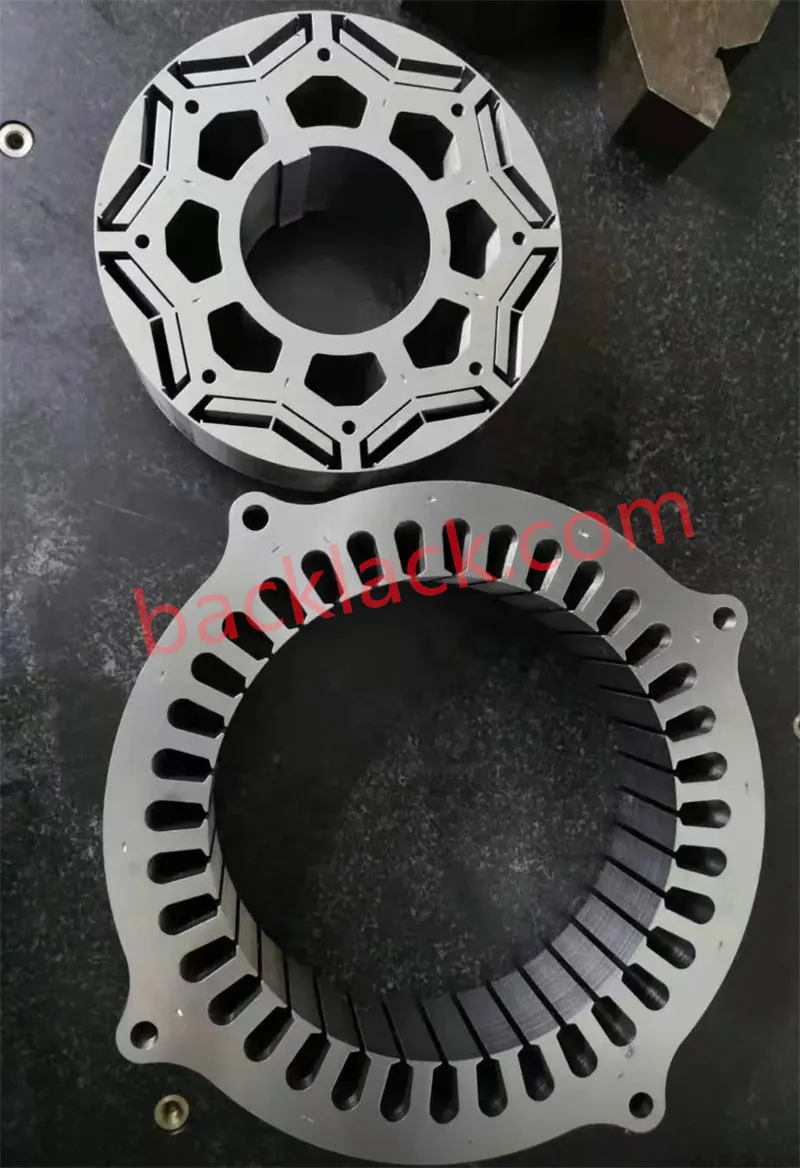
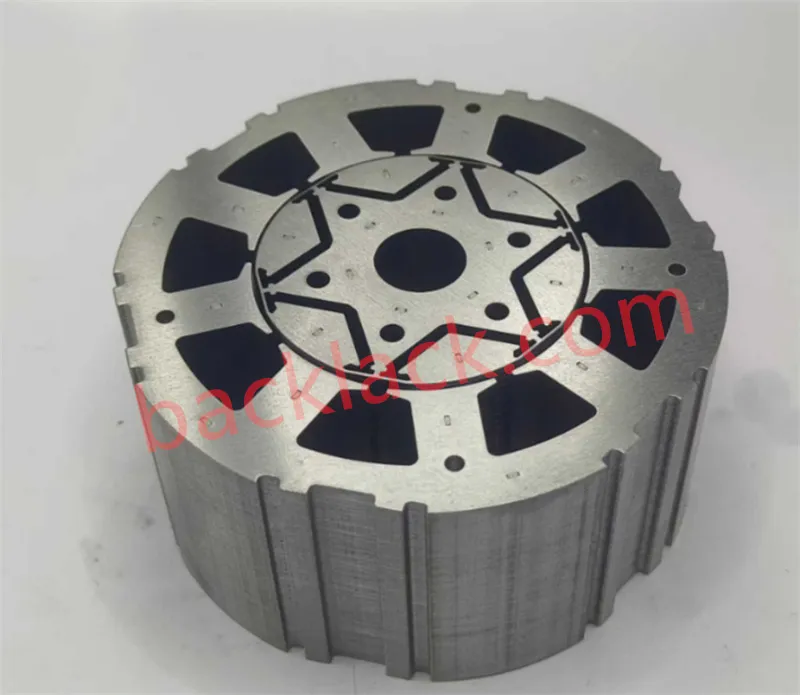
010Mm Backlack Technology Eliminates Eddy Current Loss Electric Motor
Rivet Free In Mold Bonding Stator Core High Torque Density Motor Design
Stress Free Backlack Lamination Magnetic Permeability Engineering Guide
Backlack Vs Welding Vs Riveting In Mold Bonding Precision Stator
Micron Level Coating Uniformity Backlack Prevents Interlaminar Shorts
Zero Overflow Curing Self Bonding Motor Lamination High Slot Fill Factor
Shear Strength 12Mpa thermal Limits High Performance Backlack Stator
Backlack Self Bonding Lamination Reduces Acoustic Noise Nvh Resonance
Custom 010Mm Backlack Stator Core Humanoid Robot Joint Actuator
Optimizing Kt Torque Constant Frameless Servo Motor Backlack Lamination
Ultra Low Iron Loss Motor Core Dexterous Hand Coreless Actuator
Humanoid Robot Actuator 010Mm Ultra Thin Silicon Steel Rivet Free Stator
Minimizing Cogging Torque Frameless Torque Motor In Mold Bonding Core
Zero Stress Backlack Lamination Micro Stepping Medical Robotics
Custom Soft Magnetic Alloy Stator High Torque Planetary Joint Actuator
010Mm 020Mm Silicon Steel Stator Core Evtol Propulsion Motor
High Frequency Low Loss Backlack Stator Lightweight Drone Motor
Maximizing Power To Weight Ratio Evtol Electric Motor Backlack Core
Thermal Management Core Loss Reduction High Rpm Aerospace Motor
Shock Resistant Backlack Stator Lamination High Dynamic Reversal
010Mm Vs 020Mm Silicon Steel Processing High Rpm Stator Selection
Burr Free Precision Stamping 0005Mm Ultra Thin Electrical Steel
Precision Wire Edm Vs Progressive Die Stamping 010Mm Motor Core
High Stacking Factor 98 Percent Electromagnetic thermal Efficiency
High Frequency Iron Loss Reduction Pwm Variable Frequency Inverter
Accelerating Motor Npi Existing Stamping Die Library Reduces Lead Time
5 7 Day Rapid Prototyping Backlack Stator Samples Existing Tooling
Lowering Npi Cost Existing Die Library Frameless Servo Motor Prototype
Wire Edm Prototype To High Volume Stamping Custom Motor Core Scaling
Dfm and Tooling Evaluation Guide Custom 010Mm Backlack Motor Core

1. Three Major Bottlenecks of Traditional Lamination Methods

In ultra-high-speed BLDC motors, humanoid robot joint actuators, and eVTOL propulsion units, traditional mechanical interlocking (cleating), side-welding, or bolting methods introduce distinct operational drawbacks:

  • Increased Eddy Current Loss (Pfe): Stamping interlocks puncture the surface insulation of electrical steel, creating localized short circuits that dramatically elevate iron losses at high frequencies.
  • Residual Mechanical Stress: Interlocking deformation and welding heat introduce severe stress fields into the silicon steel, reducing magnetic permeability and raising coercivity.
  • NVH & Structural Imperfections: Micro-gaps between mechanically locked laminations vibrate under high rotational speeds, generating audible noise and failing strict stiffness and miniaturization requirements.

2. Technical Comparison: Backlack vs. Traditional Methods

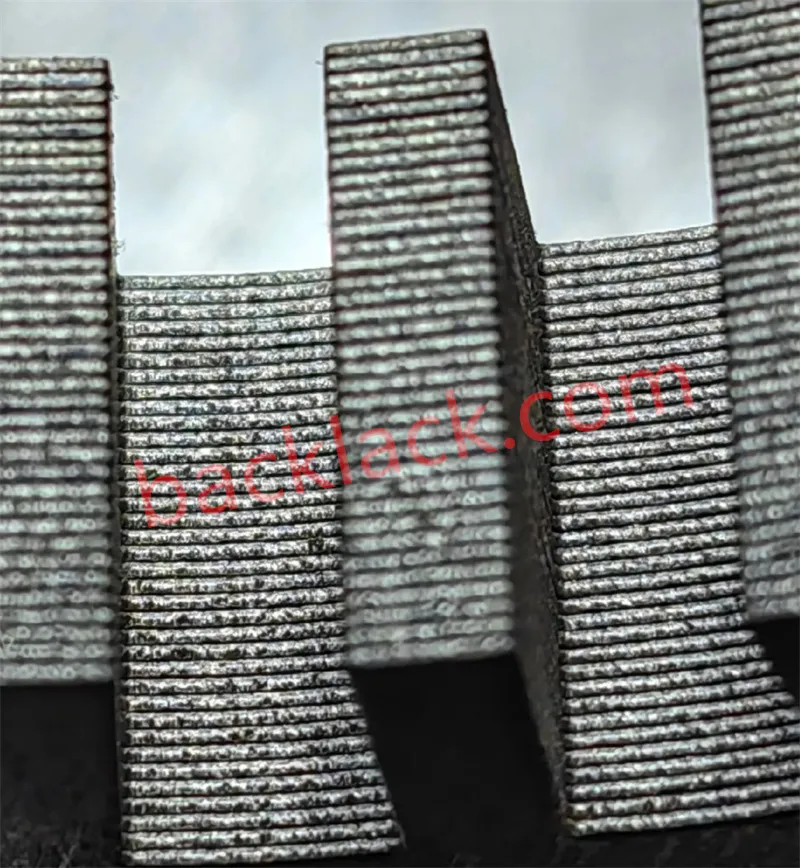
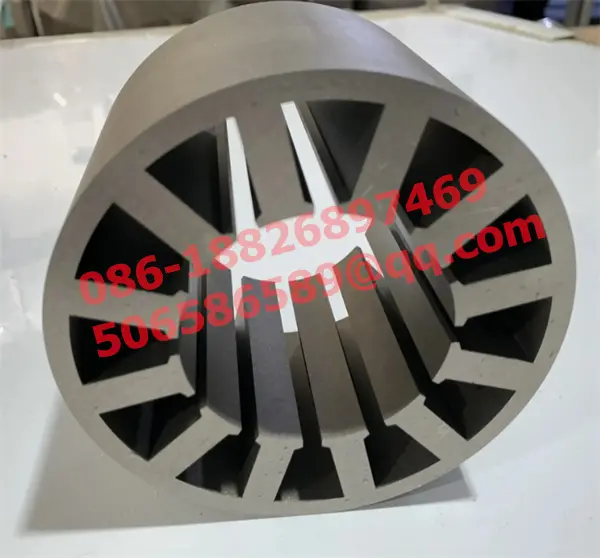
Self-bonding technology uses electrical steel pre-coated with a thermoplastic or thermosetting adhesive layer. After precision stamping, the stack is cured under controlled heat and pressure to achieve molecular-level adhesion across every lamination.

Evaluation Metric Traditional Interlocking / Welding Self-Bonding (Backlack) Cores Engineering Benefit
Joining Method Localized rivets / side weld seams Full-surface interlaminar bonding Eliminates short circuits & minimizes core loss
Stress State High mechanical / thermal stress 100% Stress-Free Fully preserves raw magnetic permeability
Interlaminar Insulation Pierced at interlocking points Continuous 100% insulation Drastically reduces high-frequency eddy currents
NVH Performance Prone to micro-vibrations & resonance Solid block structure; suppresses vibration Whisper-quiet operation & high rigidity
Slot Fill & Heat Dissipation Interlocks consume internal space No interlocks; maximum slot utilization Increases slot fill factor & evens heat dissipation
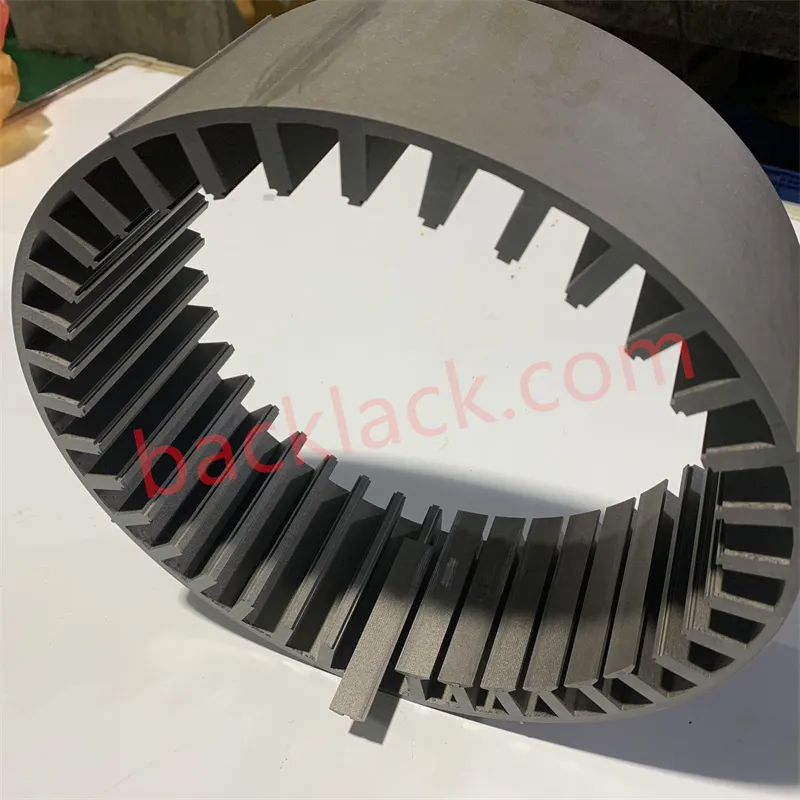
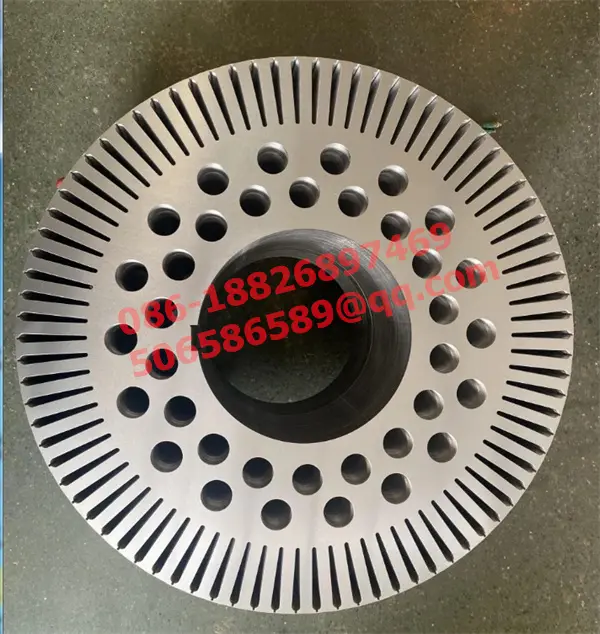
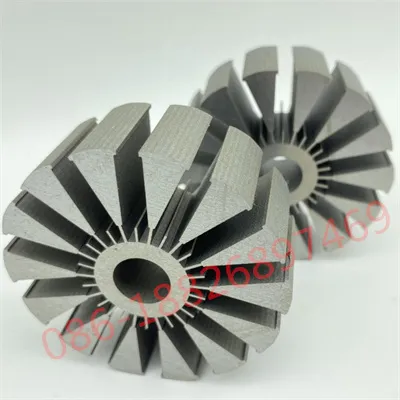
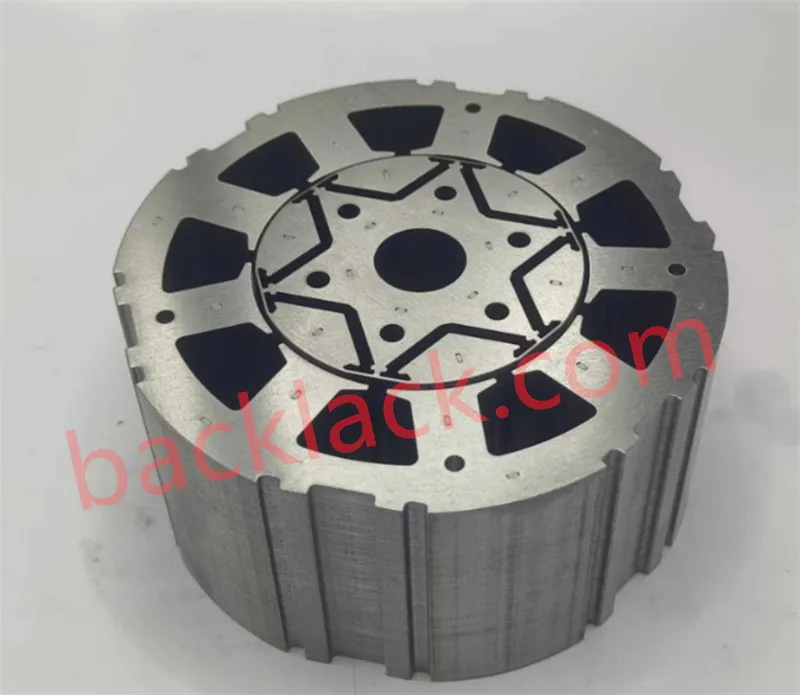
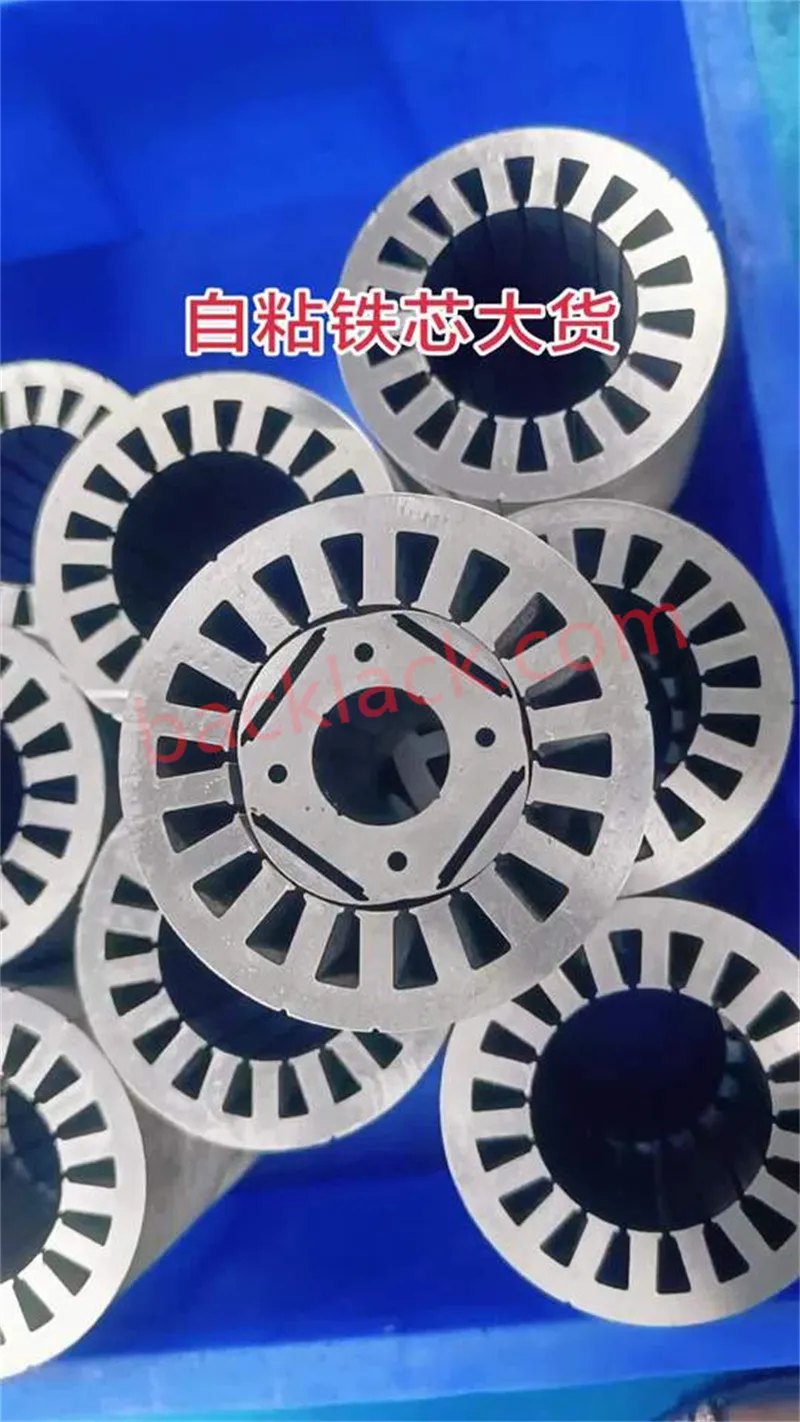
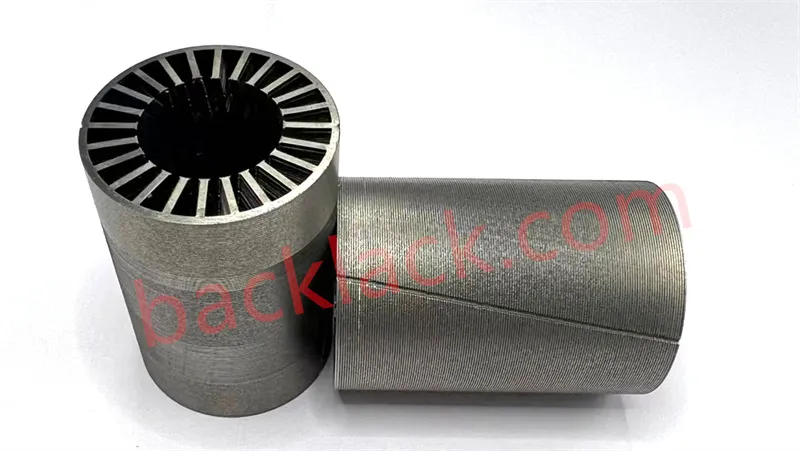
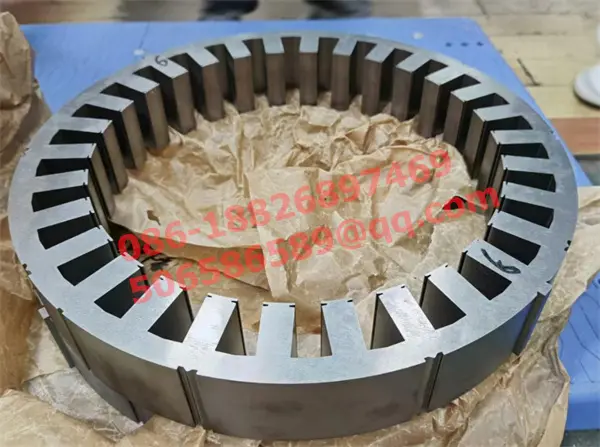
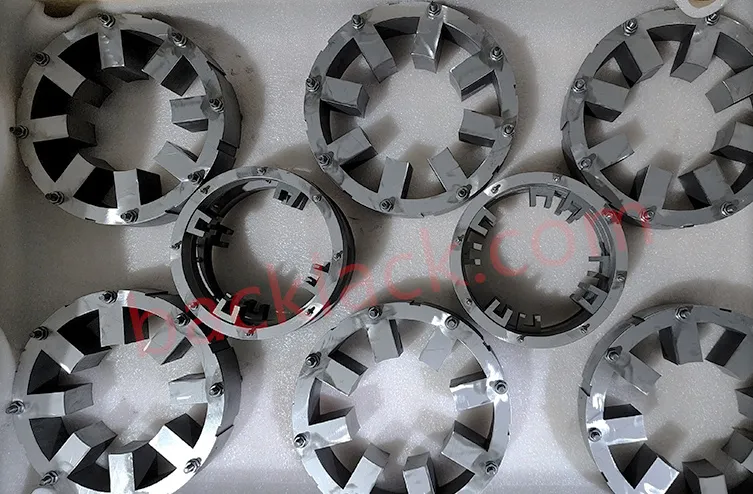
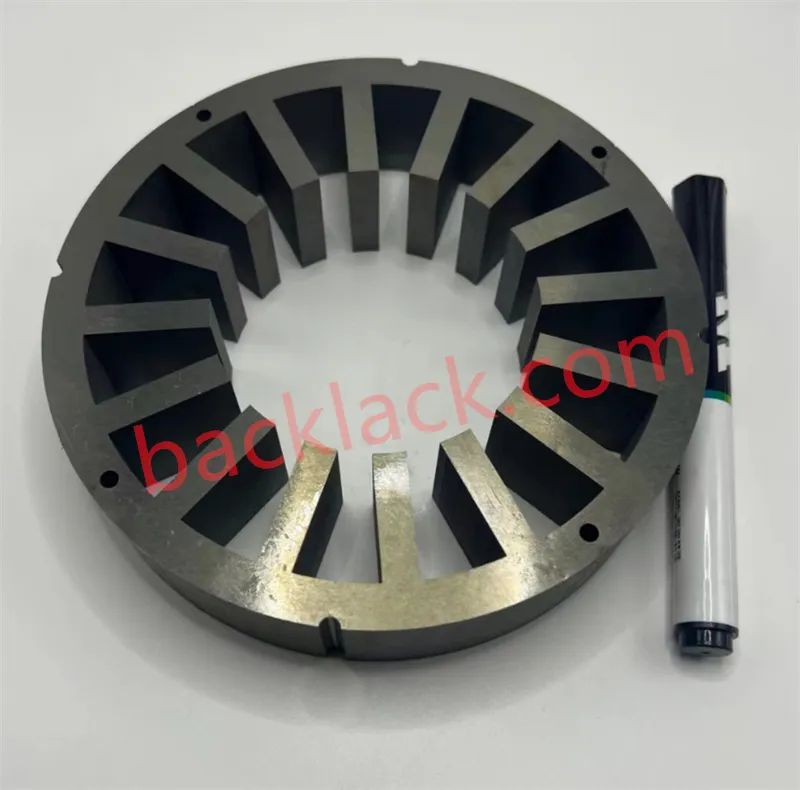
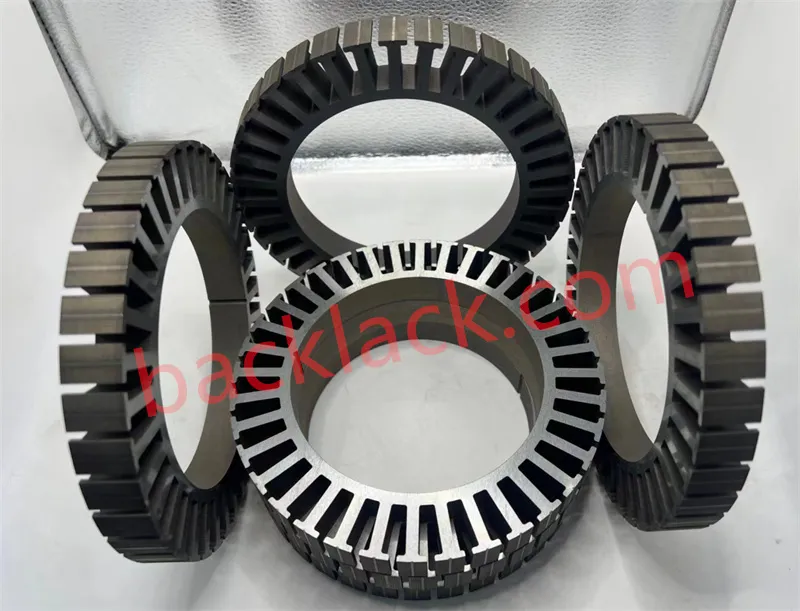
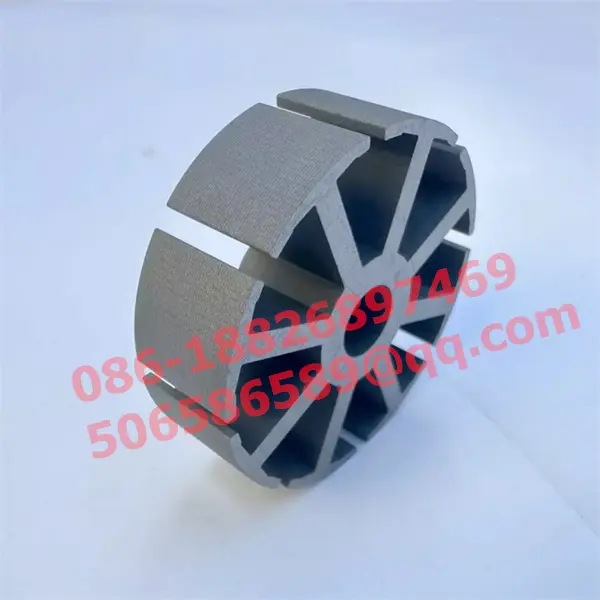
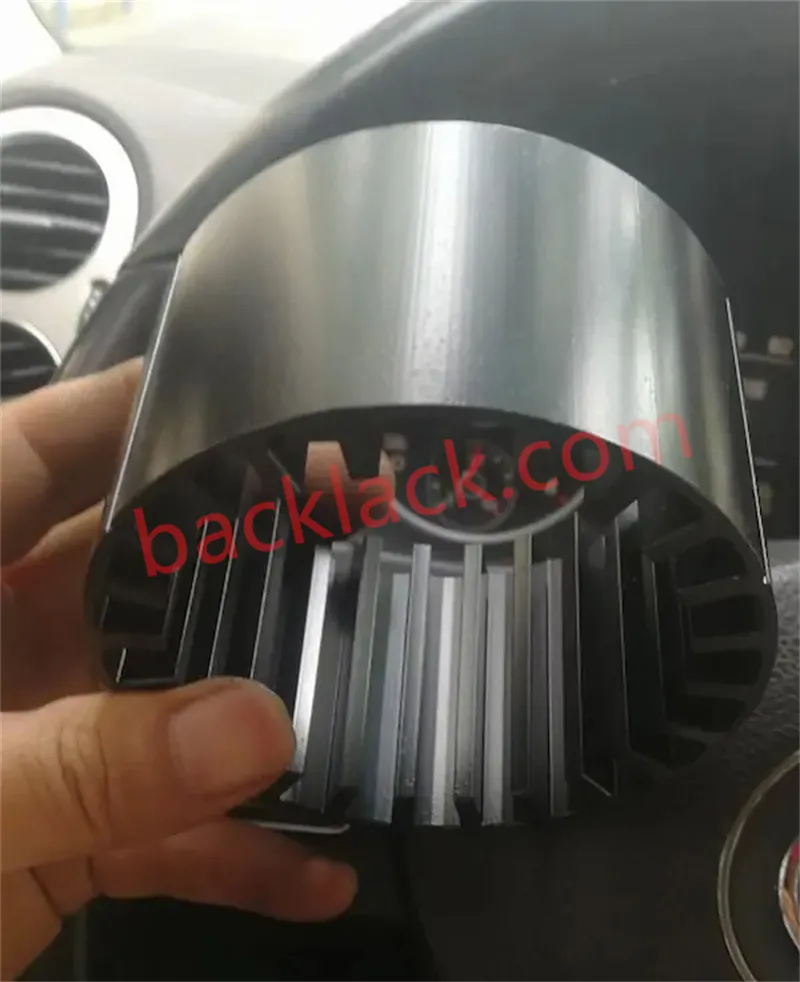
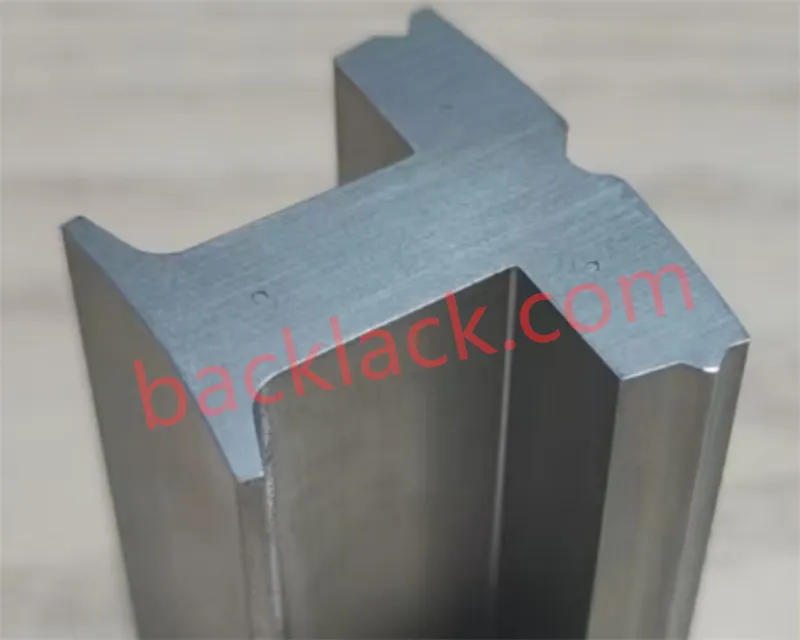
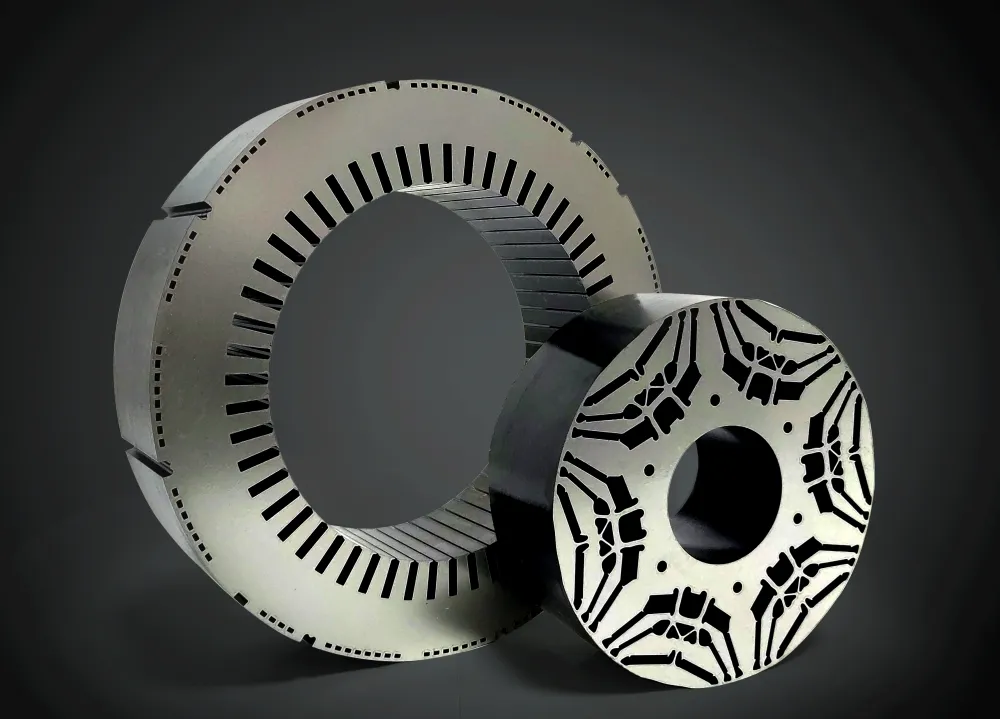
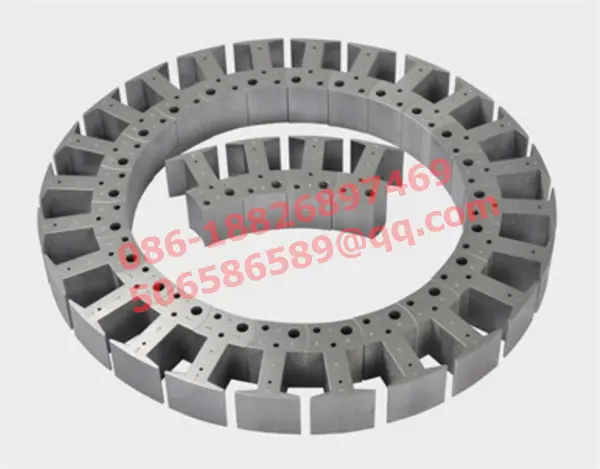
Mass Produced Self Bonding Stator and Rotor Cores

3. Engineering Implementation: From R&D to Mass Production

Custom lamination is more than executing a CAD drawing; it requires deep tooling strategies, material expertise, and cost optimization.

1
Minimize upfront R&D & tooling costs

Existing Stamping Die Library

We maintain an extensive in-house library of standard stamping dies covering various outer diameters, slot counts, and shaft configurations. During early-stage R&D, clients can leverage existing dies to produce prototype samples without paying upfront tooling fees, significantly shortening time-to-market.

2
Optimize material utilization & throughput

Progressive Tandem Dies & In-Die Bonding

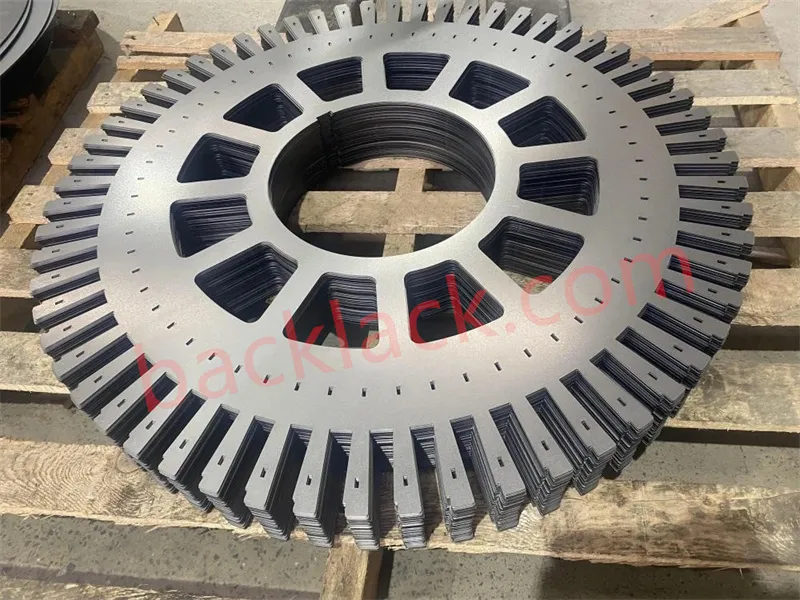
For high-volume production, single- or double-row progressive tandem dies punch stators and rotors from the same strip, increasing raw material utilization by over 15%. Integrated precision thermal controls enable high-speed stamping at 200+ SPM with shear bond strength exceeding 100N.

3
Master high-frequency precision limits

Ultra-Thin Gauge Processing (0.1mm - 0.2mm)

As lamination thickness decreases from 0.35mm down to 0.2mm, 0.15mm, and 0.1mm, stamping difficulty escalates exponentially. Our micron-level clearance control ensures burr-free, high-precision laminations across ultra-thin alloys.

4. Core Applications Driving Backlack Adoption

  • Humanoid Robotics: Dexterous hands and compact joint actuators demand high torque density, low heat generation, and minimal noise in ultra-compact footprints.
  • eVTOL & Aerospace Propulsion: Weight reduction and low iron loss directly dictate hover time and flight range under continuous high-load operations.
  • High-Performance Automotive & Servo Motors: To meet demanding high-speed stress requirements and strict NVH standards, market leaders are rapidly transitioning to Backlack lamination designs.

About Youyou Company

As a premier custom motor lamination manufacturer, Youyou Company specializes in solving core loss, NVH, and heat dissipation bottlenecks in next-generation electric motors. By combining ultra-thin 0.10mm–0.20mm silicon steel processing with rivet-free In-Mold Bonding (Backlack Technology), we engineer high-efficiency, stress-free stator and rotor cores. Leveraging our extensive in-house stamping die library, we help motor developers transition seamlessly from rapid prototyping to automated high-volume production for humanoid robot joint actuators, eVTOL propulsion motors, and frameless servo systems.

Ready to eliminate eddy current loss and accelerate your motor development?

Contact our engineering team to request Backlack stator samples using our existing die library or get a free In-Mold Bonding DFM & Tooling evaluation today!
REQUEST TECHNICAL CONSULTATION

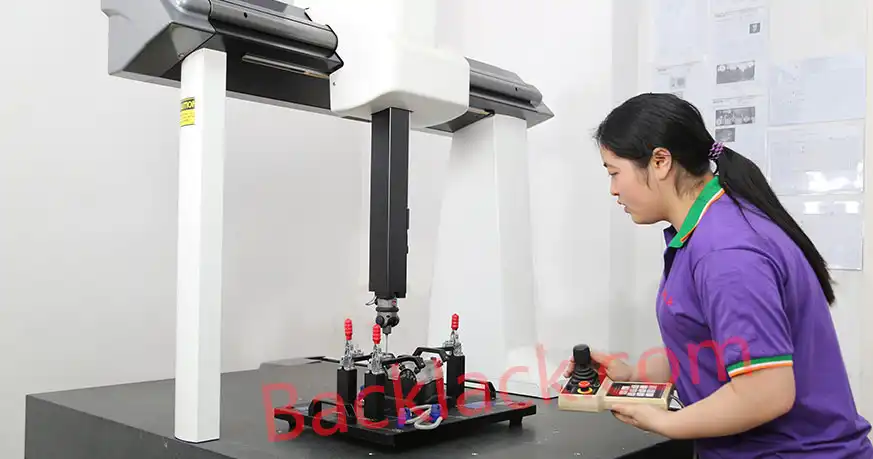
Quality Control for Custom Backlack Stator & Rotor Cores

As a specialized custom motor lamination factory, Youyou Company enforces strict, full-process quality control for In-Mold Bonding (Backlack) stator and rotor cores. Leveraging ultra-thin 0.10mm–0.20mm silicon steel processing and an extensive in-house stamping die library, we deliver zero-defect, ultra-low iron loss, and whisper-smooth precision components engineered for humanoid robot joints, eVTOL propulsion motors, and high-frequency BLDC drives.

0.10mm–0.20mm Coating Uniformity & Foil Inspection: 100% incoming inspection on ultra-thin electrical steel and Backlack varnish coatings. Micron-level coating uniformity prevents interlaminar short circuits, drastically suppressing high-frequency eddy current losses under high-RPM PWM inverter drives.

Stress-Free Bonding & Peak Permeability Preservation: Precision temperature and pressure curing profiles eliminate mechanical rivet distortion and welding stresses. This stress-free bonding fully preserves native magnetic permeability, maximizing torque constant (Kt) for robotic joints and eVTOL drives.

High Shear Strength (>100N / ≥12MPa) & NVH Optimization: Fully cross-linked resin bonding creates a monolithic, solid-block structure. Eliminating inter-sheet micro-vibrations suppresses magnetostriction noise, delivering superior NVH performance and shock resistance under frequent reversals.

Burr-Free Stamping & Zero-Overflow Curing: Precision progressive stamping and wire-EDM ensure lamination burrs ≤0.005mm. Strict thermal control prevents resin overflow into stator slots, guaranteeing high slot fill factors and seamless automatic winding.

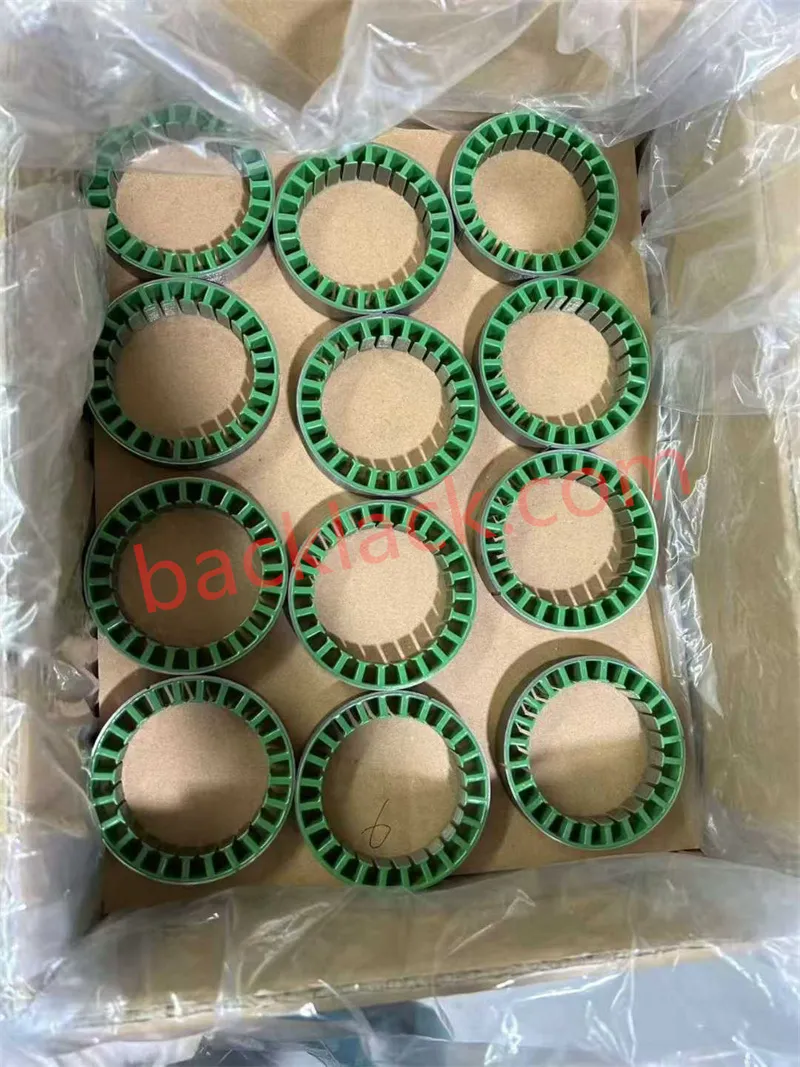
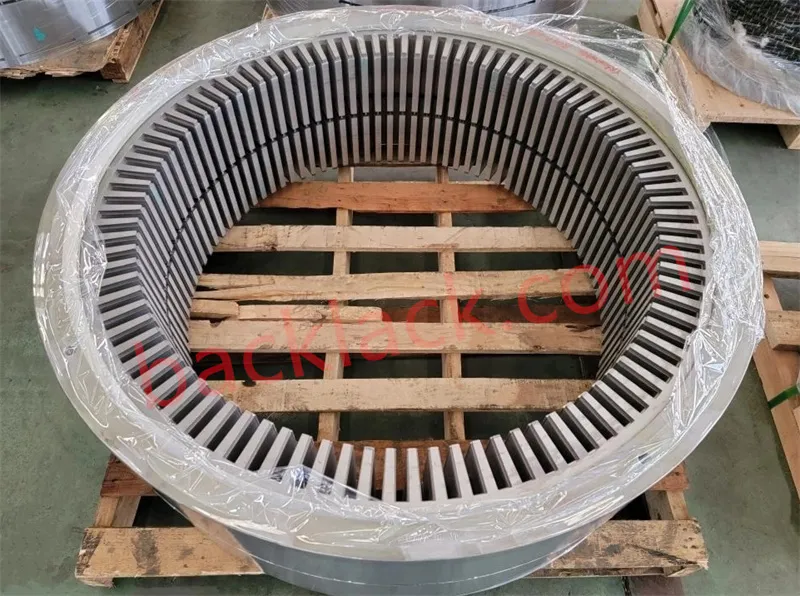
Quality Control For Custom Backlack Stator and Rotor Core

FAQS

Technical insights on 0.10mm–0.20mm Backlack lamination processing, existing die prototype acceleration, and custom stator/rotor core manufacturing for eVTOL and robotic joint actuators.

Traditional riveting or welding disrupts the insulation coating between laminations, creating localized eddy current loops. By using 0.10mm ultra-thin silicon steel with In-Mold Bonding (Backlack), Youyou Company eliminates inter-sheet mechanical deformation. Combined with burr control ≤ 0.005mm, this complete interlaminar insulation reduces high-frequency iron loss by up to 50% under rapid PWM frequency switching.

To reduce NPI (New Product Introduction) cycles and tooling costs, we maintain an extensive in-house stamping die library covering common frameless and servo motor dimensions. By leveraging existing die sets combined with rapid precision wire-EDM or laser cutting, motor designers can acquire fully bonded, high-precision Backlack samples within 7 to 10 days without paying expensive initial tooling charges.

Our fully cross-linked resin bonding process converts the lamination stack into a solid, monolithic block. It delivers exceptional shear strength ≥ 12 MPa (lamination-to-lamination pull strength > 100N), resisting severe shock, mechanical resonance, and rapid dynamic reversals in humanoid robot joints across operating temperatures from -40°C to +180°C.

Rivets and welds induce internal stress concentrations that degrade native magnetic permeability ($μ$). Backlack bonding achieves 100% stress-free lamination, maximizing the motor's torque constant ($K_t$). Furthermore, the continuous polymer layer between sheets dampens magnetostriction-induced micro-vibrations, significantly lowering acoustic noise and structural resonance for whisper-quiet operation.

Excessive resin squeeze-out reduces slot fill factor and damages copper wire insulation during automatic winding. Youyou Company utilizes closed-loop automated thermal curing profiles with multi-stage dynamic pressure control. By precisely matching resin viscosity transition phases, we guarantee optimum cross-linking density while achieving zero slot overflow for seamless downstream winding.

Ready to Eliminate High-Frequency Eddy Current Loss & Accelerate Motor Development?

Start Your Custom Backlack Stator & Rotor Core Project Today

Seeking a premier motor lamination manufacturing partner in China specializing in 0.10mm–0.20mm ultra-thin silicon steel processing and In-Mold Bonding (Backlack Technology)? Look no further! From high-torque humanoid robot joint actuators and dexterous hand coreless motors to high-RPM eVTOL propulsion drives, Youyou Company provides precision, stress-free soft magnetic core solutions. Leveraging our extensive in-house stamping die library, we help you bridge the gap seamlessly from rapid prototyping to high-volume automated production.

Contact our engineering team today to request Backlack samples using our existing die library, get 5–7 day rapid prototyping quotes, or receive a free In-Mold Bonding DFM & Tooling evaluation for your next-generation motor project!

Get Your Custom Quote Now