Eliminating Interlocking and Welding: How In-Mold Curing Self-Bonding Technology Unlocks Next-Gen Motor Core Performance

How Replacing Mechanical Joinery with Precision In-Mold Backlack Unlocks the Full Potential of 0.1mm–0.2mm Motor Laminations

In the relentless pursuit of higher power density, extreme RPMs, and superior NVH (Noise, Vibration, and Harshness) performance for next-generation electric motors, lamination stack manufacturing is undergoing a profound paradigm shift.

For decades, mechanical interlocking, laser welding, and riveting served as the primary methods for securing stator and rotor laminations. However, as electrical steel ultra-thinning trends push thicknesses down to micro-levels (0.1mm to 0.2mm), traditional joinery methods have hit a severe technological bottleneck—introducing edge stress losses, inter-lamination short circuits, and structural distortion.

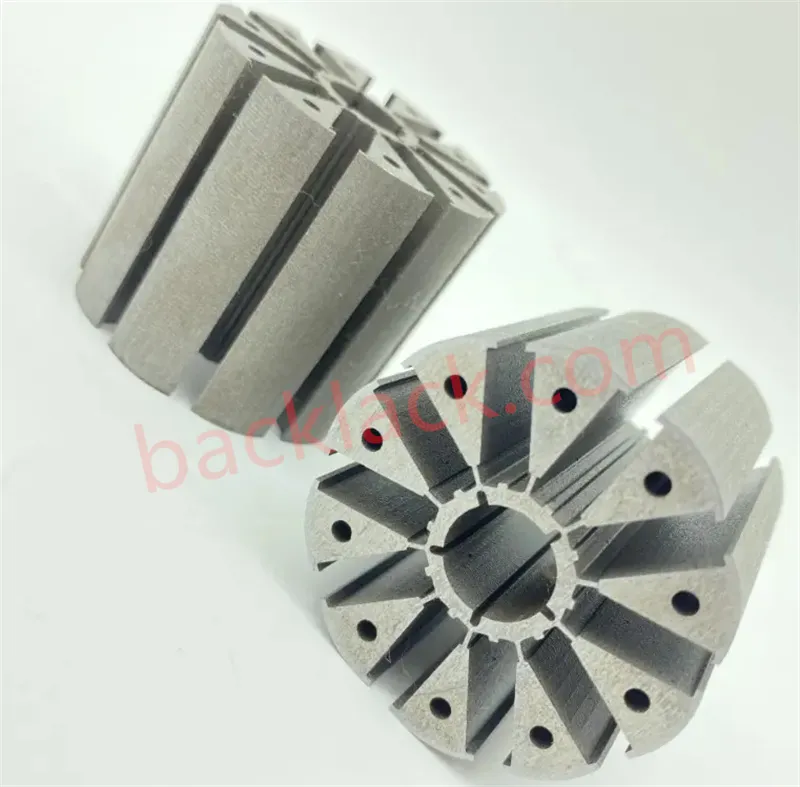
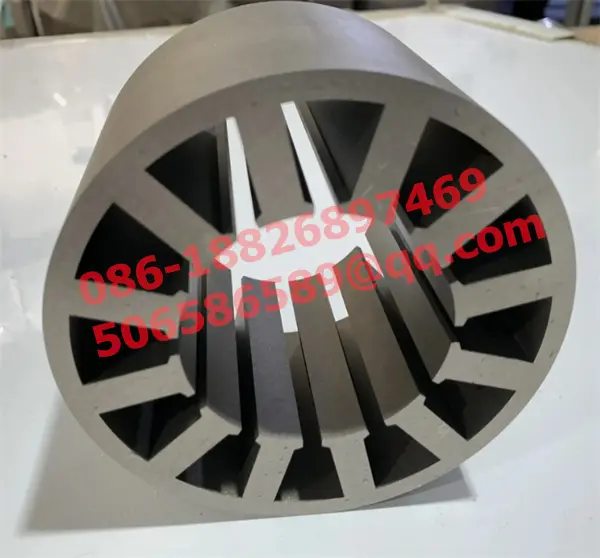
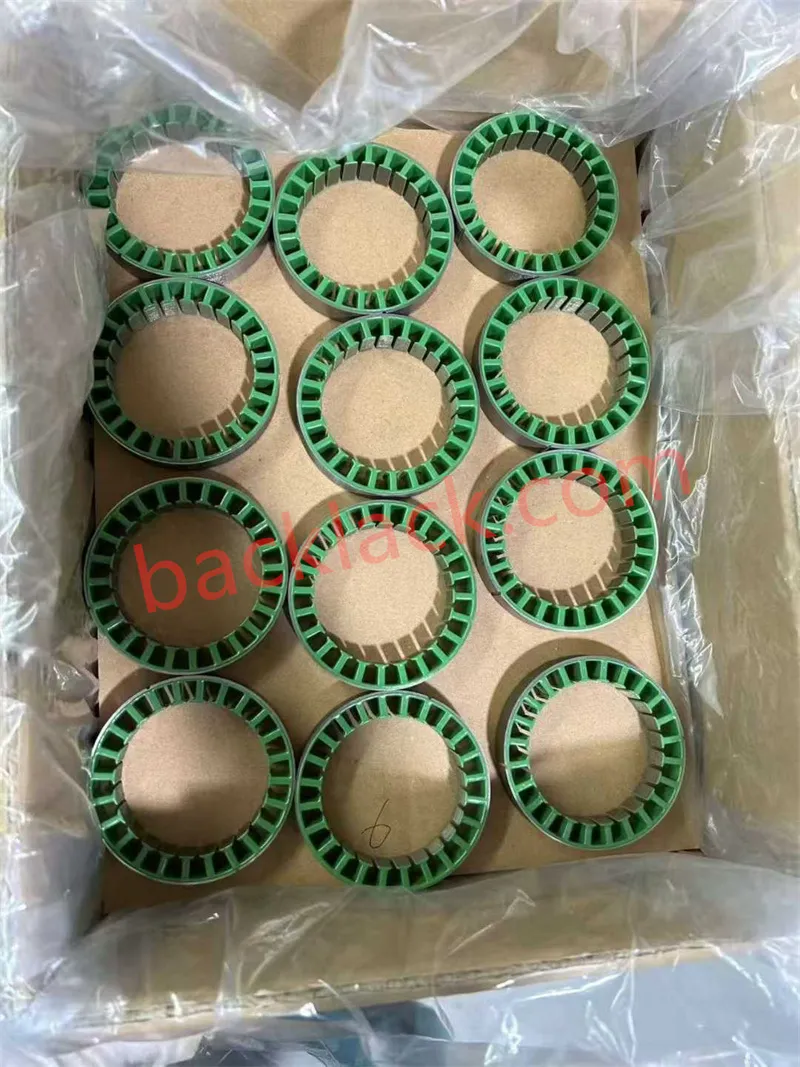
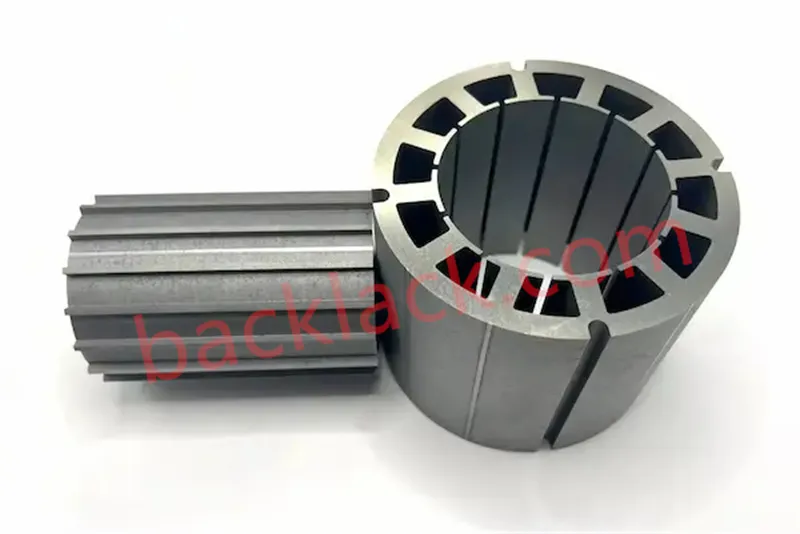
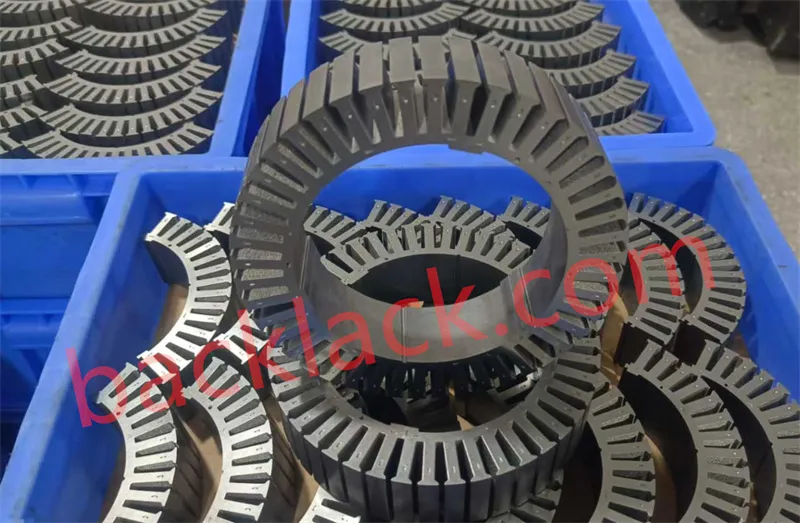
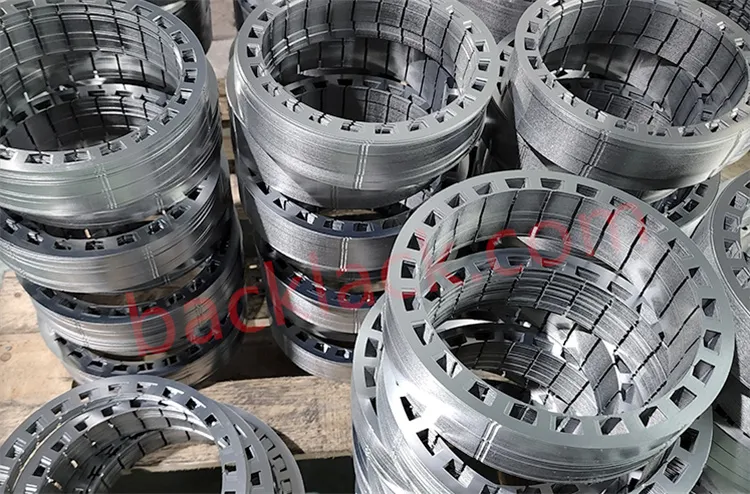
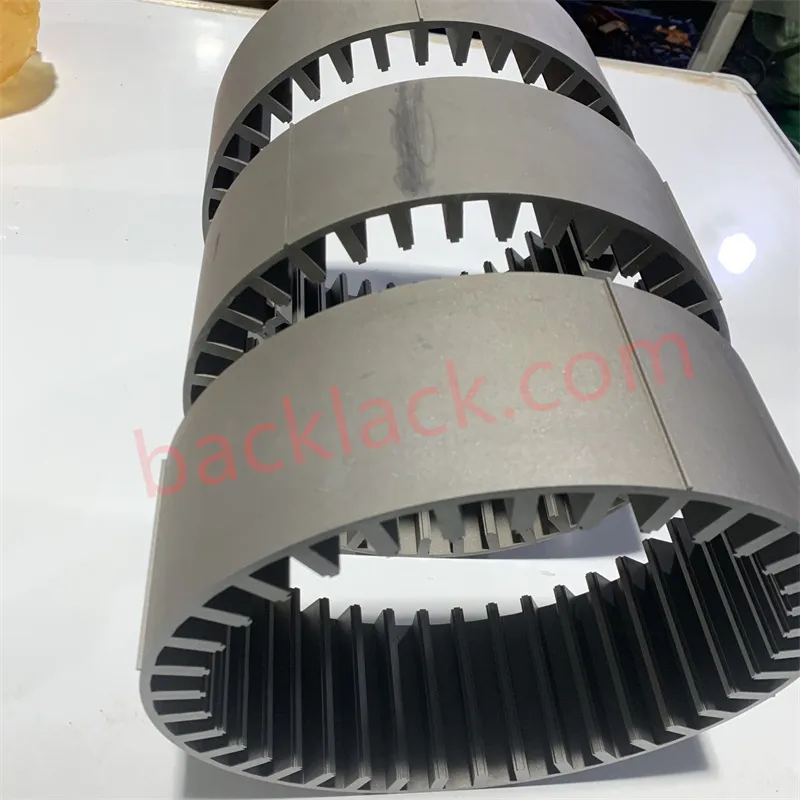
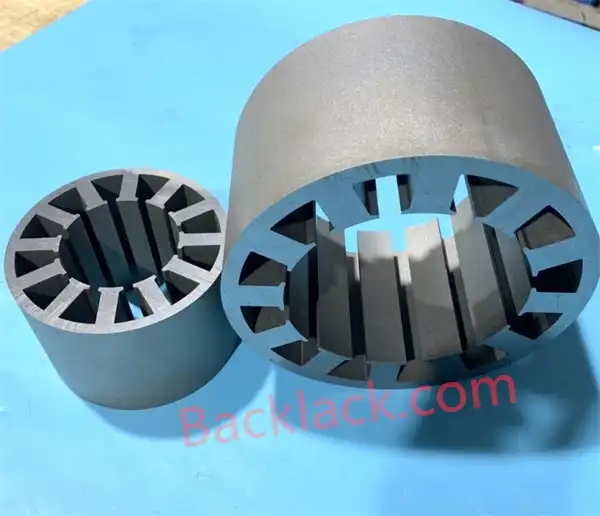
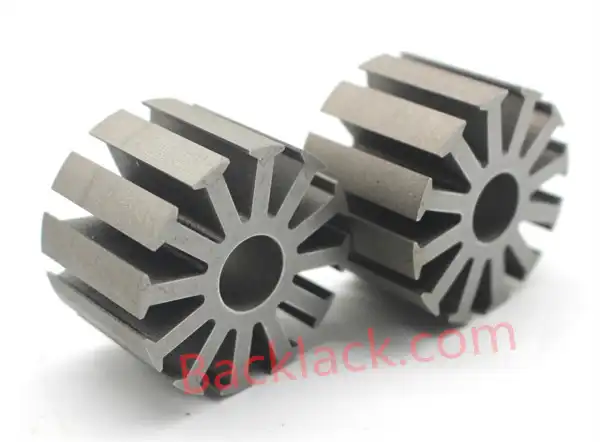
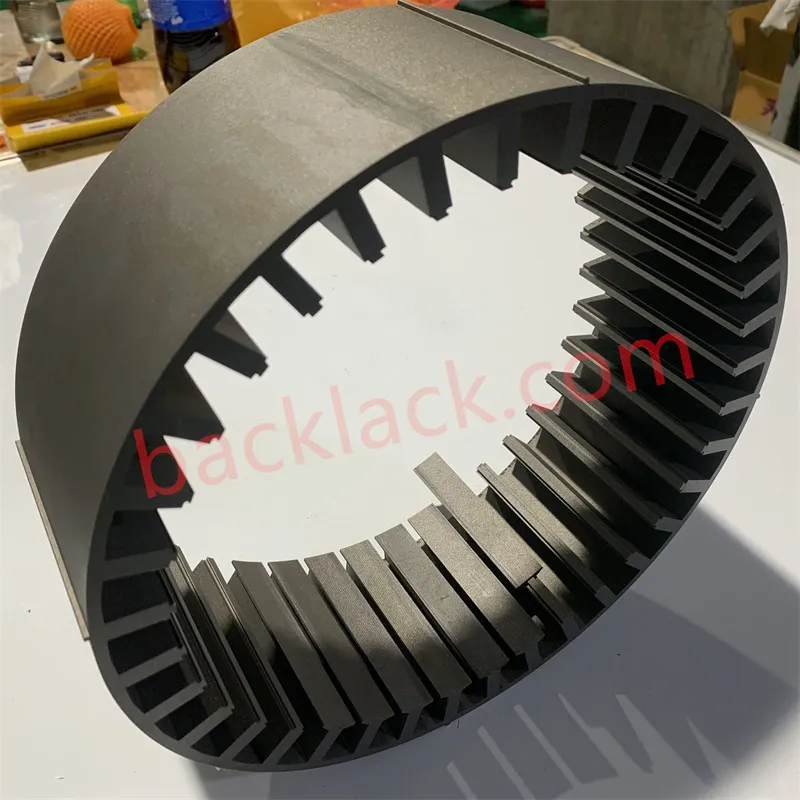
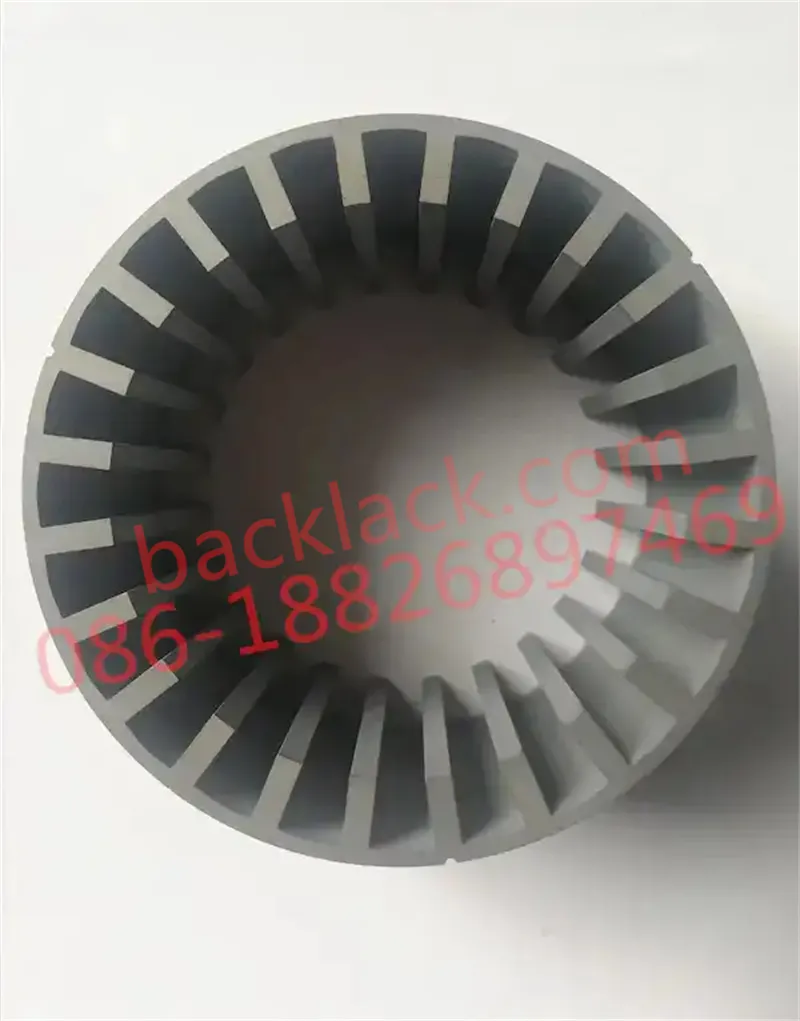
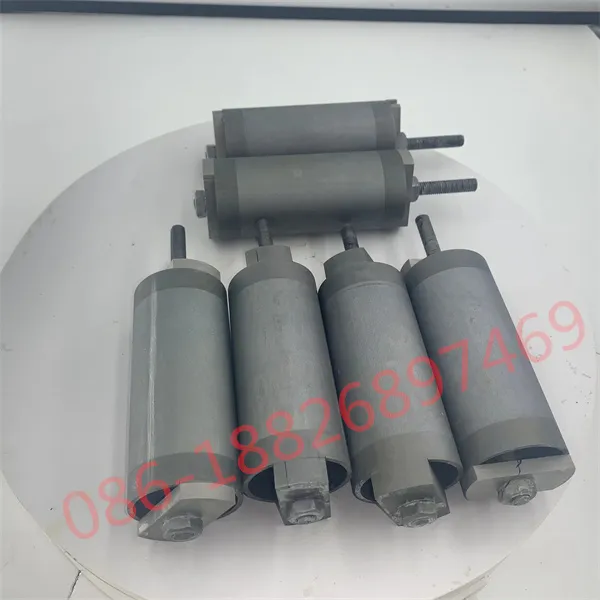
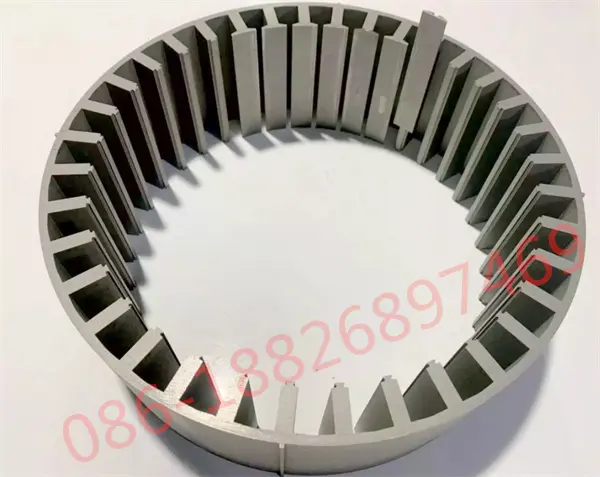
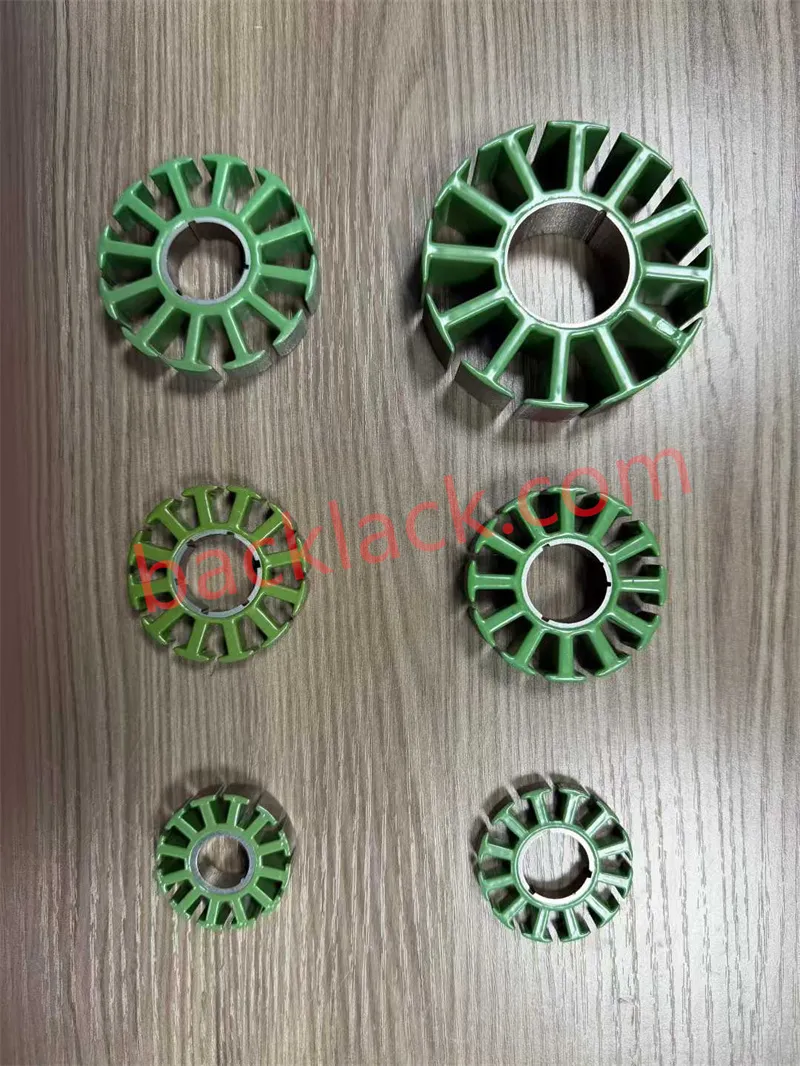
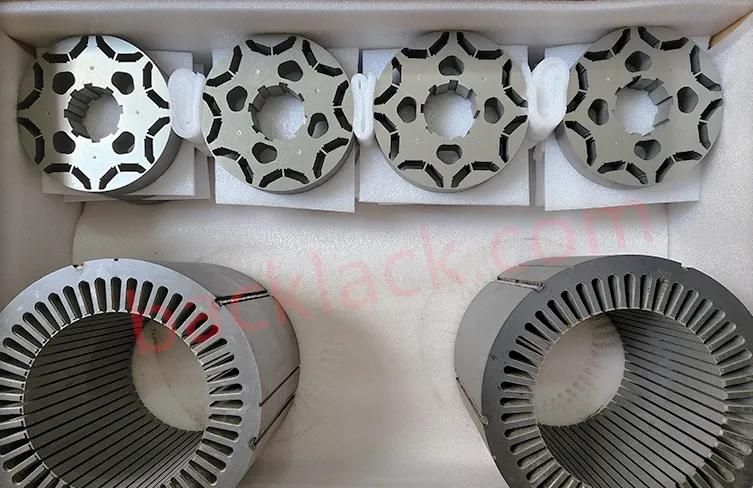
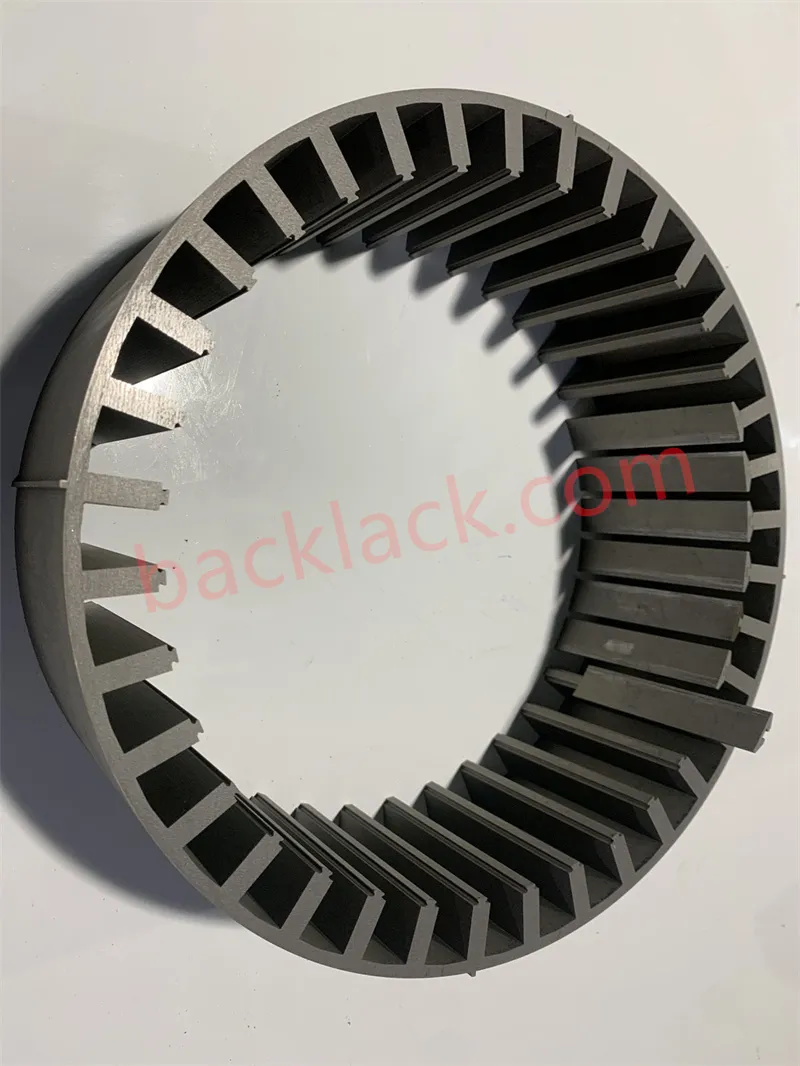
In-Mold Curing Self-Bonding Technology (Backlack) integrates chemical cross-linking directly within the precision stamping process. By completely replacing physical joinery, it opens an entirely new engineering pathway for high-efficiency motor manufacturing.

I. The Structural Limitations of Conventional Stacking Methods

Under high-frequency motor operation, even microscopic physical damage or stress concentration translates directly into magnetic loss and acoustic noise:

  • Interlocking / Riveting: Localized mechanical deformation breaks the organic insulation layer on the steel surface, creating short-circuit loops that dramatically increase Eddy Current Losses. On ultra-thin laminations, it also frequently induces edge burrs and warping.
  • Laser Welding: The Heat-Affected Zone (HAZ) along the weld line releases residual thermal stress, causing local magnetic permeability deterioration and stray flux leakage.
  • Conventional Oven Curing (Off-line Backlack): While it avoids physical damage, off-line oven baking requires long cycle times (tens of minutes to hours) and often suffers from planar distortion caused by uneven thermal stress relief during cooling.
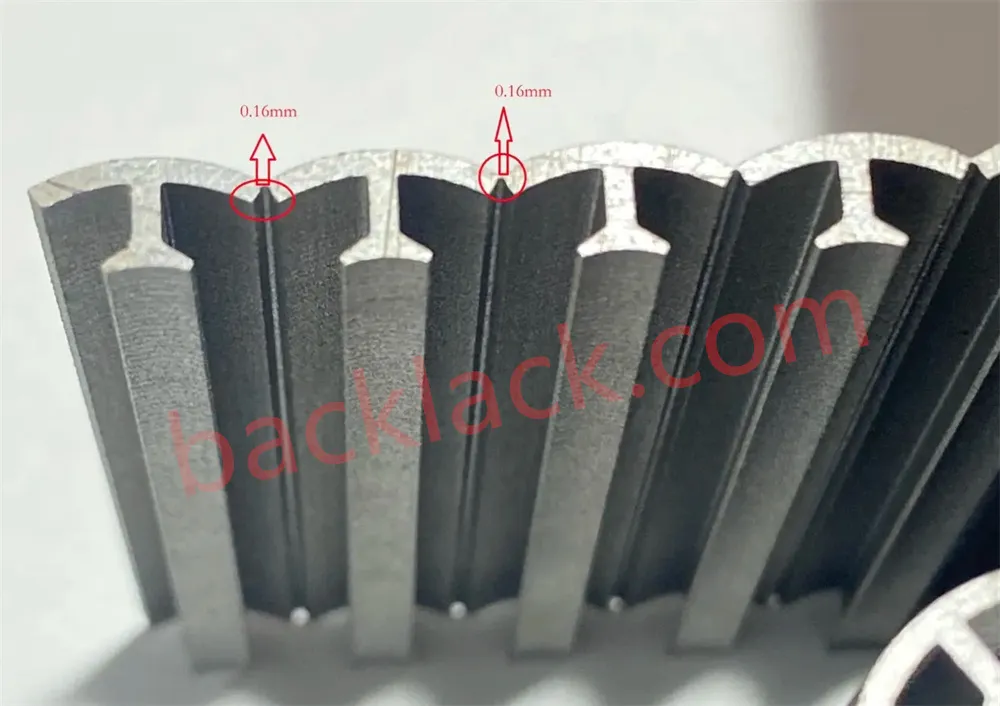
Eliminating Interlocking Welding Losses In Mold Curing Self Bonding Motor Cores Guide To In Mold Curing Self Bonding Cores For High Speed Motors In Mold Curing Vs Traditional Interlocking Self Bonding Technology 0.1Mm Ultra Thin Electrical Steel In Mold Self Bonding Reduces Eddy Current Losses In Mold Cured Self Bonding Motor Cores Overcoming thermal Stress and Shorts N Mold Curing Mechanics Seconds Level Polymerization 98 Stacking Factor Liminating Localized Magnetic Saturation Welding Free Self Bonding Stacks Ngineering High Rpm Traction Motors Full Surface Chemical Bonding Aximizing Slot Fill Factor thermal Dissipation In Stator Cores Backlack Anufacturing Dynamics In Mold Cured Ultra Thin 0.1Mm Silicon Steel Ext Gen 800V Ev Traction Motors In Mold Cured Self Bonding Cores Esigning Quiet Drone Motors In Mold Self Bonding Stators Suppress Nvh Igh Precision Servo Motors Sub Micron Concentricity Stator Cores Vtol Aviation Electric Propulsion Ultra Thin Self Bonding Stacks Overcoming Heat Dissipation Bottlenecks Zero Air Gap Self Bonding Stators Custom In Mold Curing Self Bonding Motor Core Manufacturing Youyou Company Precision Motor Lamination Wire Edm Prototyping In Mold Curing Stamping Global Oem Partner Youyou Company 0.1Mm Self Bonding Stator Cores Accelerating Time To Market Wire Edm Prototyping For In Mold Curing Zero Defect Lamination Manufacturing Quality Control In Mold Cured Cores In Mold Curing Vs off Line Oven Baking Backlack Cores Lead Times Replacing Mechanical Riveting With In Mold Self Bonding High Efficiency Hidden Costs of Weld Seams Self Bonding Stators Superior Efficiency Reducing Scrap Rates In High Speed Motor Lamination Production Chemical Bonding Vs Physical Joinery Structural Analysis Self Bonding Future of Electric Motor Core Stacking Ultra Thin Laminations In Mold Curing Beyond Interlocking Chemical Self Bonding Coatings Soft Magnetic Alloys High Frequency Power Conversion In Mold Self Bonding 005Mm To 02Mm Steels Bridging Design and Manufacturability High Speed Traction Motors Low Loss In Mold Cured Motor Cores Energy Efficiency In E Mobility

II. Process Dynamics of In-Mold Curing Self-Bonding

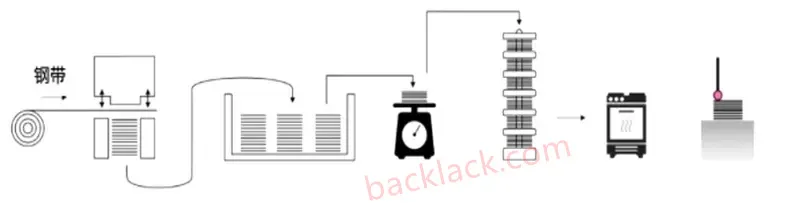
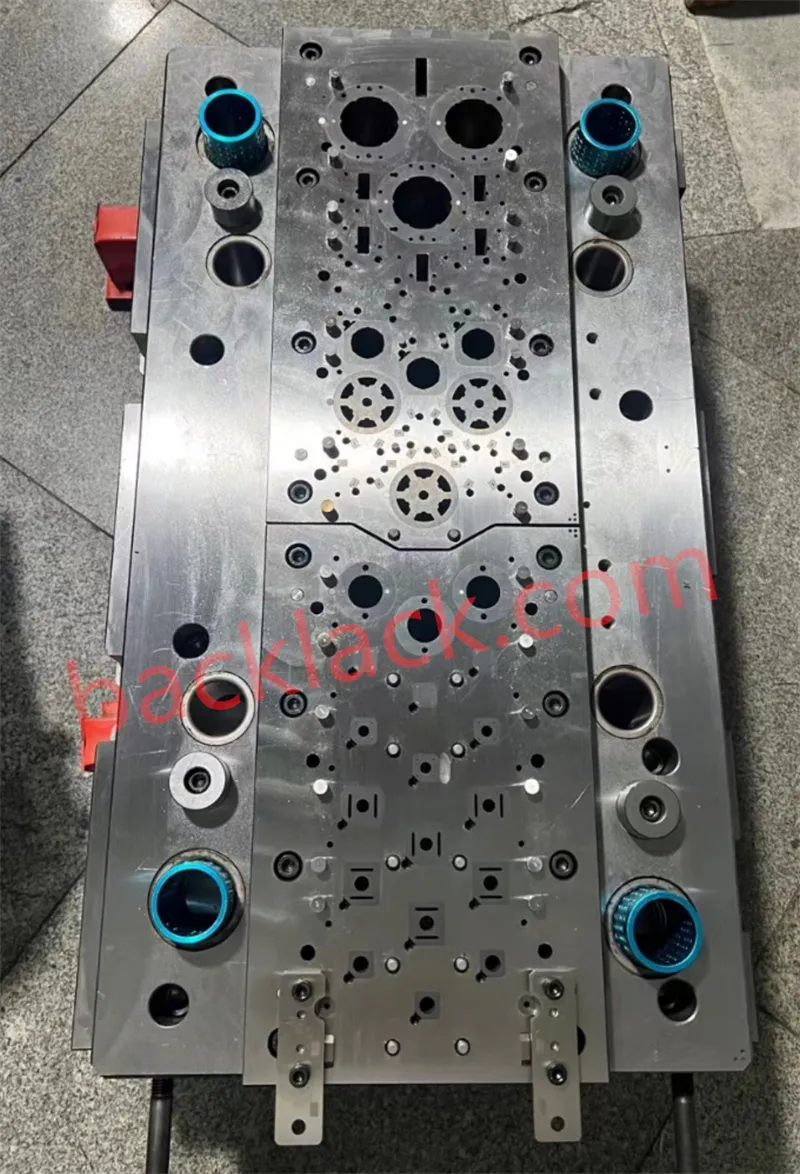
In-mold curing integrates the physical cross-linking process of self-bonding coatings directly inside high-precision, high-speed stamping dies.

[Pre-Coated Self-Bonding Electrical Steel Strip]
     │
     ▼
[High-Speed Stamping & In-Mold Precision Alignment]
     │
     ▼
[In-Mold Temperature & Pressure Control (Seconds-Level Curing)]
     │
     ▼
  [Finished Output (High-Precision, Zero-Stress Core)]
  • Pre-Coated Resin Layer: Electrical steel strips are uniformly pre-coated with a thin (2 ~ 3 μm) thermo-setting resin layer (B-Stage state).
  • In-Mold Thermal & Pressure Control: Micro-heating elements and pressure sensors are embedded within the die's stacking station, generating a highly uniform local thermal-mechanical field.
  • Rapid Polymerization: Utilizing specialized fast-curing coatings, full C-Stage resin cross-linking is achieved in seconds during the stamping cadence, achieving 100% full-surface molecular bonding.

III. Core Performance Advantages of In-Mold Cured Cores

Based on factory test data and magnetic circuit analysis, in-mold cured self-bonding delivers comprehensive performance upgrades:

  • Maximum Stacking Factor (≥ 98%): The ultra-thin, uniform bonding layer maximizes active magnetic iron volume within a given slot envelope.
  • Zero Inter-Lamination Short Circuits: Fully preserves 100% of the electrical steel’s original surface insulation resistance and magnetic permeability.
  • Optimized Heat Dissipation: The full-coverage bonding layer eliminates air micro-gaps, reducing thermal resistance and facilitating rapid heat transfer from the stator windings to the housing.
  • Full-Surface Bonding: Unlike point-or-line connections in welding or interlocking, 100% surface area bonding delivers exceptionally high shear and peel strength, easily withstanding centrifugal forces at 20,000+ RPM.
  • Suppression of Electromagnetic Whine: Eliminating inter-lamination clearance prevents high-frequency micro-vibrations induced by alternating magnetic fields, significantly lowering motor acoustic noise.

IV. Engineering Challenges & Factory-Level Solutions

Deploying in-mold curing self-bonding for mass production demands rigorous manufacturing control:

Engineering Challenge Factory-Level Solution
Rapid Seconds-Level Curing Developing in-mold thermal fluid simulation models paired with dynamic PID algorithms for millisecond-level thermal response.
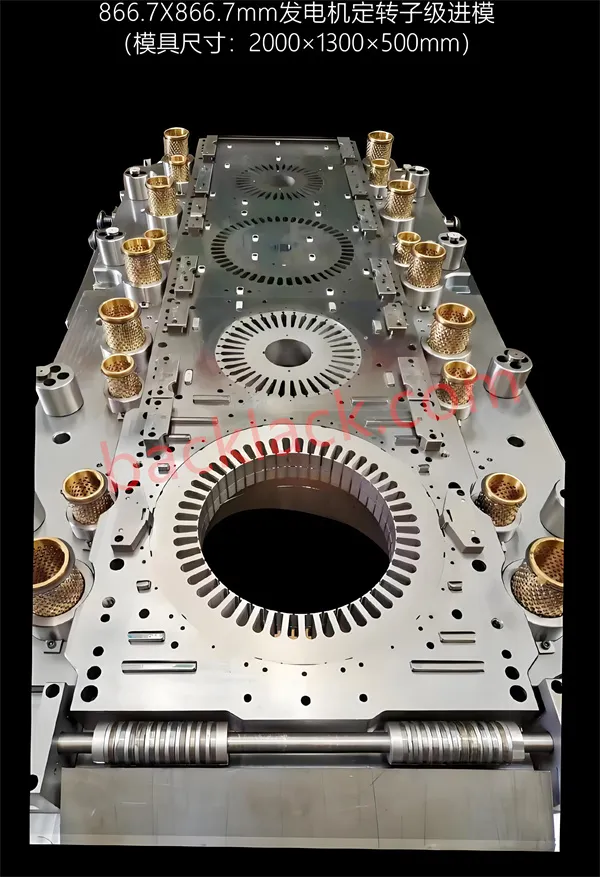
High-Precision Composite Dies Integrating thermal isolation barriers within the tooling to keep the punching zone at ambient temperature while maintaining precise high heat in the curing zone.
Ultra-Thin Strip Feeding Implementing high-precision servo feeding with tension-free control designed specifically for 0.1mm ~ 0.2mm ultra-thin self-bonding steel.

About YouYou Company

As a specialized manufacturer of high-precision motor stator and rotor cores, YouYou Company delivers state-of-the-art precision stamping, in-mold curing self-bonding (Backlack), and soft magnetic alloy processing services. We provide global OEMs and Tier-1 suppliers with end-to-end solutions, ranging from material selection and rapid prototyping (Wire-EDM / In-Mold Curing) to high-volume automated production.

Ready to Upgrade Your Motor Design?

Contact our engineering team today for technical consultation, rapid prototyping, and empirical test reports.

REQUEST CONSULTATION

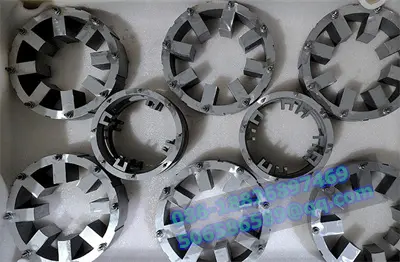
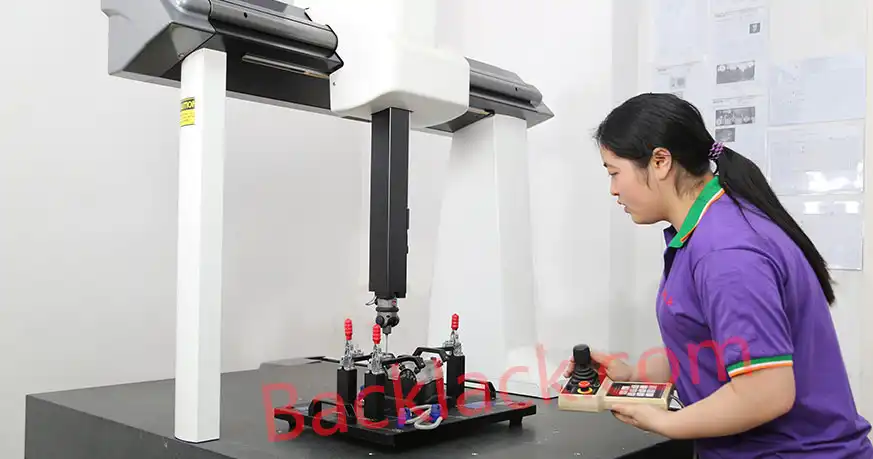
Quality Control for Lamination Bonding Stacks

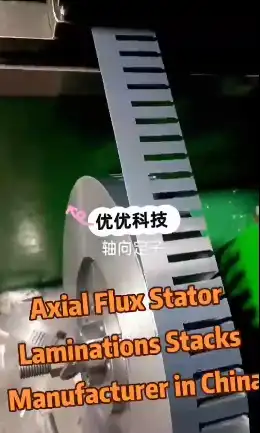
As a stator and rotor lamination bonding stack manufacturer in China, we strictly inspect the raw materials used to make the laminations.

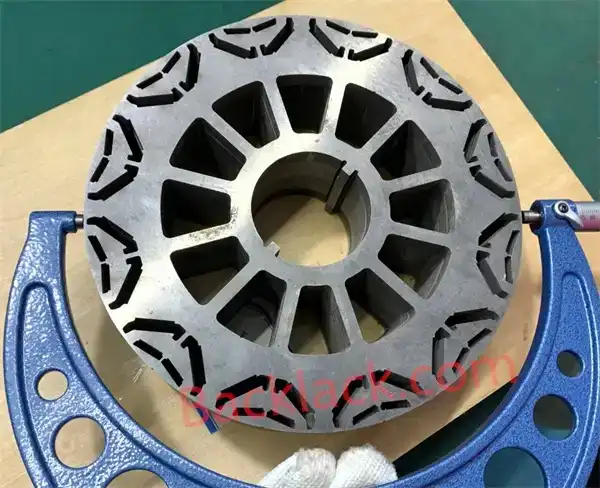
Technicians use measuring tools such as calipers, micrometers, and meters to verify the dimensions of the laminated stack.

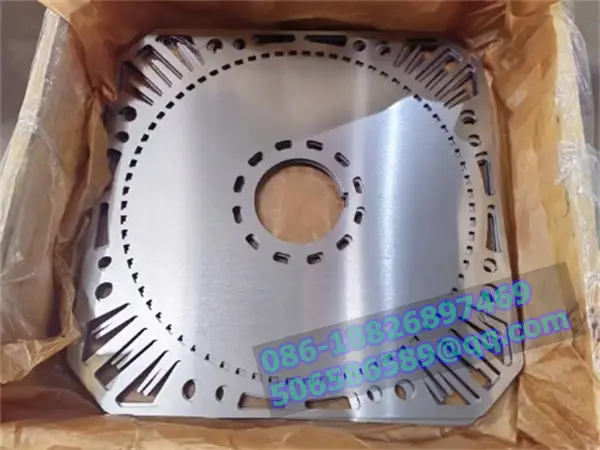
Visual inspections are performed to detect any surface defects, scratches, dents, or other imperfections that may affect the performance or appearance of the laminated stack.

Because disc motor lamination stacks are usually made of magnetic materials such as steel, it is critical to test magnetic properties such as permeability, coercivity, and saturation magnetization.

Quality Control For Adhesive Rotor and Stator Laminations

Quality Control for Lamination Bonding Stacks

As a stator and rotor lamination bonding stack manufacturer in China, we strictly inspect the raw materials used to make the laminations.

Technicians use measuring tools such as calipers, micrometers, and meters to verify the dimensions of the laminated stack.

Visual inspections are performed to detect any surface defects, scratches, dents, or other imperfections that may affect the performance or appearance of the laminated stack.

Because disc motor lamination stacks are usually made of magnetic materials such as steel, it is critical to test magnetic properties such as permeability, coercivity, and saturation magnetization.

Quality Control For Adhesive Rotor and Stator Laminations

Other Motor Laminations Assembly Process

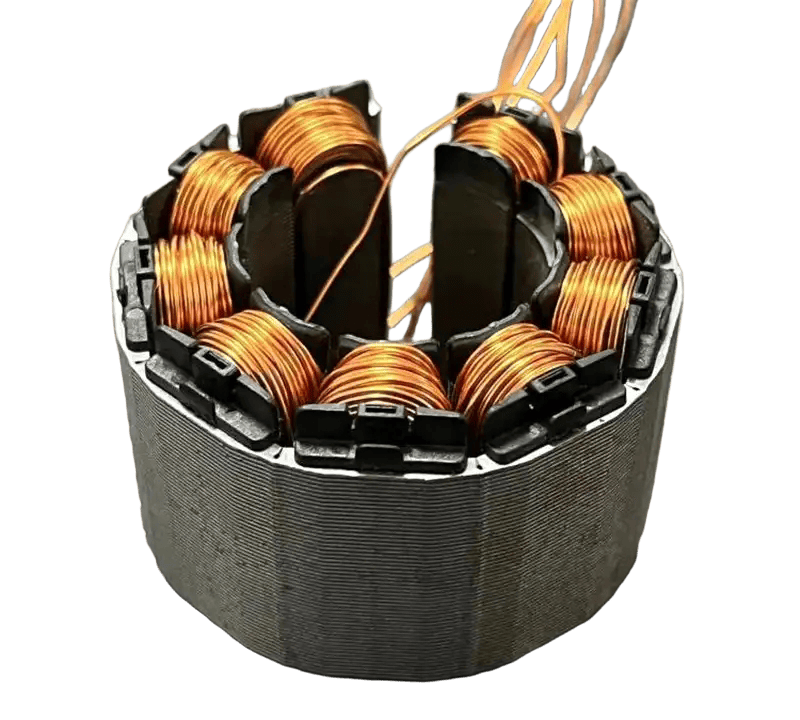
Stator Winding Process

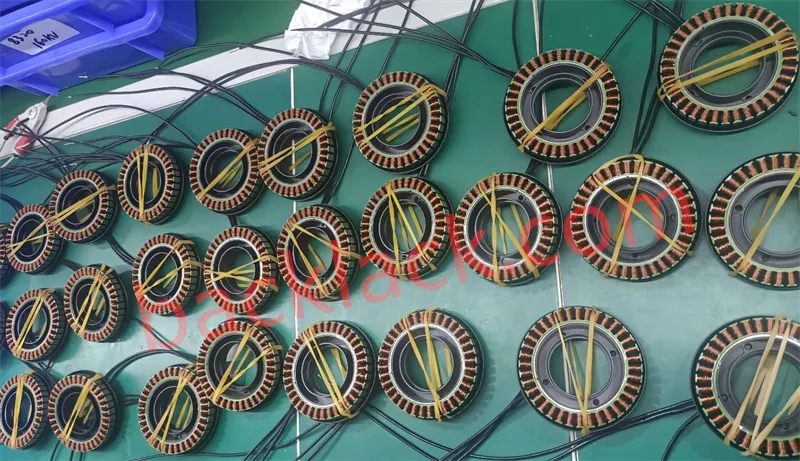
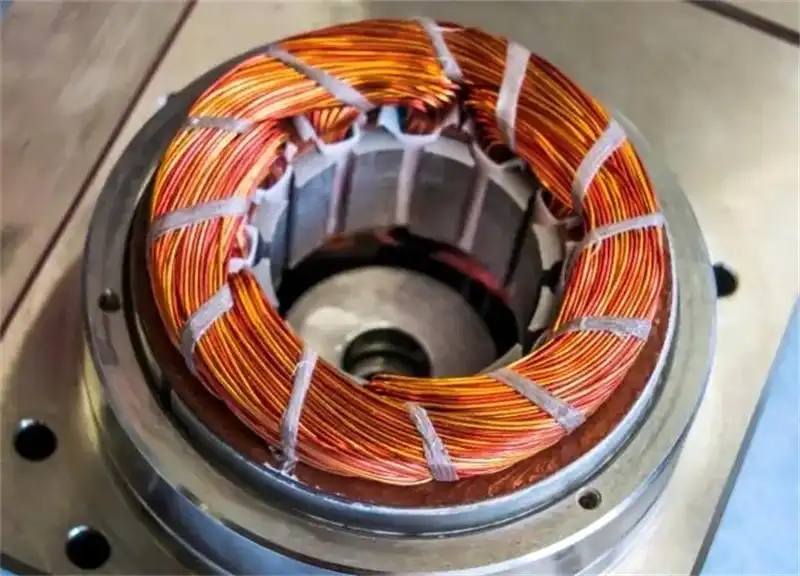
The stator winding is a fundamental component of the electric motor and plays a key role in the conversion of electrical energy into mechanical energy. Essentially, it consists of coils that, when energized, create a rotating magnetic field that drives the motor. The precision and quality of the stator winding directly affects the efficiency, torque, and overall performance of the motor.

We offer a comprehensive range of stator winding services to meet a wide range of motor types and applications. Whether you are looking for a solution for a small project or a large industrial motor, our expertise guarantees optimal performance and lifespan.

Motor Laminations Assembly Stator Winding Process

Epoxy powder coating for motor cores

Epoxy powder coating technology involves applying a dry powder which then cures under heat to form a solid protective layer. It ensures that the motor core has greater resistance to corrosion, wear and environmental factors. In addition to protection, epoxy powder coating also improves the thermal efficiency of the motor, ensuring optimal heat dissipation during operation.

We have mastered this technology to provide top-notch epoxy powder coating services for motor cores. Our state-of-the-art equipment, combined with the expertise of our team, ensures a perfect application, improving the life and performance of the motor.

Motor Laminations Assembly Epoxy Powder Coating For Motor Cores

Injection Molding of Motor Lamination Stacks

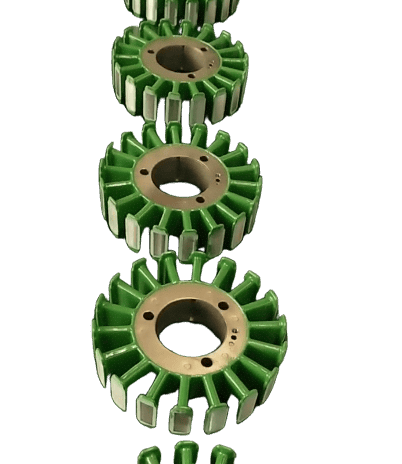
Injection molding insulation for motor stators is a specialized process used to create an insulation layer to protect the stator's windings.

This technology involves injecting a thermosetting resin or thermoplastic material into a mold cavity, which is then cured or cooled to form a solid insulation layer.

The injection molding process allows for precise and uniform control of the thickness of the insulation layer, guaranteeing optimal electrical insulation performance. The insulation layer prevents electrical short circuits, reduces energy losses, and improves the overall performance and reliability of the motor stator.

Motor Laminations Assembly Injection Molding of Motor Lamination Stacks

Electrophoretic coating/deposition technology for motor lamination stacks

In motor applications in harsh environments, the laminations of the stator core are susceptible to rust. To combat this problem, electrophoretic deposition coating is essential. This process applies a protective layer with a thickness of 0.01mm to 0.025mm to the laminate.

Leverage our expertise in stator corrosion protection to add the best rust protection to your design.

Electrophoretic Coating Deposition Technology For Motor Lamination Stacks

FAQS

What is the primary difference between In-Mold Curing and conventional off-line oven Backlack?

Conventional Backlack requires off-line oven baking, which takes minutes to hours and often introduces thermal stress deformation during cooling. In-Mold Curing integrates precision heating and pressure directly inside the high-speed stamping die, completing the resin polymerization in seconds. This delivers higher dimensional accuracy, zero thermal warping, and a substantially shorter production lead time.
What ultra-thin steel thicknesses are compatible with In-Mold Curing self-bonding technology?

The technology is exceptionally well-suited for ultra-thin silicon steel laminations ranging from 0.05mm, 0.10mm, 0.15mm to 0.20mm, where traditional mechanical interlocking causes severe burrs or distortion. It is also fully compatible with standard 0.35mm/0.50mm grades and high-performance cobalt-iron alloys (e.g., Vacodur 49 / 1J22).

How does In-Mold Curing impact the motor's stacking factor and electromagnetic losses?

With an ultra-thin pre-coated bonding layer of only 2μm – 3μm, the stacking factor can easily achieve ≥98%. By completely eliminating interlocking dimples and laser weld seams, surface insulation remains 100% intact, effectively preventing inter-lamination eddy current spikes and localized magnetic saturation.

Is the bonding strength sufficient for high-speed EV and aviation motors operating at 20,000+ RPM?

Yes. Unlike point-or-line connections in welding or interlocking, self-bonding creates a 100% full-surface chemical bond across every lamination. The resulting shear and peel strength allow the core to act as a monolithic solid, capable of easily withstanding the centrifugal forces and thermal stresses of extreme high-speed operation (20,000 to 30,000+ RPM).

How does full-surface self-bonding contribute to motor NVH (Noise, Vibration, Harshness) reduction?

By eliminating micro-gaps and physical clearance between laminations, the monolithic solid structure prevents high-frequency micro-vibrations induced by alternating magnetic fields. This drastically suppresses high-frequency electromagnetic whine and improves overall motor acoustic performance.

Can YouYou Company support rapid prototype cores before committing to high-speed progressive dies?

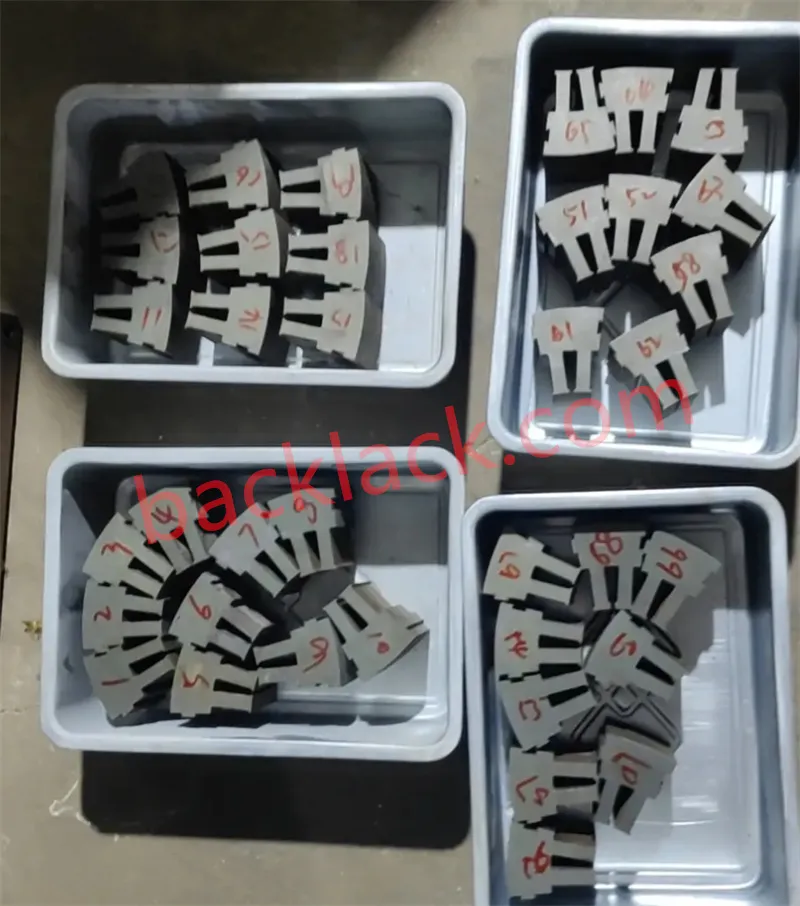
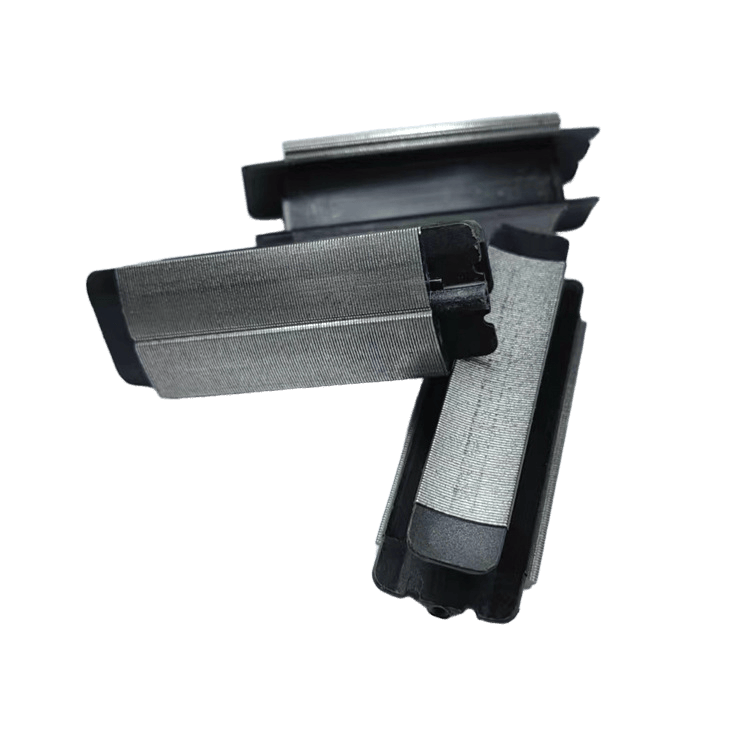
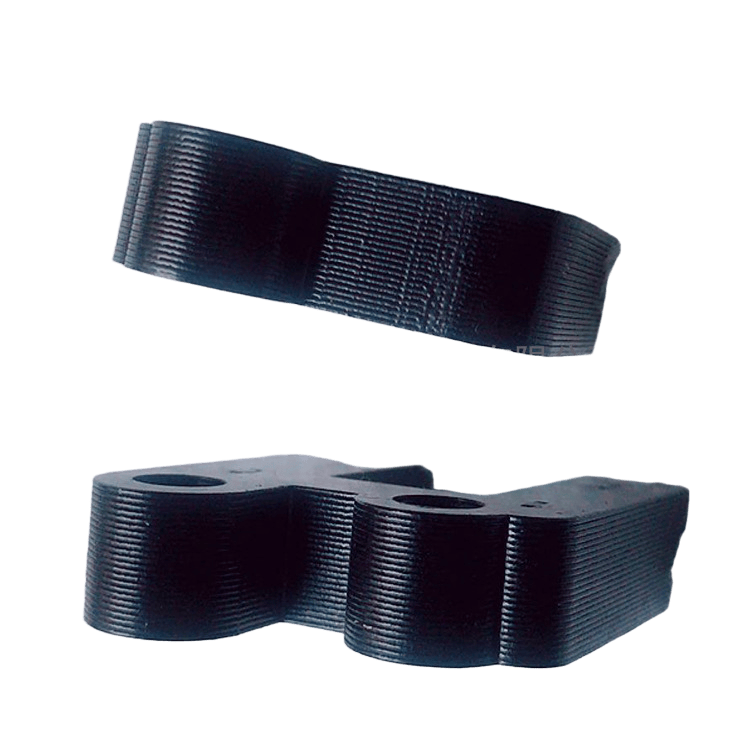
Abolutely. YouYou Company provides end-to-end prototyping services. For low-volume functional samples, we utilize multi-axis Wire EDM taper cutting paired with pre-bonded Backlack blocks to match production-grade performance in as fast as 5 to 10 business days, saving long-lead stamping die investments.

What engineering solutions ensure precise curing during high-speed stamping beats?

We develop in-mold thermal-fluid simulation models paired with dynamic PID algorithms for millisecond-level thermal response. Thermal isolation barriers are integrated inside the tooling to keep the punching zone at ambient temperature while maintaining precise high heat in the curing zone.

Why choose YouYou Company as your custom motor lamination manufacturing partner?

YouYou Company integrates material selection, high-precision Wire EDM prototyping, and high-volume automated In-Mold Curing Backlack production. We help global OEMs and Tier-1 suppliers achieve maximum power density and extreme high efficiency for next-generation electric traction, robotics, and eVTOL motors.

Are You Ready to Eliminate Iron Loss & Unlock Extreme Motor Efficiency?

Start Your Custom In-Mold Curing Self-Bonding Core Project Today

Looking for a trusted precision manufacturing partner in China specializing in In-Mold Curing Backlack self-bonding, ultra-thin 0.1mm–0.2mm electrical steel, and high-precision motor lamination stamping? Look no further! Whether you need zero-stress stator stacks for 800V EV traction motors or whisper-quiet high-RPM rotor cores, Youyou Company provides tailored, high-density lamination solutions engineered to your exact specifications.

Contact our engineering team now to request a rapid prototype quote for your custom self-bonding motor cores and break through physical efficiency limits!

Get Your Custom Quote Now

Recommended For You