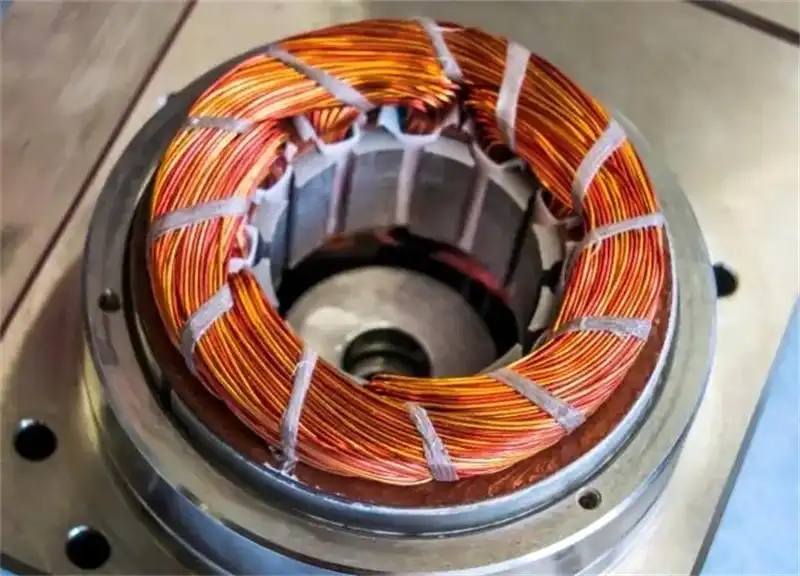
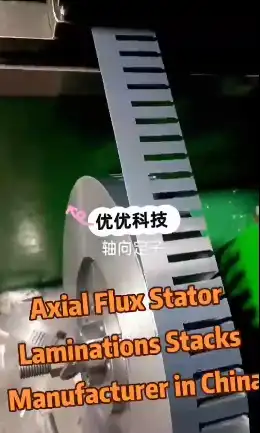
Why is single punch high-precision mold the ⎡ultimate solution⎦ for your high-end stator core?

​The burrs of this batch of stator cores exceeded the standard again, and the lamination coefficient deviation was 0.03mm - the energy efficiency level was stuck at IE4, and the customer wanted to deduct the payment!

​The new fan-shaped special-shaped core was tested 5 times, and the edge was curled every time after punching, and the rotor could not be installed at all...

​When the industry is calling for high-efficiency motors, you will find that the accuracy and complexity of the cores punched out by traditional continuous molds have long been unable to keep up with the demand - especially for thin-walled special-shaped cores. The accumulated errors of multiple continuous stamping processes have made burrs, deformation, and lamination inaccuracy a "hard nut to crack".

​These troubles may be related to the type of mold you choose.

​At this time, a single-punch high-precision mold for single punching may be the key to breaking through the bottleneck.

1

Single punch die vs. continuous die: "Precision defense battle" for motor cores

Thnology completely subverts traditional processes by coating special adhesives on the surface of silicon steel sheets, and forming seamless integral cores after lamination and curing.Let me ask a question first: Why do new energy vehicle companies' 800V high-voltage motors and industrial robots' high-power servo motors begin to abandon continuous dies and use single punch high-precision dies instead?

The answer lies in the underlying logic of "single punching":

Although the continuous die (progressive die) is suitable for mass production (such as ordinary motor core), it is completed through "multi-station continuous feeding + multiple stamping". Every time it passes a station, the silicon steel sheet will be "pulled" by the feeder once, and cumulative errors are inevitable - for example, the blanking gap offset is 0.005mm. After 5 stations, the total error may be magnified to 0.025mm, which directly leads to the stacking coefficient out of tolerance.

Even more fatal is the thin-walled special-shaped structure: when the core needs to be made into a 0.3-0.5mm thin-walled groove, bevel or stepped special shape, the "pulling force" of continuous stamping will cause the silicon steel sheet to deform slightly (such as warping) during the blanking process, and the punched shape does not match the design drawing at all.

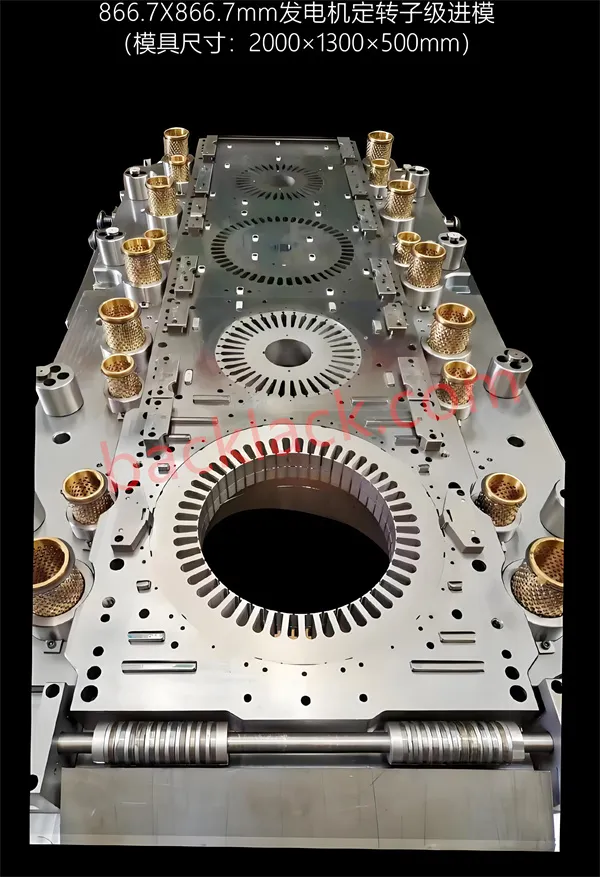
The single punch die is "done at one time": after the silicon steel sheet is placed, all the punches in the die (may be 10, 15 or even more) act at the same time, completing all processes such as blanking, rib pressing, and notching at one time. There is no pulling from multiple feedings, no cumulative errors from multiple workstations, and the dimensional accuracy of thin-walled special-shaped structures can be directly controlled within ±0.01mm (1/7 of the diameter of a hair), and the burrs are ≤0.005mm (3μm) - this is the "micron-level precision" that high-end motors want.

Development Trend of Motor Lamination Bonding Technology Process Upgrade Path From Gluing To Self Adhesion
2

TechnicalThe "difficulty" of single punch high-precision molds: thin-walled special-shaped + single-shot molding, each step requires hard-core technology

But single punch molds are by no means "enhanced versions of ordinary molds". To meet the requirements of "single punching" and "high precision and complexity" at the same time, mold manufacturers must tackle three "hard bones":

1

Structural design: Multi-process integration, as precise as "building blocks"

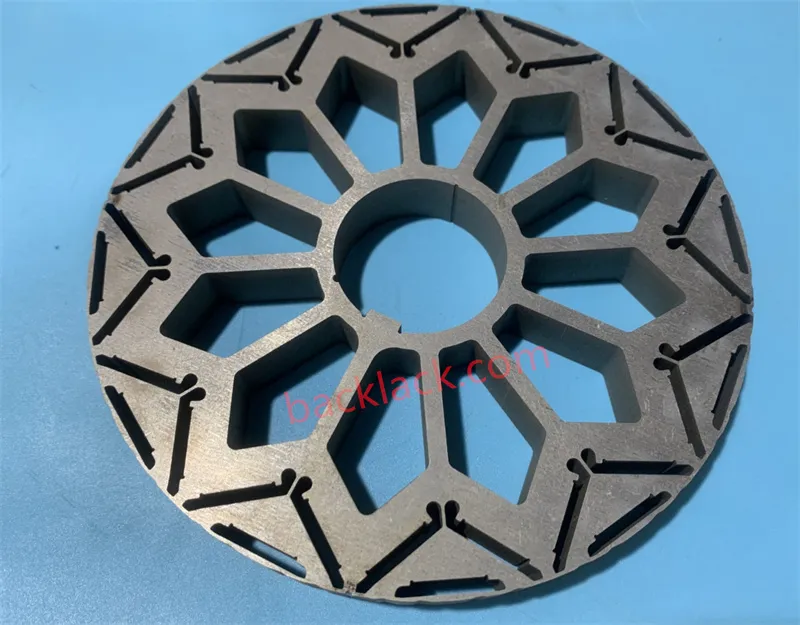
The core of the single punch die is "multi-process integration" - for example, if you want to punch a fan-shaped iron core with ventilation holes, reinforcing ribs and special-shaped grooves, the mold needs to be arranged at the same time:

The position, angle and pressure of these punches must be accurately calculated: the punch for punching ventilation holes cannot touch the special-shaped grooves next to it, the punch for pressing ribs cannot crack the silicon steel sheet at the thin wall, and the combined force of all blanking forces must be balanced to avoid mold deformation.

A leading electric motor factory once asked us to develop a "single punch die for stepped special-shaped iron core". The punch design alone was revised 8 times - because a slight deviation in the punching angle at the thin wall (0.3mm) would cause excessive burrs on the edge; if the punch sequence was wrong by 0.1mm, it would cause "misalignment" when stacking.

3

Process verification: simulation + mold trial, "nip the risk in the bud"

Once a single punch mold has a problem, the loss is several times that of a continuous mold - because it is "one-time molding", and a failed mold trial may directly scrap it. Therefore, professional mold manufacturers will do two things:

A customer once compared two mold factories: Factory A directly tried the mold 3 times and spent 150,000; Factory B first did 10 simulation optimizations, and the mold trial was successful once, saving 100,000, and the mass production yield was directly increased from 70% to 98%.

Energy efficiency revolution

The self-adhesive structure eliminates the gap between the laminations, reduces eddy current loss by 30%-40%, and reduces iron loss to less than 0.20W/kg.

Tight lamination improves thermal conductivity, improves heat dissipation efficiency by 30%, and helps the motor to operate continuously at high load.

NVH performance breakthrough

The bonding strength reaches 5N/mm² (10 times that of traditional welding), the vibration amplitude is reduced by 60%, and the noise is controlled below 35dB.

Process simplification and cost optimization

​​Eliminate welding/riveting processes, shorten production cycle by 40%, and reduce labor costs by 50%.

​​Integrated molding reduces material waste and increases material utilization to more than 98%.

Glue Free Self Adhesive Electrical Steel Core Loss Optimization Technology For High Efficiency Motors
3

Global application scenarios: practical cases from laboratory to mass production

New energy vehicle drive motor

Tesla Model S Plaid: uses 0.20mm self-adhesive silicon steel laminations, with a rotation speed exceeding 20,000rpm and a power density of 5kW/kg.

BYD e-Platform 3.0: Optimizes magnetic flux distribution through the skew slot stacking process to achieve 97.5% working efficiency.

Industrial servo motor

ABB IRB 6700: uses PPS injection-molded self-adhesive core, which is 40% smaller in size and has a protection level of IP67.

Aerospace field

​​GE Aviation LEAP engine: Amorphous alloy self-adhesive core achieves high temperature operation of 200℃ and reduces weight by 30%.

A Complete Analysis of Motor Lamination Bonding Technology Welding Riveting Self Adhesive Process Comparison and Applicable Scenarios
5

Conclusion

Self-adhesive silicon steel technology - the "hidden champion" of the motor industry

From precision proofing in the laboratory to large-scale application in global production lines, self-adhesive silicon steel lamination technology is reshaping the motor manufacturing landscape with its core advantages of high efficiency, intelligence and environmental protection. With the continuous breakthroughs in materials science and automation technology, this technology will become the "gold standard" in the field of high-end motors, injecting strong momentum into the global Industry 4.0.
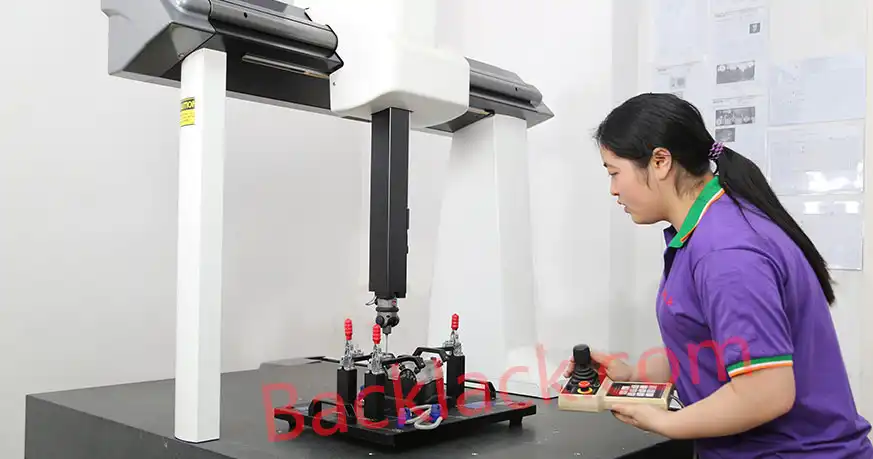
Quality Control for Lamination Bonding Stacks

As an stator and rotor lamination bonding stack manufacturer in China, we strictly inspect the raw materials used to make the laminations.

Technicians use measuring tools such as calipers, micrometers, and meters to verify the dimensions of the laminated stack.

Visual inspections are performed to detect any surface defects, scratches, dents, or other imperfections that may affect the performance or appearance of the laminated stack.

Because disc motor lamination stacks are usually made of magnetic materials such as steel, it is critical to test magnetic properties such as permeability, coercivity, and saturation magnetization.

Quality Control For Adhesive Rotor and Stator Laminations

Other Motor Laminations Assembly Process

Stator Winding Process

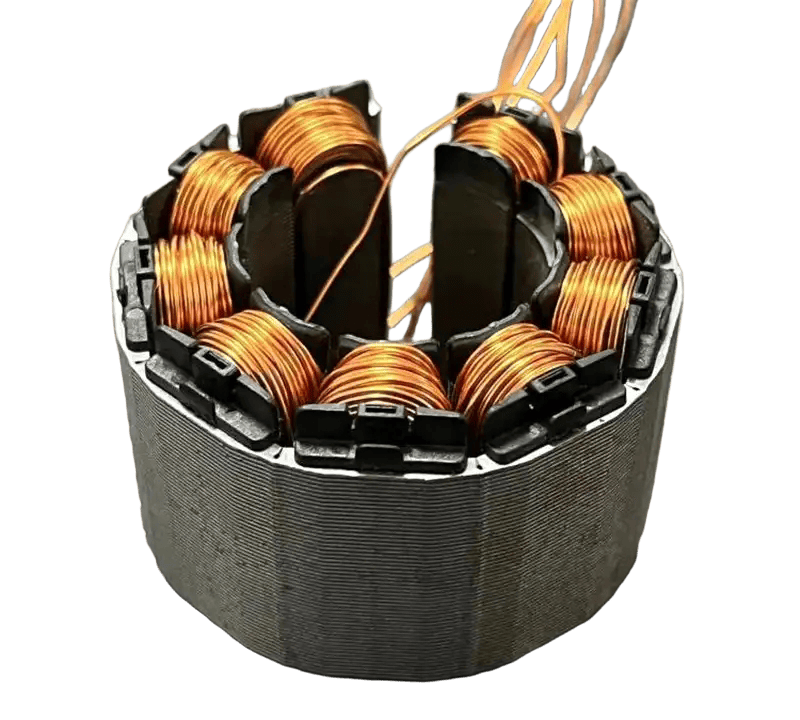
The stator winding is a fundamental component of the electric motor and plays a key role in the conversion of electrical energy into mechanical energy. Essentially, it consists of coils that, when energized, create a rotating magnetic field that drives the motor. The precision and quality of the stator winding directly affects the efficiency, torque, and overall performance of the motor.

We offer a comprehensive range of stator winding services to meet a wide range of motor types and applications. Whether you are looking for a solution for a small project or a large industrial motor, our expertise guarantees optimal performance and lifespan.

Motor Laminations Assembly Stator Winding Process

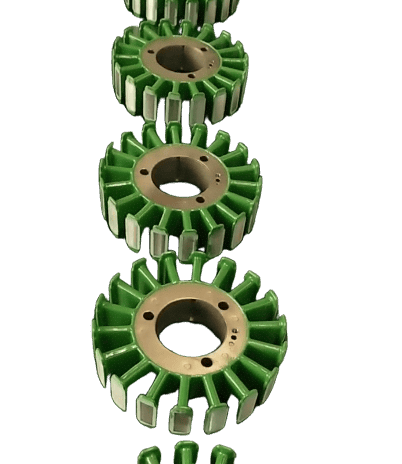
Epoxy powder coating for motor cores

Epoxy powder coating technology involves applying a dry powder which then cures under heat to form a solid protective layer. It ensures that the motor core has greater resistance to corrosion, wear and environmental factors. In addition to protection, epoxy powder coating also improves the thermal efficiency of the motor, ensuring optimal heat dissipation during operation.

We have mastered this technology to provide top-notch epoxy powder coating services for motor cores. Our state-of-the-art equipment, combined with the expertise of our team, ensures a perfect application, improving the life and performance of the motor.

Motor Laminations Assembly Epoxy Powder Coating For Motor Cores

Injection Molding of Motor Lamination Stacks

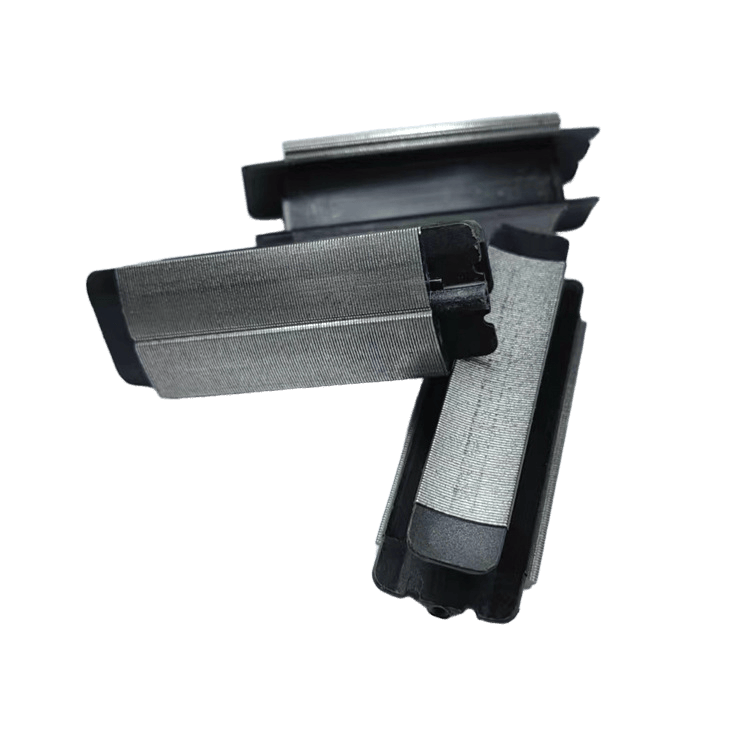
Injection molding insulation for motor stators is a specialized process used to create an insulation layer to protect the stator's windings.

This technology involves injecting a thermosetting resin or thermoplastic material into a mold cavity, which is then cured or cooled to form a solid insulation layer.

The injection molding process allows for precise and uniform control of the thickness of the insulation layer, guaranteeing optimal electrical insulation performance. The insulation layer prevents electrical short circuits, reduces energy losses, and improves the overall performance and reliability of the motor stator.

Motor Laminations Assembly Injection Molding of Motor Lamination Stacks

Electrophoretic coating/deposition technology for motor lamination stacks

In motor applications in harsh environments, the laminations of the stator core are susceptible to rust. To combat this problem, electrophoretic deposition coating is essential. This process applies a protective layer with a thickness of 0.01mm to 0.025mm to the laminate.

Leverage our expertise in stator corrosion protection to add the best rust protection to your design.

Electrophoretic Coating Deposition Technology For Motor Lamination Stacks

FAQS

What thicknesses are there for motor lamination steel? 0.1MM?

The thickness of motor core lamination steel grades includes 0.05/0.10/0.15/0.20/0.25/0.35/0.5MM and so on. From large steel mills in Japan and China. There are ordinary silicon steel and 0.065 high silicon silicon steel. There are low iron loss and high magnetic permeability silicon steel. The stock grades are rich and everything is available..

What manufacturing processes are currently used for motor lamination cores?

In addition to stamping and laser cutting, wire etching, roll forming, powder metallurgy and other processes can also be used. The secondary processes of motor laminations include glue lamination, electrophoresis, insulation coating, winding, annealing, etc.

How to order motor laminations?

You can send us your information, such as design drawings, material grades, etc., by email. We can make orders for our motor cores no matter how big or small, even if it is 1 piece.

How long does it usually take you to deliver the core laminations?

Our motor laminate lead times vary based on a number of factors, including order size and complexity. Typically, our laminate prototype lead times are 7-20 days. Volume production times for rotor and stator core stacks are 6 to 8 weeks or longer.

Can you design a motor laminate stack for us?

Yes, we offer OEM and ODM services. We have extensive experience in understanding motor core development.

What is the advantages of bonding vs welding on rotor and stator?

The concept of rotor stator bonding means using a roll coat process that applies an insulating adhesive bonding agent to the motor lamination sheets after punching or laser cutting. The laminations are then put into a stacking fixture under pressure and heated a second time to complete the cure cycle. Bonding eliminates the need for a rivet joints or welding of the magnetic cores, which in turn reduces interlaminar loss. The bonded cores show optimal thermal conductivity, no hum noise, and do not breathe at temperature changes.

Can glue bonding withstand high temperatures?

Absolutely. The glue bonding technology we use is designed to withstand high temperatures. The adhesives we use are heat resistant and maintain bond integrity even in extreme temperature conditions, which makes them ideal for high-performance motor applications.

What is glue dot bonding technology and how does it work?

Glue dot bonding involves applying small dots of glue to the laminates, which are then bonded together under pressure and heat. This method provides a precise and uniform bond, ensuring optimal motor performance.

What is the difference between self-bonding and traditional bonding?

Self-bonding refers to the integration of the bonding material into the laminate itself, allowing the bonding to occur naturally during the manufacturing process without the need for additional adhesives. This allows for a seamless and long-lasting bond.

Can bonded laminates be used for segmented stators in electric motors?

Yes, bonded laminations can be used for segmented stators, with precise bonding between the segments to create a unified stator assembly. We have mature experience in this area. Welcome to contact our customer servic.

Are you ready?

Start stator and rotor lamination bonding stack Now!

Looking for a reliable stator and rotor lamination bonding stack Manufacturer from China? Look no further! Contact us today for cutting-edge solutions and quality stator laminations that meet your specifications.

Contact our technical team now to obtain the self-adhesive silicon steel lamination proofing solution and start your journey of high-efficiency motor innovation!

Get Started Now

Recommended For You