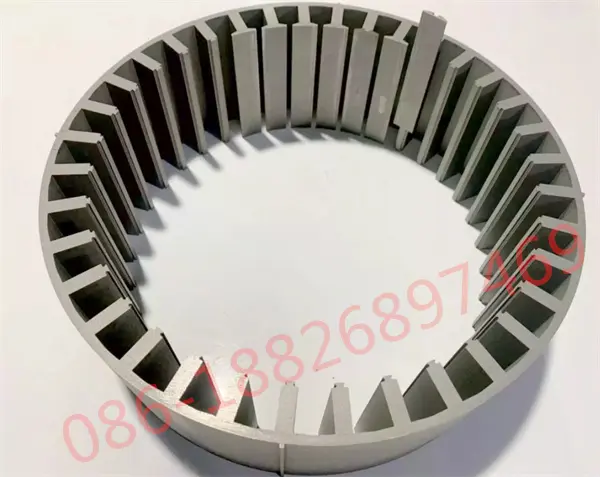
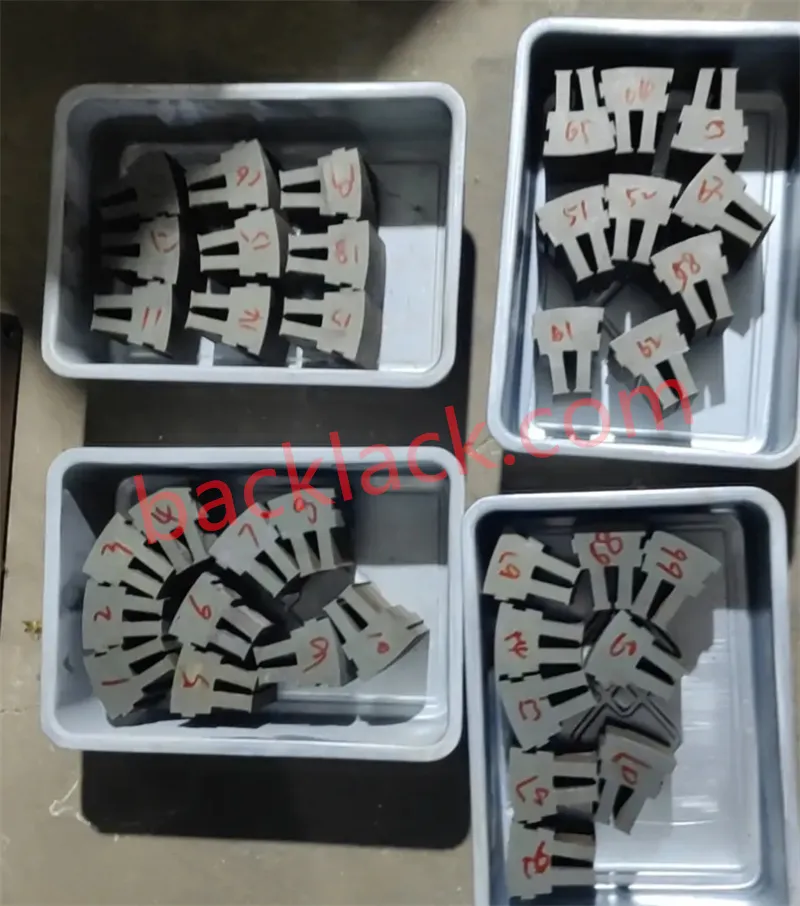
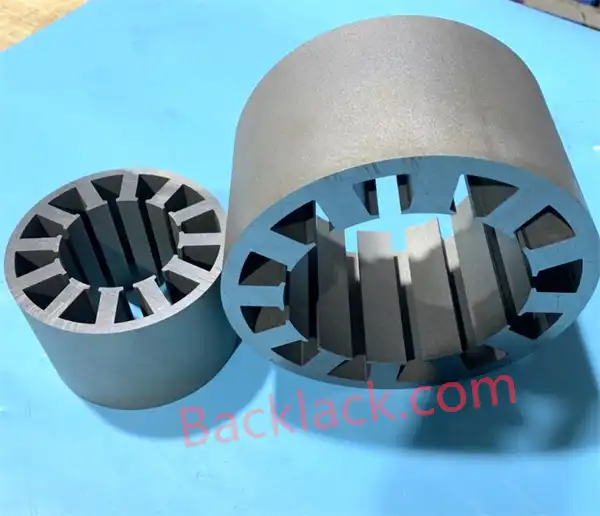
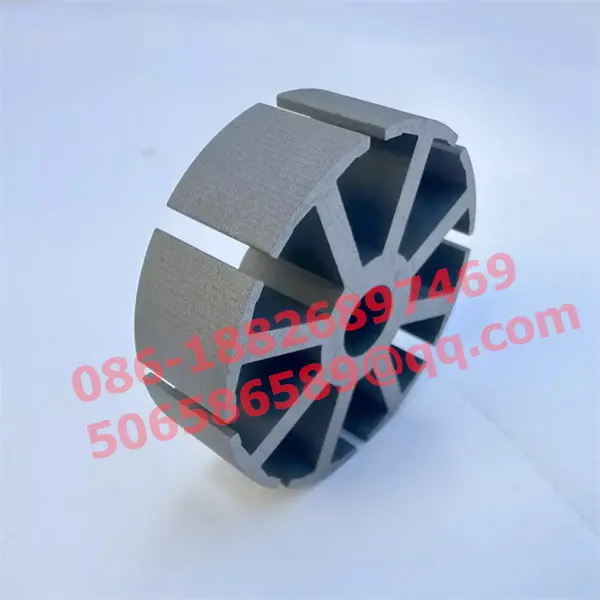
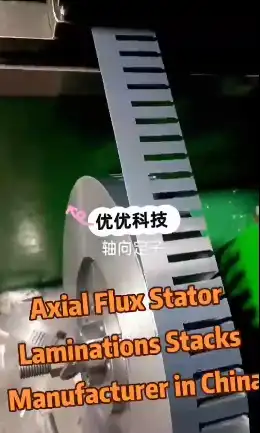
Eliminating Cogging Torque: How Precision Wire EDM Unlocks High-Accuracy Helical Skewed Slots for Cobalt-Iron Motor Cores

Applications of Backlack Self-Bonding Technology and Vacodur 49 Cobalt-Iron Alloys in Quiet, High-Power-Density Motors by Wire EDM
💡 Executive Summary
  • Physical Bottleneck of High-Performance Alloys: Cobalt-Iron alloys (e.g., 1J22, Vacodur 49) deliver an ultra-high magnetic saturation of 2.3–2.4 T, but they are exceptionally sensitive to mechanical stress and magnetic anisotropy.
  • The Slot Topology Dilemma: Straight slots maximize magnetic flux output (100%), while helical skewed slots effectively eliminate cogging torque. However, conventional mechanical skewing causes severe magnetic degradation and dimensional distortion.
  • Process Breakthrough: Combining Precision Wire EDM with 0.1 mm / 0.2 mm Backlack (self-bonding) lamination technology prevents stress-induced magnetic loss while achieving micron-level skew alignment accuracy.

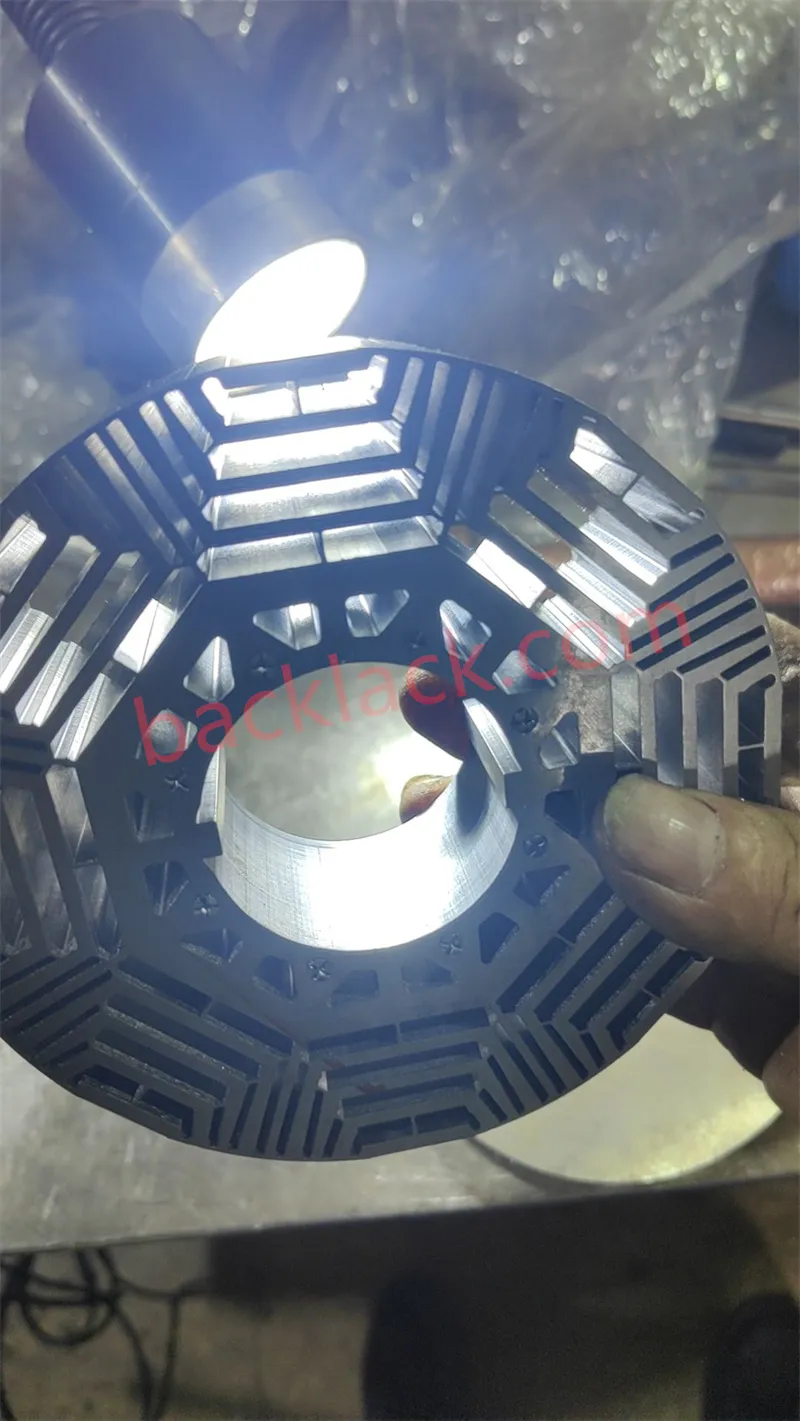
In high-end electric motor applications demanding lightning-fast response, ultra-high power density, or smooth operation—such as drone propulsion, medical robotics, 12-inch semiconductor wafer handling equipment, and aerospace actuators—Cobalt-Iron (CoFe) alloys stand out as the undisputed performance kings.

However, as a precision motor core processing factory specializing in custom stators and rotors, we frequently encounter a major trade-off during customer design implementation: Engineering teams want the ultra-high power density of Cobalt-Iron alloys alongside helical skewed slots to eliminate cogging torque, yet traditional processing methods often deform the material or ruin its magnetic properties.

Below is a detailed engineering comparison between straight and helical skewed slots, as well as an inside look at how precision Wire EDM unlocks high-accuracy skewed slots without compromising magnetic performance.
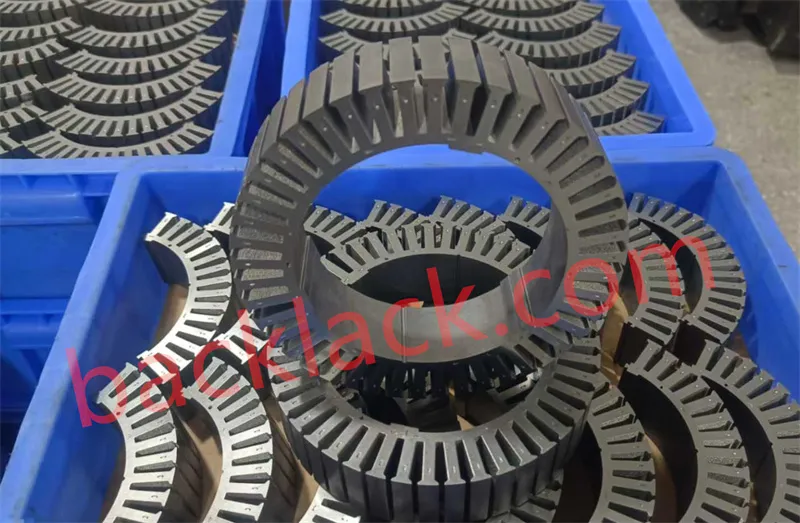
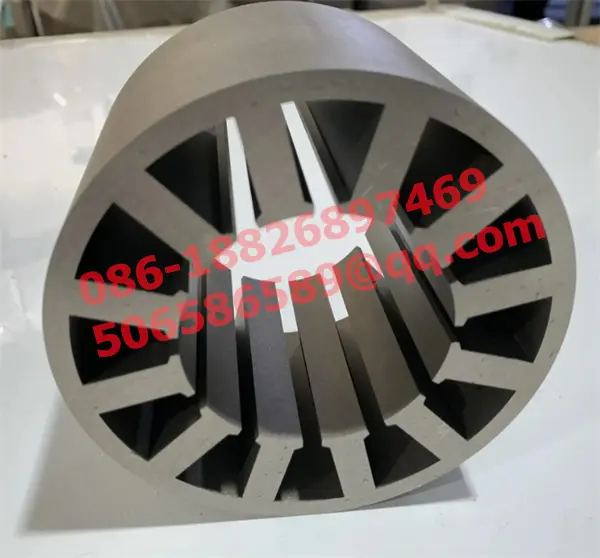
Straight Vs Helical Skewed Slots For Cobalt Iron Stators How To Balance Magnetic Flux Density and Cogging Torque Helical Skewed Vs Straight Slot Cobalt Iron Motor Cores A Comprehensive Engineering Selection Guide Why Straight Slots Maximize Cobalt Iron Saturation While Skewed Slots Eliminate Motor Cogging Torque Optimizing Power Density and Smoothness Straight Slot Stators Vs Wire Edm Skewed Cores In Vacodur 49 Evaluating Iron Loss and Torque Ripple Straight Vs Helical Skewed Stator Designs In High Frequency Motors Eliminating Cogging Torque How Precision Wire Edm Unlocks High Accuracy Helical Skewed Slots In Cobalt Iron Cores Why Precision Wire Edm Is the Gold Standard For Machining Stress Sensitive Vacodur 49 Skewed Stators Overcoming Mechanical Strain How Non Contact Wire Edm Preserves Magnetic Permeability In Cobalt Iron Laminations Multi Axis Wire Edm Taper Cutting Achieving Micron Level Helical Skew Angles In Backlack Stator Blocks How Precision Wire Edm Prevents Edge Short Circuits and Burr Formation In Ultra Thin Cobalt Iron Stator Cores Maximizing 2 4T Saturation How Precision Core Manufacturing Prevents Magnetic Degradation In Vacodur 49 The Stress Sensitivity of 1J22 and Vacodur 49 Why Traditional Stamping Destroys Cobalt Iron Magnetic Performance Restoring Magnetic Permeability the Critical Role of Vacuum Hydrogen Annealing In Skewed Cobalt Iron Stators High Saturation Cobalt Iron Motor Cores How To Prevent Hysteresis Loss and thermal Buildup In Skewed Slots Engineering High Power Density Actuators Why Vacodur 49 Requires Zero Stress Processing For Helical Skewed Cores Combining 0 1Mm Ultra Thin Backlack Laminations With Wire Edm Skewed Slots For High Frequency Motors Why Backlack Self Bonding Outperforms Riveting and Welding In High Accuracy Helical Skewed Stator Cores Minimizing High Frequency Eddy Current Loss the Synergy of Backlack Self Bonding and Wire Edm Skewing How Backlack Bonded Blocks Maintain Structural Rigidity During Precision Wire Edm Helical Slot Machining High Temperature Class H Backlack Self Bonding Stators Perfect Companions For Skewed Cobalt Iron Motor Cores How To Eliminate Motor Cogging Torque Without Sacrificing High Magnetic Saturation In Cobalt Iron Stators Straight Stator Plus Skewed Magnet Rotor Vs Helical Skewed Stator Which Setup Delivers the Highest Motor Efficiency Reducing Torque Ripple In Precision Servos Helical Skewed Slot Design Principles For Cobalt Iron Stator Cores A Complete Guide To Cogging Torque Reduction In High Speed Aerospace Motors Using Skewed Vacodur 49 Cores Whisper Quiet Operation In Medical Robotics How Precision Skewed Stators Eliminate Harmonic Torque Ripple Custom Wire Edm Helical Skewed Stators For Drone Motors Achieving Maximum Torque and Low Noise Ultra Smooth 12 Inch Wafer Handling Drives Custom Backlack Cobalt Iron Skewed Stators From China Rapid Prototyping of Complex Helical Skewed Stator Cores How Wire Edm Delivers Custom Samples In 5 Days High Precision Segmented and Skewed Stator Cores For Medical Robotics A Custom Manufacturing Guide Why Global Ev and Robotics Engineers Choose Youyou Company For Custom Cobalt Iron Wire Edm Stator Prototyping

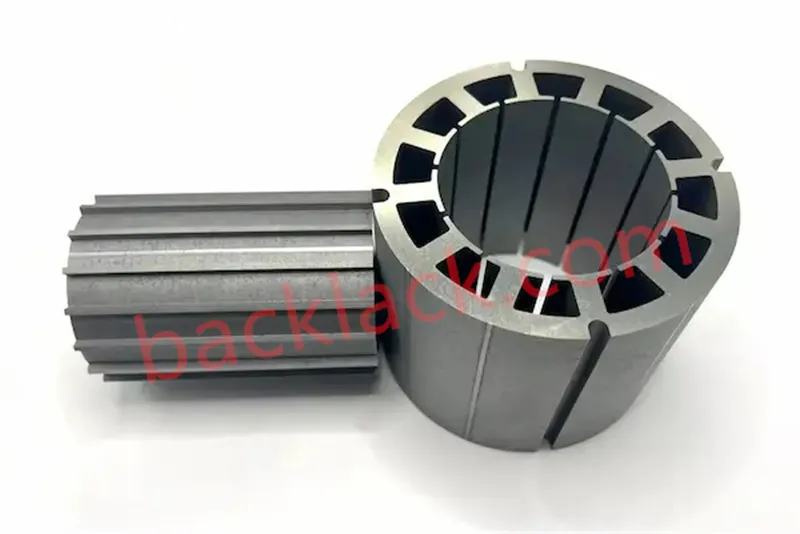
I. Cobalt-Iron Alloys: Straight Slots vs. Helical Skewed Slots Performance Comparison

While Cobalt-Iron alloys offer unmatched magnetic saturation, they exhibit severe work hardening, high mechanical hardness, and extreme stress sensitivity. The chosen slot topology directly dictates flux paths, residual stress, and torque output:

Comparison Dimension Straight Slot Design Helical Skewed Slot Design
Magnetic Flux Utilization 100% Maximum Output
Parallel flux path that fully leverages the 2.3T+ saturation of CoFe alloys.
~90%–95% Utilization
Axial flux components tilt the magnetic path, leading to premature localized saturation at tooth tips.
Cogging Torque & Ripple Higher
Pronounced slotting effect; requires advanced drive control algorithms to smooth out low-speed torque ripple.
Extremely Low
Significantly mitigates cogging torque and high-order harmonics for whisper-quiet, ultra-smooth rotation.
Iron Loss & High-Freq Heating Lower Losses
Minimal stray flux and end-leakage; hysteresis and eddy current losses remain well-controlled.
Slightly Higher
Cross-flux and leakage fields increase stray losses and localized thermal buildup under high frequencies.
Stamping & Stacking Feasibility Standard / High Yield
Compatible with standard high-precision stamping and Backlack bonding with manageable tool wear.
Extremely Challenging
Highly dependent on precision stepped skewing or Wire EDM indexing.
Annealing Stress Recovery Complete Recovery
Symmetrical geometry allows full residual stress relief during vacuum/hydrogen annealing.
Stress Sensitive
Forced mechanical skewing introduces severe shear stress that demands stringent annealing profiles.

II. The Mechanical Skewing Trap & The Wire EDM Solution

⚠️ Warning: Forced Mechanical Skewing Destroys Magnetic Performance

Mechanically twisting a laminated stack to force a skewed slot profile creates intense internal shear stress. Empirical factory testing indicates that unannealed, mechanically skewed Cobalt-Iron cores suffer a coercive force (Hc) spike of over 40%, degrading premium material down to basic silicon steel performance.
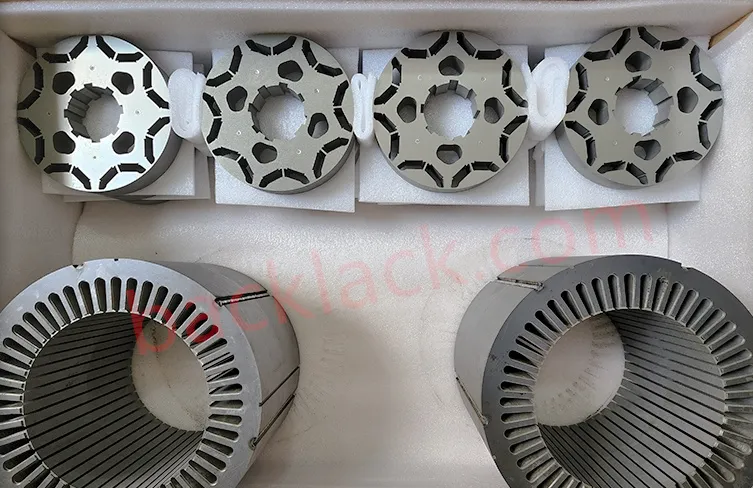
Traditional Mechanical Skewing:

[Stamped Core] ──(Forced Mechanical Twist)──► Internal Shear Stress ──► Hc Spikes / Permeability Drops ──► Material Degradation

Precision Wire EDM Processing:

[Backlack Block] ──(Micron-Level Wire Cutting)──► Zero Mechanical Stress ──► Precise Skew Profile ──► Vacuum Annealing ──► 100% Magnetic Recovery

1. Key Advantages of Precision Wire EDM

When processing complex helical or stepped skewed slots (Stepped Skewing), Wire EDM offers distinct non-contact machining benefits:

  • Zero Mechanical Stress: Spark erosion cuts the alloy without physical tool pressure, preventing stress-induced magnetic degradation at the source.
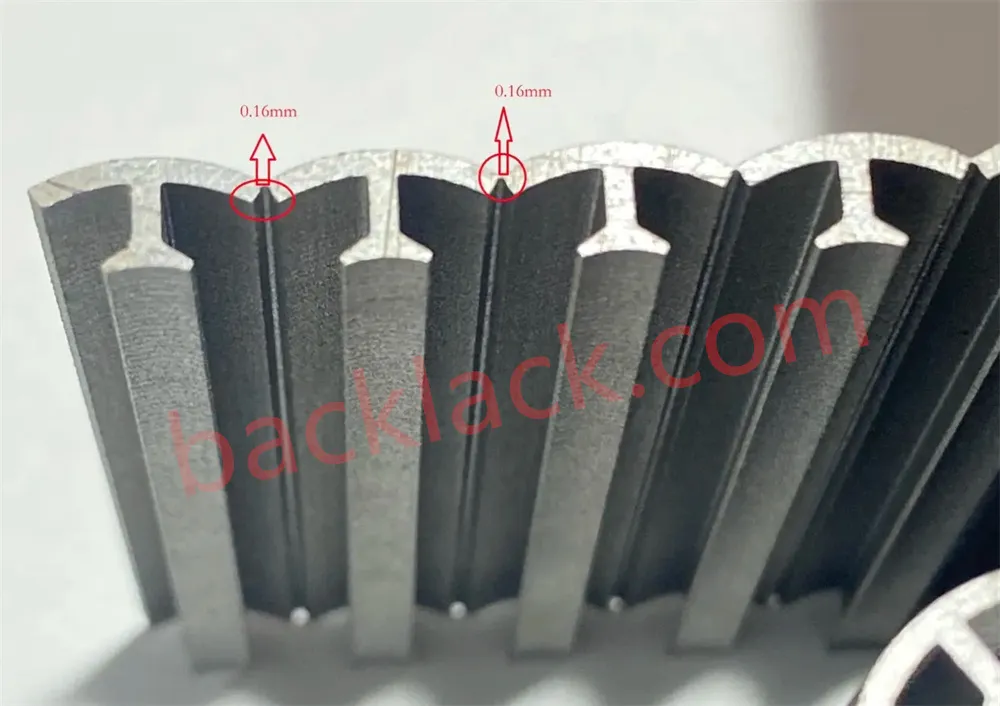
  • Micron-Level Geometric Precision: Easily achieves slot dimensional tolerances of ±0.002 mm with burr-free edges and zero inter-lamination short circuits.
  • Rapid Prototyping Agility: Eliminates the need for expensive, long-lead-time progressive skewing dies during the R&D and pilot production phases.

2. Synergy with 0.1 mm–0.2 mm Backlack (Self-Bonding) Technology

Cutting alone is not enough; conventional riveting or interlocking introduces inter-lamination shorts and slot misalignment during EDM wire passes.

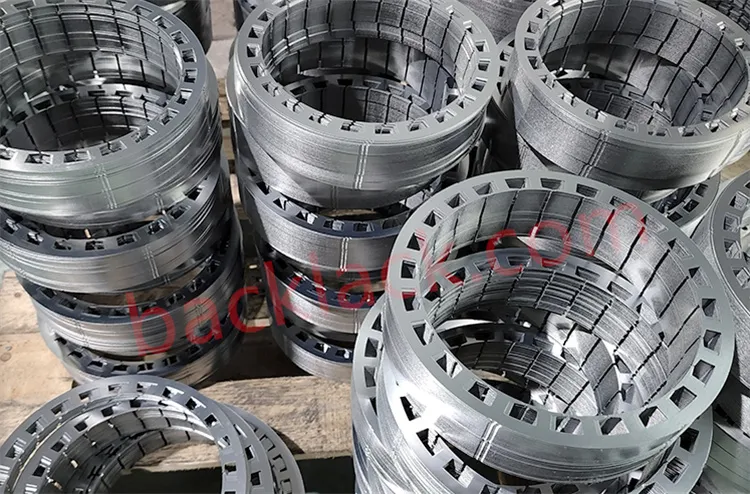
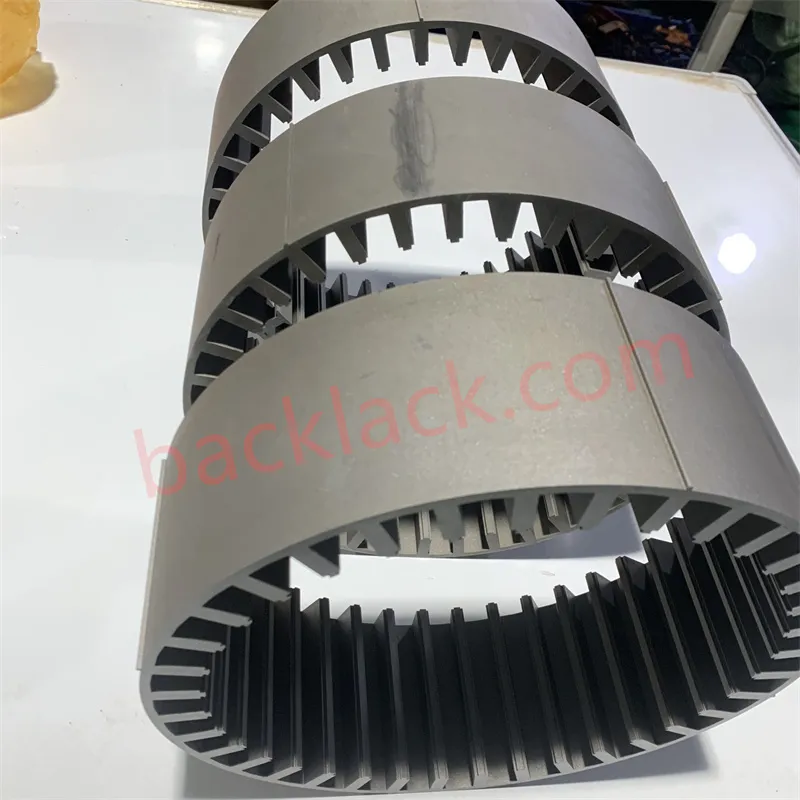
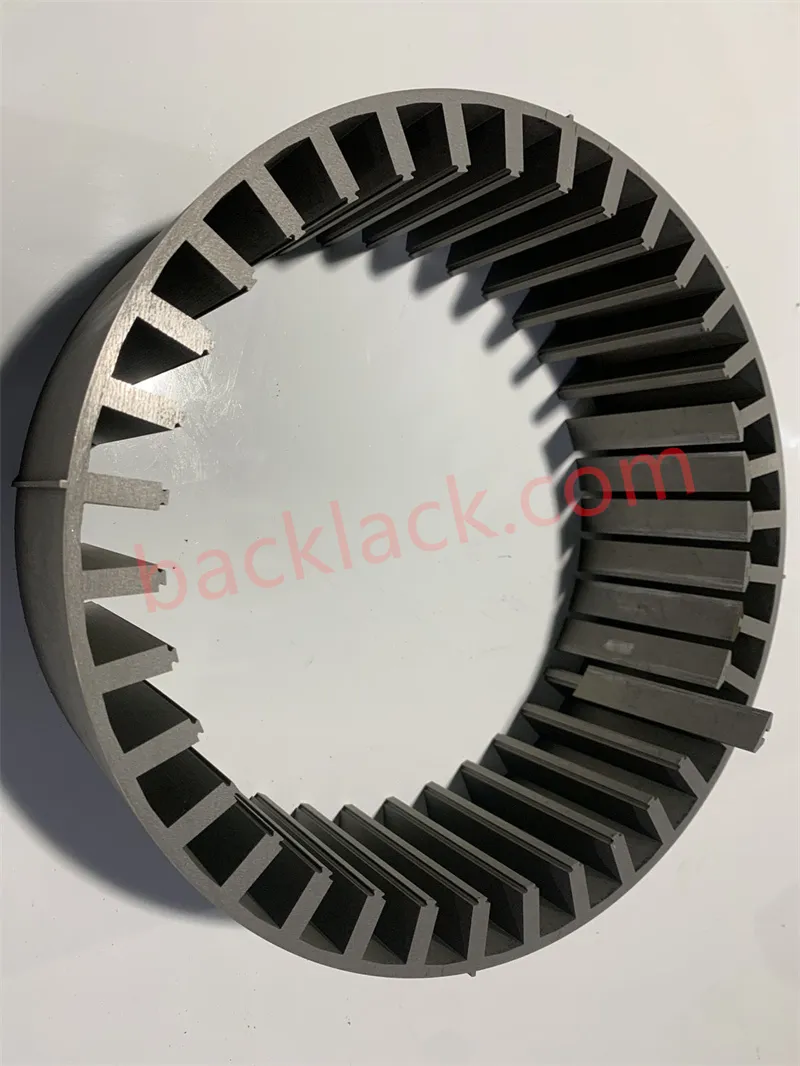
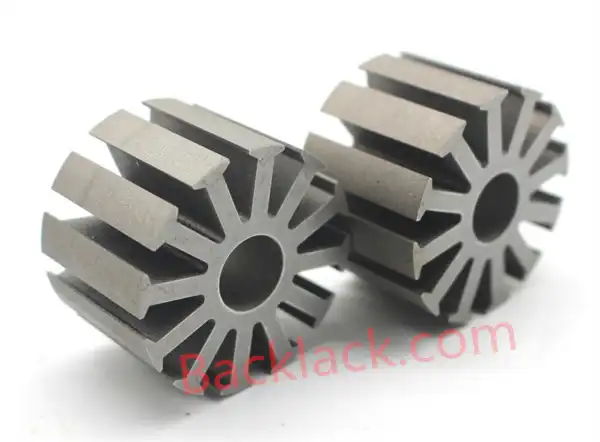
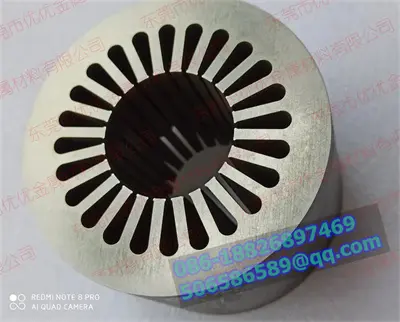
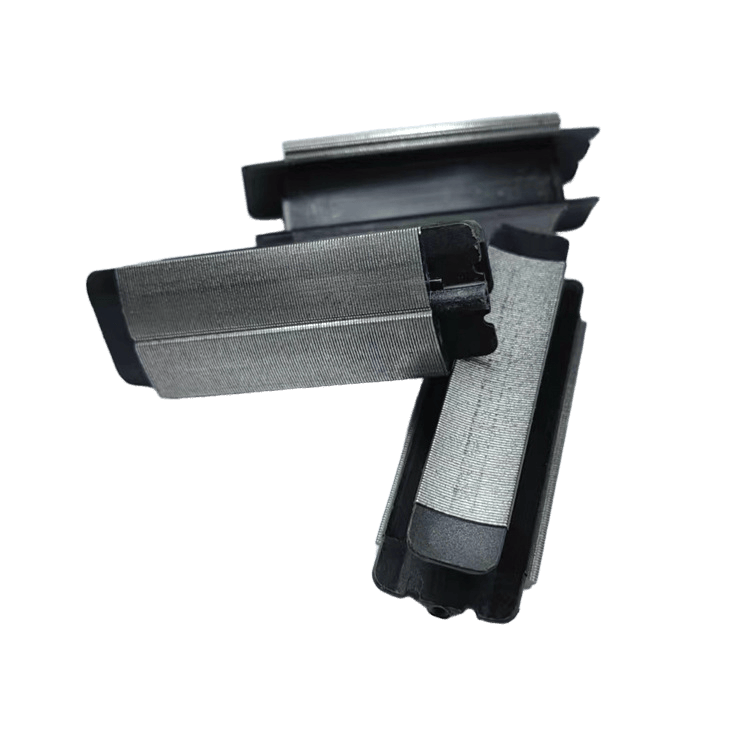
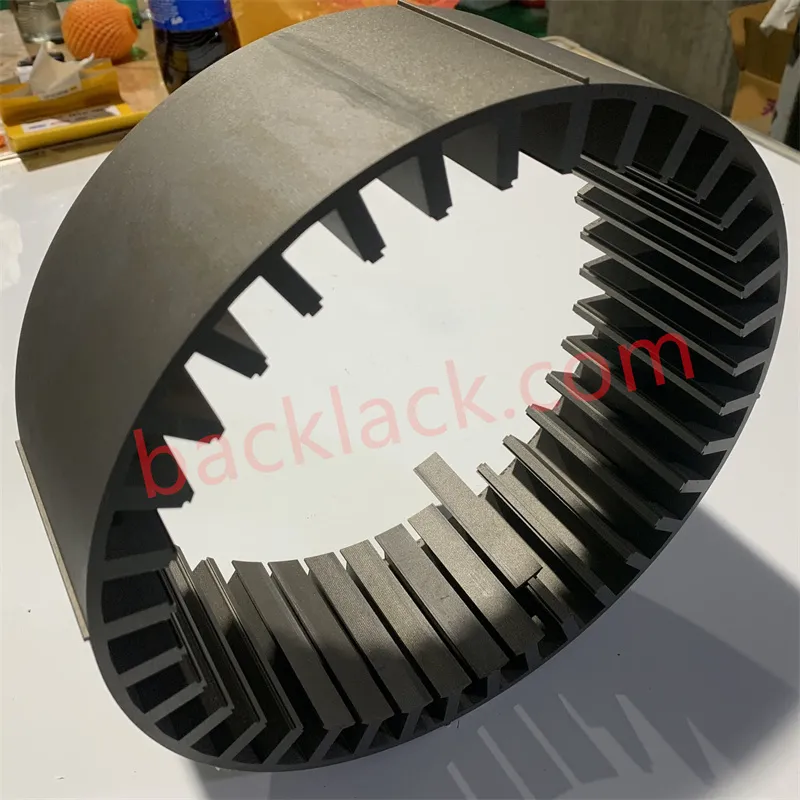
The Youyou Solution: We pre-coat 0.1 mm or 0.2 mm ultra-thin Cobalt-Iron laminations with Backlack varnish and thermal-bond them into a solid "core block" before wire cutting. The bonded block provides high structural rigidity, preserving inter-lamination insulation and minimizing high-frequency eddy current losses.

III. Application Selection Matrix

🚀 Option A: Maximum Power Density & Energy Conversion

Recommended Combination: Cobalt-Iron Alloy + Straight Slot Stator + Skewed Magnet Rotor

Target Applications: Drone propulsion motors, RC modeling, ultra-high-speed servos, aerospace actuators.

Processing Advantage: Retains 100% magnetic flux efficiency through straight slots while counteracting cogging torque via the rotor magnets, ensuring the highest manufacturing yield.

🎯 Option B: Ultra-Smooth Operation, Low Ripple & Low Noise

Recommended Combination: Cobalt-Iron Alloy + Backlack Bonding + Wire EDM Stepped Skewed Slots

Target Applications: Medical surgical robotics, 12-inch semiconductor wafer handling equipment, high-precision linear actuators.

Processing Advantage: Eliminates cogging torque at the source. Combined with stress-free Backlack stacking and final magnetic annealing, it delivers smooth operation without sacrificed magnetic properties.

IV. Manufacturing & Process Commitment from Youyou Company

As a precision processing factory specializing in custom motor cores, Youyou Company understands both the metallurgy and the manufacturing techniques needed to maximize high-value alloys:

  • Turnkey Backlack Coating & Bonding: Full capability for 0.1 mm, 0.15 mm, and 0.2 mm ultra-thin silicon steel and Cobalt-Iron alloys (1J22 / Vacodur 49) with mesh/dot coating and heat-press curing—completely eliminating rivet shorts.
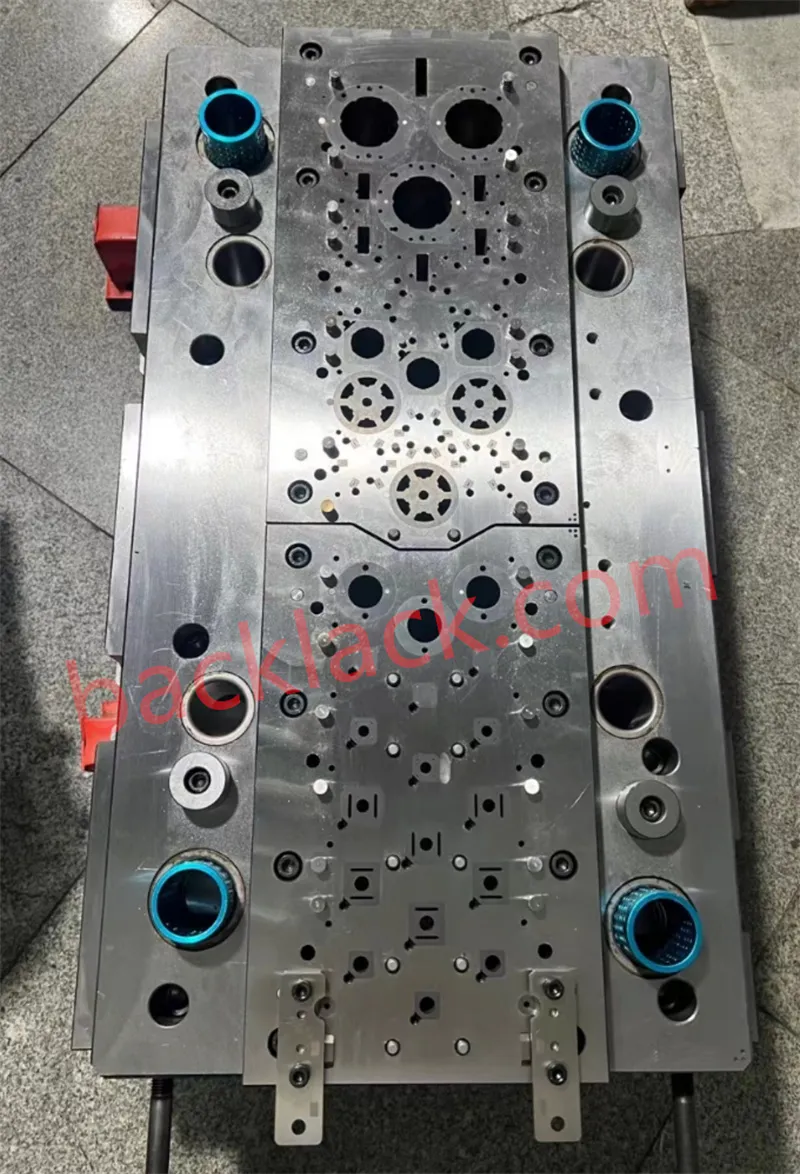
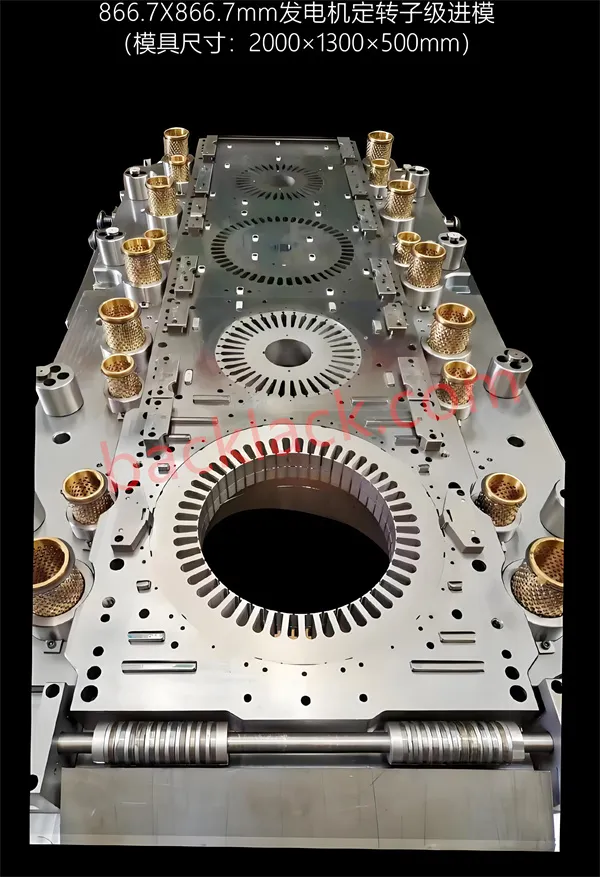
  • Dual-Track Tooling (Wire EDM & High-Speed Stamping): Complete lifecycle support, from rapid Wire EDM prototyping to high-volume progressive die stamping.
  • Vacuum / Hydrogen Magnetic Annealing: Equipped with dedicated atmosphere furnaces executing precise 820°C ~ 850°C heat-treatment profiles to fully relieve processing stress, recrystallize grain structures, and deliver maximum permeability (μm) and saturation (Bs).

Conclusion

In today’s fast-evolving electric motor landscape—where high power density, zero cogging torque, and ultra-quiet operation are paramount—the stator core topology and material choice remain the ultimate foundation of motor performance. While Cobalt-Iron alloys like Vacodur 49 / 1J22 offer an unmatched magnetic saturation of up to 2.4T, realizing their full potential requires overcoming extreme stress sensitivity, work hardening, and complex helical skewing geometry.
Whether your design demands the 100% flux efficiency of a straight-slot core or the whisper-quiet, low-ripple smoothness of a helical skewed stator, Youyou Company brings the advanced processing mastery your project needs. By integrating non-contact multi-axis Wire EDM precision cutting, Backlack self-bonding (0.1mm/0.2mm) stack technology, and vacuum hydrogen magnetic annealing, we eliminate mechanical stress at the source—allowing your high-end motors to break through physical efficiency and torque limits.

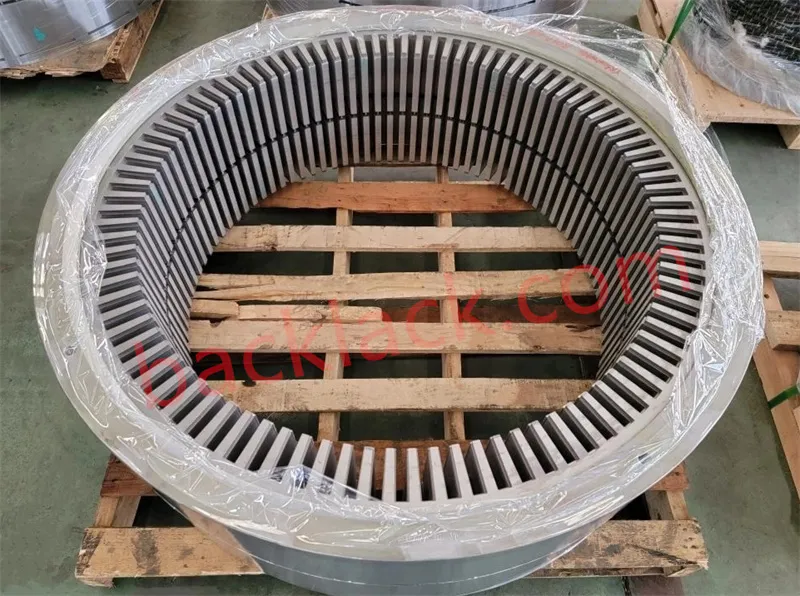
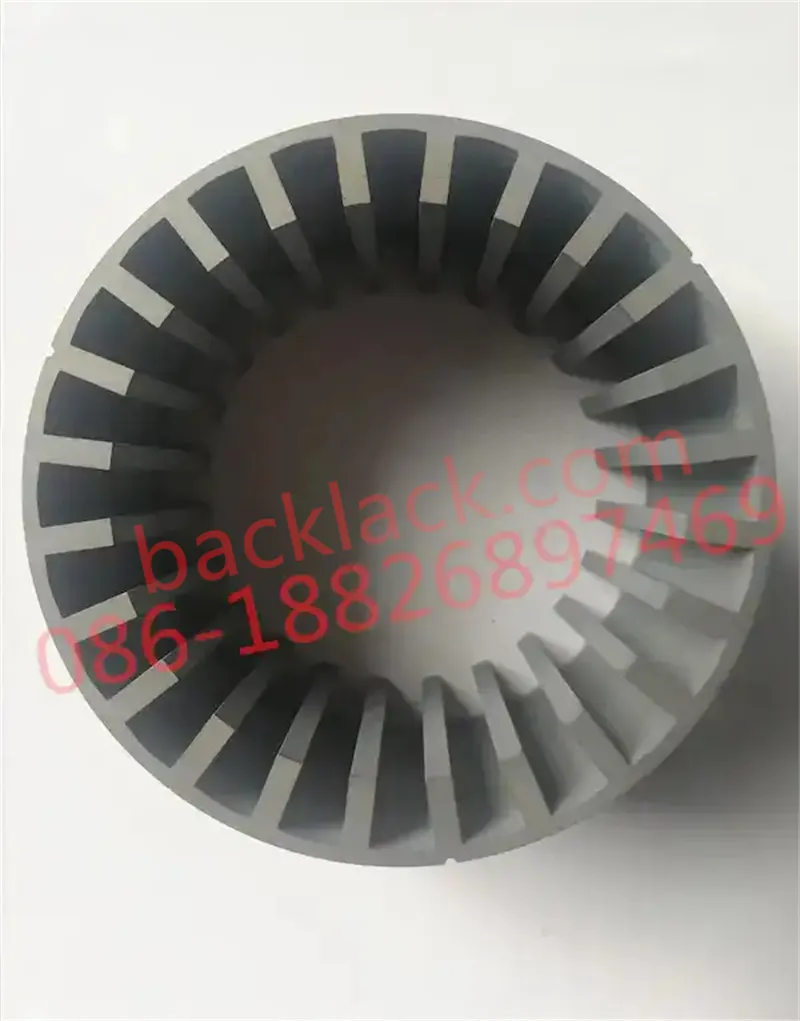
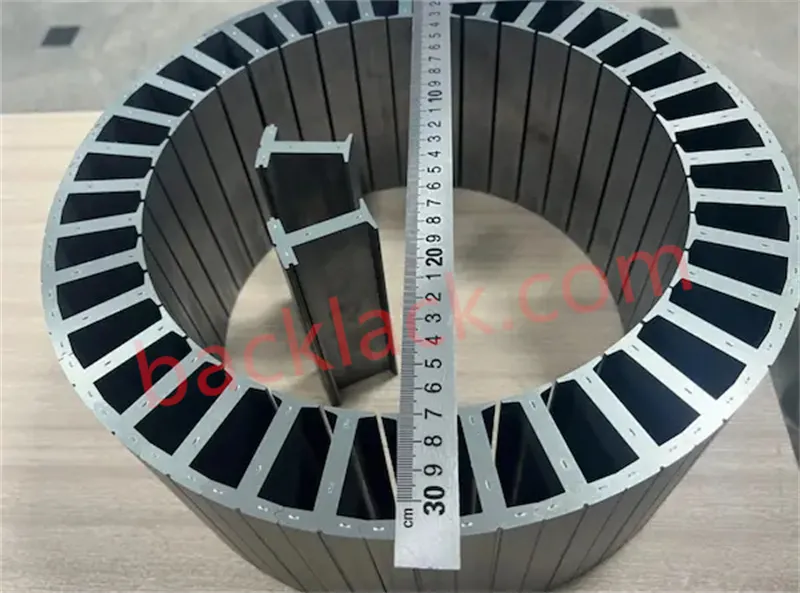
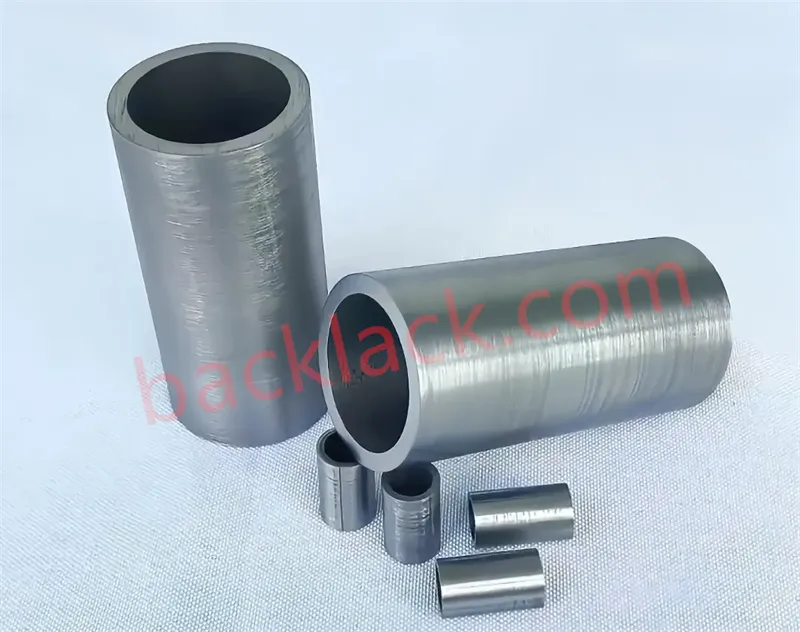
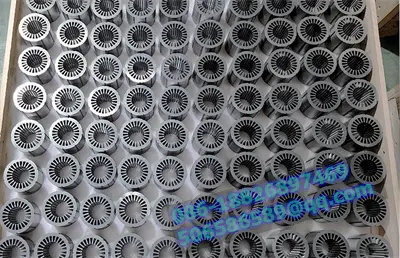
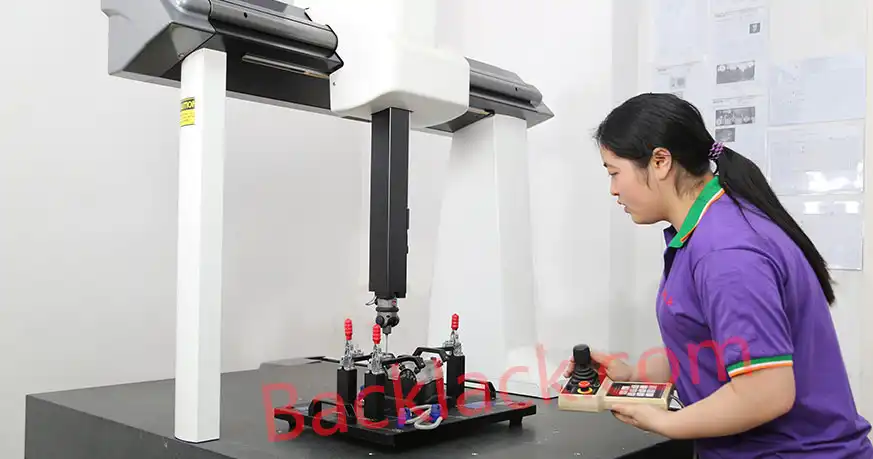
Quality Control for Lamination Bonding Stacks

As an stator and rotor lamination bonding stack manufacturer in China, we strictly inspect the raw materials used to make the laminations.

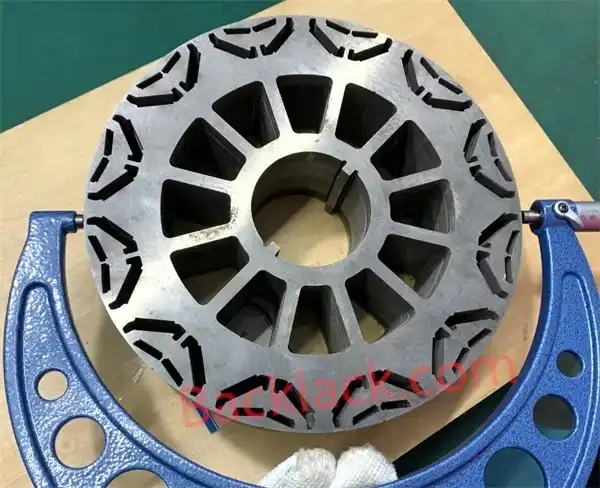
Technicians use measuring tools such as calipers, micrometers, and meters to verify the dimensions of the laminated stack.

Visual inspections are performed to detect any surface defects, scratches, dents, or other imperfections that may affect the performance or appearance of the laminated stack.

Because disc motor lamination stacks are usually made of magnetic materials such as steel, it is critical to test magnetic properties such as permeability, coercivity, and saturation magnetization.

Quality Control For Adhesive Rotor and Stator Laminations

Other Motor Laminations Assembly Process

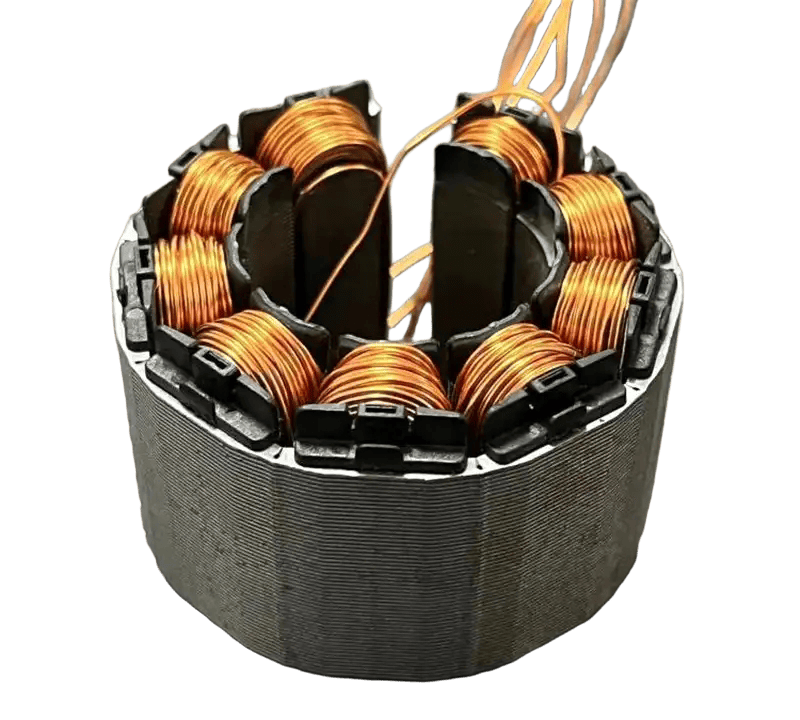
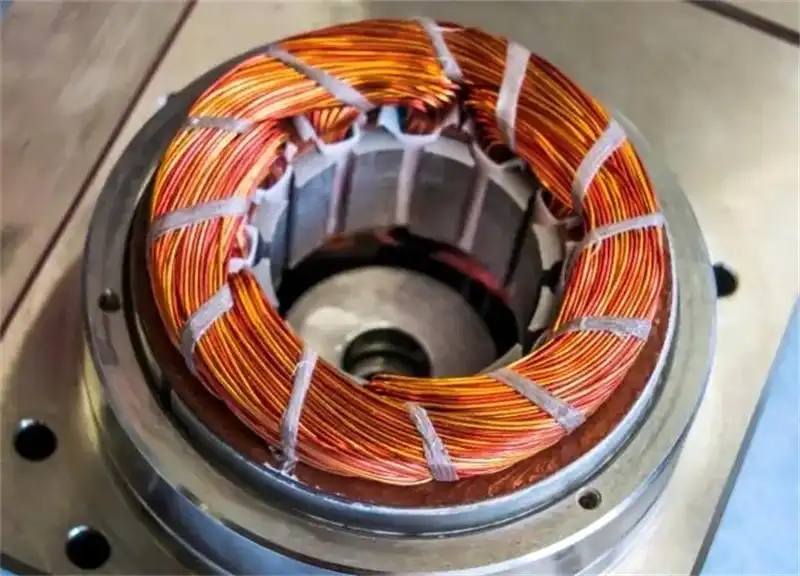
Stator Winding Process

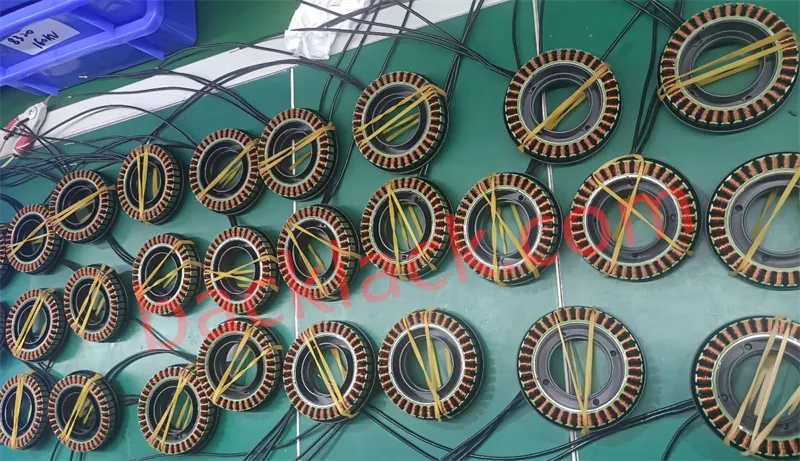
The stator winding is a fundamental component of the electric motor and plays a key role in the conversion of electrical energy into mechanical energy. Essentially, it consists of coils that, when energized, create a rotating magnetic field that drives the motor. The precision and quality of the stator winding directly affects the efficiency, torque, and overall performance of the motor.

We offer a comprehensive range of stator winding services to meet a wide range of motor types and applications. Whether you are looking for a solution for a small project or a large industrial motor, our expertise guarantees optimal performance and lifespan.

Motor Laminations Assembly Stator Winding Process

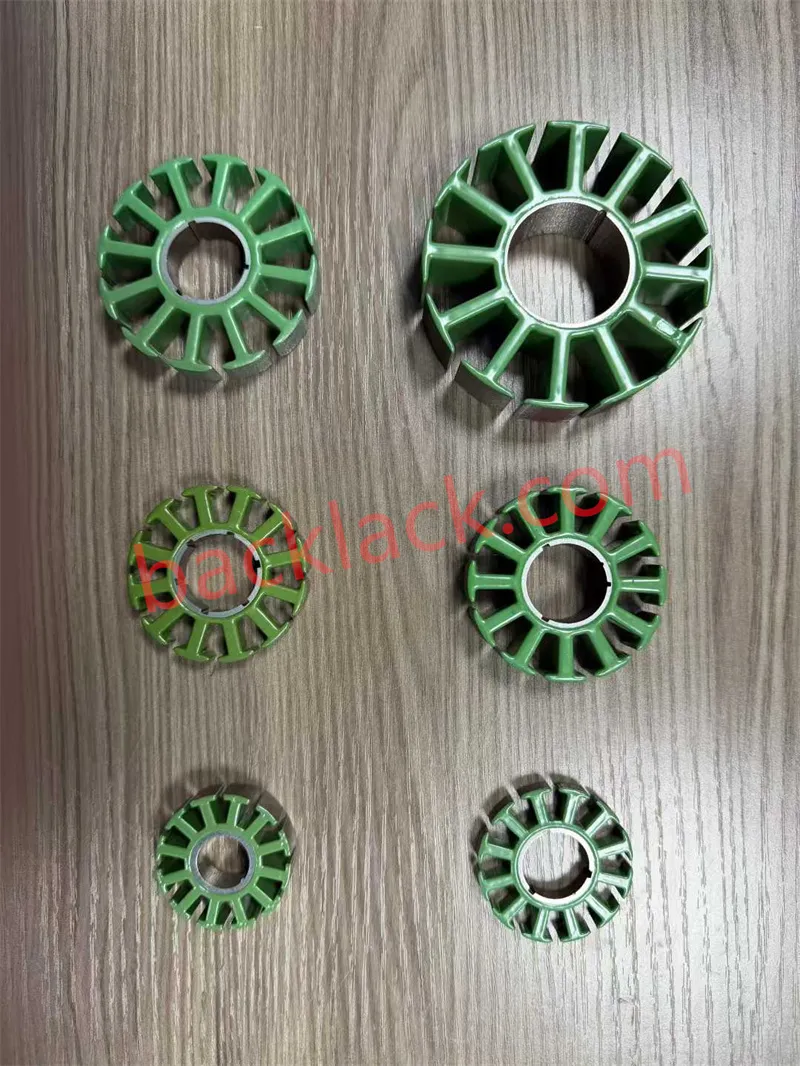
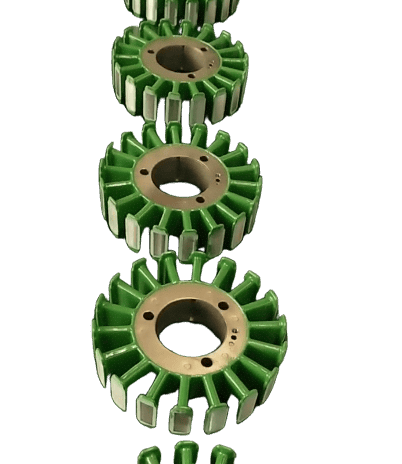
Epoxy powder coating for motor cores

Epoxy powder coating technology involves applying a dry powder which then cures under heat to form a solid protective layer. It ensures that the motor core has greater resistance to corrosion, wear and environmental factors. In addition to protection, epoxy powder coating also improves the thermal efficiency of the motor, ensuring optimal heat dissipation during operation.

We have mastered this technology to provide top-notch epoxy powder coating services for motor cores. Our state-of-the-art equipment, combined with the expertise of our team, ensures a perfect application, improving the life and performance of the motor.

Motor Laminations Assembly Epoxy Powder Coating For Motor Cores

Injection Molding of Motor Lamination Stacks

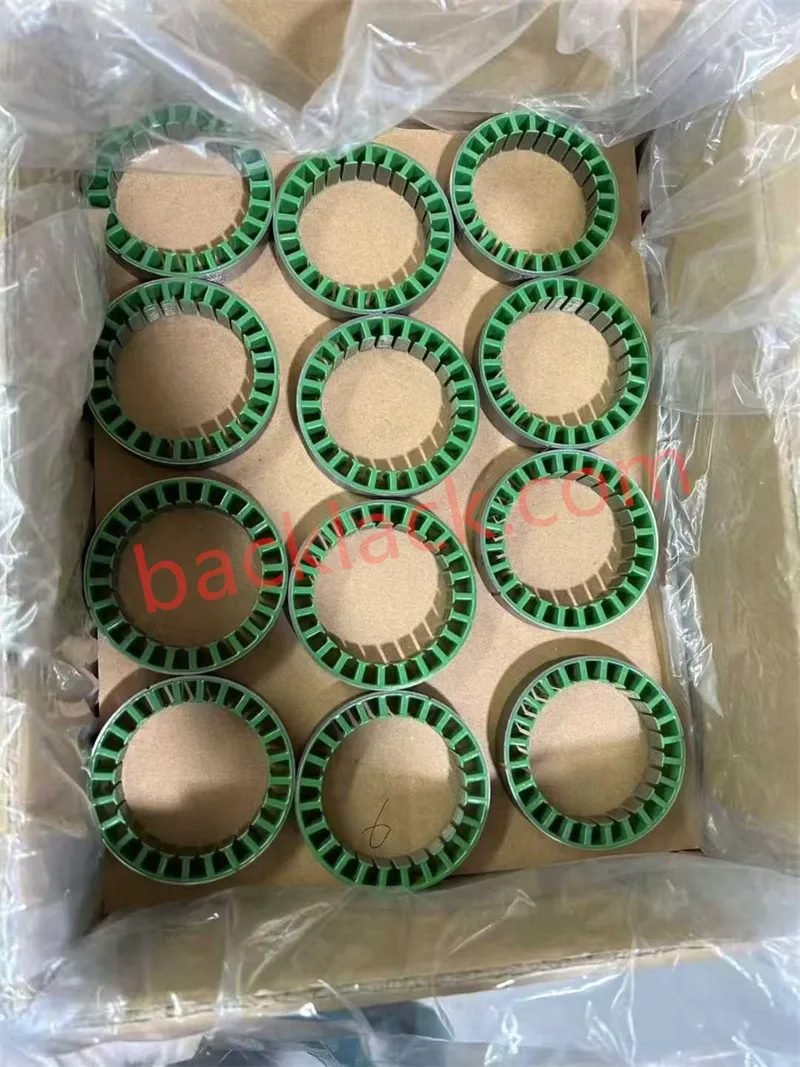
Injection molding insulation for motor stators is a specialized process used to create an insulation layer to protect the stator's windings.

This technology involves injecting a thermosetting resin or thermoplastic material into a mold cavity, which is then cured or cooled to form a solid insulation layer.

The injection molding process allows for precise and uniform control of the thickness of the insulation layer, guaranteeing optimal electrical insulation performance. The insulation layer prevents electrical short circuits, reduces energy losses, and improves the overall performance and reliability of the motor stator.
Motor Laminations Assembly Injection Molding of Motor Lamination Stacks

Electrophoretic coating/deposition technology for motor lamination stacks

In motor applications in harsh environments, the laminations of the stator core are susceptible to rust. To combat this problem, electrophoretic deposition coating is essential. This process applies a protective layer with a thickness of 0.01mm to 0.025mm to the laminate.

Leverage our expertise in stator corrosion protection to add the best rust protection to your design.

Electrophoretic Coating Deposition Technology For Motor Lamination Stacks

FAQS

Why are Cobalt-Iron (CoFe) alloys so sensitive to mechanical processing compared to standard silicon steel?

Cobalt-Iron alloys (such as 1J22 and Vacodur 49) exhibit extreme magnetostriction and high mechanical hardness. Mechanical shearing, punching, or forced twisting introduces severe internal lattice distortion and shear stress. This residual stress drastically increases coercive force (Hc) and degrades magnetic permeability (μm), causing up to a 30%–40% loss in magnetic performance if not properly annealed.

How much magnetic performance is lost when using helical skewed slots instead of straight slots?

Helical skewed slots typically result in a 5% to 10% reduction in effective flux density compared to straight slots. This is due to the axial flux component tilting the magnetic path, which causes premature localized magnetic saturation at the tooth tips and slightly increases stray end-leakage losses.

Why is Precision Wire EDM superior to traditional mechanical skewing for Cobalt-Iron stators?

Wire EDM is a non-contact electro-thermal cutting process that applies zero physical force or mechanical stress to the laminations. It enables micron-level geometrical accuracy (±0.002mm) for complex helical or stepped skew angles without burrs, preventing inter-lamination short circuits and mechanical stress degradation.

What is the benefit of combining Backlack (self-bonding) technology with Wire EDM skew cutting?

Backlack bonding coats each 0.1mm or 0.2mm lamination with an organic varnish before heat-curing the stack into a monolithic "block." When wire-cut, this solid block maintains full mechanical integrity without sheet displacement or vibration, preserving edge insulation and preventing eddy current spikes.

Can final magnetic annealing fully restore the magnetic properties of a skewed Cobalt-Iron core?

Yes, provided the core underwent non-destructive processing (like Wire EDM or stepped lamination) and is annealed in a dedicated vacuum or pure hydrogen atmosphere furnace at 820°C – 850°C. This thermal process recrystallizes the grain structure and completely relieves residual processing stress.

When should I choose a "Straight Slot Stator + Skewed Magnet Rotor" combination instead?

This alternative is ideal when maximum power density and energy conversion efficiency are your highest priorities (e.g., drone propulsion, aviation actuators). It retains 100% of the stator's magnetic flux capability while mitigating cogging torque on the rotor side, optimizing both performance and manufacturing yield.

What ultra-thin lamination thicknesses does Youyou Company support for Cobalt-Iron alloys?

We specialize in processing ultra-thin 0.05mm / 0.10mm / 0.15mm / 0.20mm Cobalt-Iron (1J22, Vacodur 49) laminations, utilizing custom Backlack coating and high-precision EDM/stamping techniques to minimize high-frequency iron loss.

How does Youyou Company ensure fast turnarounds for custom prototype cores?

By leveraging multi-axis Wire EDM taper cutting on pre-bonded Backlack raw blocks, we eliminate long-lead stamping die construction for prototypes, allowing us to deliver high-precision custom skewed stators and rotors in as fast as 5 to 10 business days.

Are You Ready to Unlock Maximum Motor Performance & Eliminate Cogging Torque?

Start Your Custom Cobalt-Iron Skewed & Straight Stator Core Project Today!

Looking for a trusted precision manufacturing partner in China specializing in Cobalt-Iron alloys (Vacodur 49 / 1J22), 0.1mm Backlack self-bonding, and stress-free Wire EDM skewed slots? Look no further! Whether you need 100% flux-dense straight stators or whisper-quiet helical skewed cores, Youyou Company provides tailored, zero-stress lamination solutions engineered to your exact specifications.

Contact our engineering team now to request a rapid prototype quote for your custom Cobalt-Iron stator cores and break through physical motor efficiency limits!

Get Your Custom Quote Now

Recommended For You